Table of Contents
The rise of technology has always influenced the arts, but recent advancements have brought a game-changer: AI tools for artists.
These aren’t just fancy gadgets; they’re reshaping how artists conceive and create their work. From painters to musicians, professionals are finding these tools invaluable.
They offer a blend of efficiency and innovation, opening doors to uncharted creative territories. For anyone in the art world, now is the time to explore and embrace these tools. They’re not just the future—they’re the present, offering endless possibilities for those willing to dive in.
Visual Arts and Design
1. Artbreeder
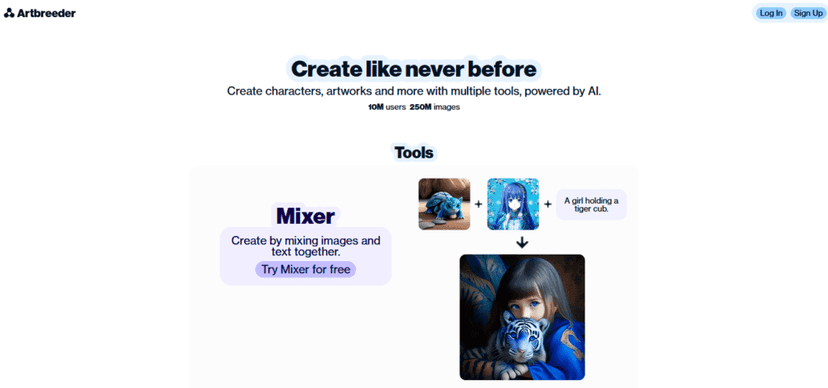
Artbreeder, a platform driven by the power of Generative Adversarial Networks (GANs), sits at the crossroads of community collaboration and machine learning.
By seamlessly blending images, it unlocks an array of artistic possibilities, creating new, original artworks. It has gained traction among both artists and AI enthusiasts for its simplicity and striking outputs.
Specifications
At its core, Artbreeder harnesses the power of GANs, particularly BigGAN, to interpolate and generate images.
The platform is web-based, ensuring accessibility without the need for cumbersome downloads or installations. It operates on a collaborative model, where users can share, modify, and blend community-generated images.
Features
Artbreeder’s distinctive features make it an attractive choice for artists keen on exploring AI-augmented creativity:
- Intuitive Sliders: Adjust various visual attributes like age, mood, or color with simple sliders. This gives artists direct control over the output.
- Collaborative Creativity: Every image on the platform can be blended and modified by any user. This continuous evolution of artwork is akin to a community-driven art project.
- Genres & Categories: Whether you’re looking to create portraits, landscapes, or fantastical creatures, Artbreeder categorizes images for easier navigation.
- High-Resolution Downloads: For those looking to use the generated artworks for professional or commercial purposes, Artbreeder offers high-res image downloads.
Pros
- User-friendly, even for those unfamiliar with AI or GANs.
- Emphasis on community-driven creativity offers endless permutations of art.
- Allows for precise modifications via attribute sliders.
Cons
- While the blending technique is innovative, it may not suit artists looking for wholly original creations from scratch.
- The shared nature of artworks means proprietary claims on a particular piece can be tricky.
Pricing
Artbreeder operates on a freemium model:
- Free: Basic access with limited monthly blends.
- Basic Plan: Priced at $8.99/month, this plan offers additional blends and high-resolution downloads.
- Unlimited Plan: At $15.99/month, users get unlimited blends, faster rendering, and more high-res downloads.
Different plans cater to hobbyists and professional artists, ensuring scalable access as per individual needs.
How does it compare to other tools?
Artbreeder’s emphasis on community collaboration sets it apart from other AI art tools. While platforms like DALL·E generate based on text, Artbreeder blends existing images, offering a unique approach to collaborative artwork generation.
2. GANPaint Studio
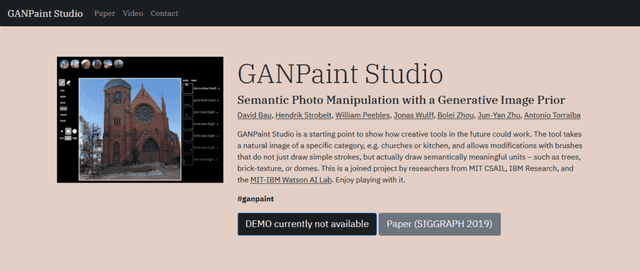
GANPaint Studio, a product of MIT’s research endeavors, represents the cutting edge of AI-assisted artistry. Harnessing the power of Generative Adversarial Networks (GANs), this platform offers artists a unique canvas, allowing them to tweak and transform scenes in ways that resonate with semantic meaning.
Unlike traditional digital art tools, GANPaint Studio understands the context of an image, enabling artists to make changes that feel organically integrated into the artwork.
Specifications
GANPaint Studio operates on the backbone of GANs, a class of artificial neural networks. GANs consist of two networks: the Generator, which creates images, and the Discriminator, which evaluates them.
In the context of GANPaint Studio, these networks have been trained with vast sets of images, empowering them to discern and generate diverse visual elements.
It’s a browser-based tool, ensuring accessibility across different platforms without the need for specialized software installations.
Features
What makes GANPaint Studio stand out are its capabilities driven by deep learning:
- Semantic Brushes: Rather than just altering colors or tones, artists can paint with concepts. For instance, you can add trees or clouds to landscapes seamlessly.
- Object Removal: With a few clicks, artists can erase specific elements from a scene. The tool fills in the gaps contextually, ensuring the resulting image remains coherent.
- Layer Manipulation: Artists have the freedom to work with layers, adding depth and complexity to their creations.
- Fine-Tuning Controls: These allow for adjusting the intensity and style of the modifications, granting artists more control over the final result.
Pros
- Introduces a novel way of interacting with images at a semantic level.
- Browser-based tool ensures wide accessibility without heavyweight installations.
- A step forward in the blend of traditional artistry and AI-powered tools.
Cons
- As with many AI tools, there’s a learning curve to fully harness its capabilities.
- The outcomes, while impressive, are still bound by the training and limits of the underlying GAN.
Pricing
GANPaint Studio has been primarily a research tool and is available freely online for users to experiment with. However, in-depth use or commercial applications might require a closer collaboration with the MIT team or licensing agreements.
How does it compare to other tools?
While tools like DeepDream offer an exploratory journey into the world of neural networks, GANPaint Studio provides artists with a more controlled environment.
It’s less about serendipitous discovery and more about intentional, semantic-driven design. It’s a pioneering step towards AI tools that understand the nuances of artistic intent.
3. Wombo Dream
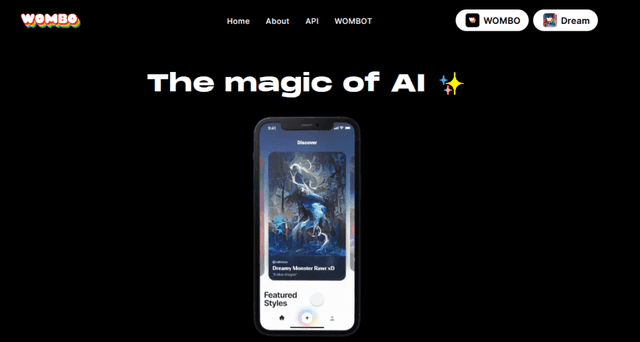
Wombo Dream emerges as a groundbreaking platform at the confluence of simplicity and technological sophistication.
It offers artists and non-artists alike the magic of transforming basic sketches into detailed and visually appealing art pieces. By harnessing the potential of artificial intelligence, Wombo Dream takes creativity to new heights, making the once-daunting task of art creation accessible to all.
Specifications
Wombo Dream operates in a cloud-based environment, ensuring users get real-time processing without burdening their devices.
At its core, it uses neural network-based algorithms trained on a vast array of art styles and compositions. This enables the tool to interpret, refine, and enhance user-uploaded sketches.
Features
Wombo Dream’s feature set is tailored to ensure ease of use while delivering stunning results:
- Simple Upload Process: Users can effortlessly upload their sketches and select preferred styles or settings.
- Variety of Art Styles: From Renaissance paintings to modern abstract art, Wombo Dream provides multiple styles to choose from.
- Interactive Edits: Post-processing, users can make tweaks to ensure the final output aligns with their vision.
- High-resolution Downloads: Finished artworks can be downloaded in high quality, making them suitable for print or digital use.
Pros
- Makes art creation accessible to users of all skill levels.
- Offers a variety of styles, ensuring versatility in outputs.
- Quick turnaround time from sketch to finished art.
Cons
- As with most AI tools, the final output might sometimes require human touch-ups.
- Limited by the styles available on the platform.
Pricing
Wombo Dream offers a tiered pricing model:
- Basic Plan: Provides access to standard features with limited monthly art transformations.
- Pro Plan: Expands upon the Basic Plan by offering more monthly transformations, premium art styles, and high-resolution downloads.
- Enterprise Plan: Designed for businesses or professionals, this plan offers unlimited transformations, premium support, and potential for custom style integrations.
Each pricing tier is crafted to cater to the diverse needs of its user base, from hobbyists to professional artists and designers.
How does it compare to other tools?
While there are other platforms leveraging AI for art creation, Wombo Dream sets itself apart with its user-friendly interface and the sheer simplicity of turning sketches into art.
It’s especially beneficial for those who might not have advanced drawing skills but have a vision they want to bring to life.
4. NightCafe Studio
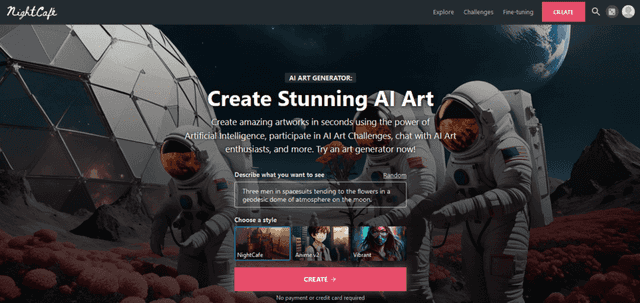
NightCafe Studio positions itself as a one-stop solution for creators looking to blend human ingenuity with the computational prowess of artificial intelligence.
It enables content creation across diverse domains like art, music, and videos. The platform democratizes the content creation process, offering tools previously reserved for seasoned professionals to everyone, from novices to experts.
Specifications
NightCafe Studio is web-based, ensuring accessibility without the need for heavy software installations. Harnessing state-of-the-art neural networks, it utilizes algorithms trained on massive datasets spanning various creative forms.
This makes it adept at understanding user inputs and synthesizing outputs that resonate with the creator’s intent.
Features
NightCafe Studio is feature-rich, offering a plethora of tools tailored for diverse creative needs:
- Art Generation: Turn rudimentary sketches or ideas into intricate artworks, spanning styles from classic to contemporary.
- AI-assisted painting tools
- Style transfers and morphing
- Music Composition:
- Generate original compositions or remixes based on user preferences.
- AI-driven mastering and sound enhancement tools
- Video Creation:
- Automated video editing using AI to detect and stitch the best sequences.
- AI-driven special effects integration
- Collaboration Tools:
- Collaborative workspaces for team projects.
- Real-time AI suggestions during collaborative sessions
Pros
- Comprehensive suite of tools covering art, music, and video domains.
- User-friendly interface, suitable for both beginners and professionals.
- Collaborative features, fostering teamwork in content creation.
Cons
- The vast array of tools might seem overwhelming for first-time users.
- AI outputs, while impressive, might sometimes lack the nuanced touch of a human creator.
Pricing
NightCafe Studio adopts a tiered pricing structure:
- Free Tier: Limited access to tools, with restrictions on the number of monthly projects and lower resolution outputs.
- Premium Plan: Unlocks the full suite of tools, high-resolution outputs, and priority processing. Suitable for individual professionals.
- Team Plan: Designed for collaborative work, this offers additional workspace features, team management tools, and bulk processing capabilities.
How does it compare to other tools?
NightCafe Studio’s strength lies in its comprehensive approach, covering multiple creative avenues under one umbrella.
While other platforms might specialize in one domain, be it art, music, or video, NightCafe provides an integrated experience, making it a favorite choice for creators who work across different mediums.
5. Infinite Studio
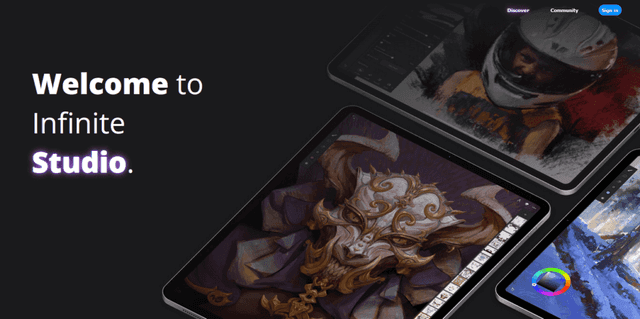
Infinite Studio is a revolutionary platform that merges the world of art and artificial intelligence. It’s not just about creating; it’s about experiencing, showcasing, and monetizing.
By offering an immersive environment, artists can push the boundaries of their creativity, augmenting their works with AI and sharing them with a global audience eager for innovative artworks.
Specifications
Infinite Studio leverages cutting-edge virtual reality and augmented reality technologies. This online platform provides an environment where artists, irrespective of their geographical location, can virtually walk into their studios, interact with their creations, and even collaborate with others in real-time.
The underpinning AI engine is trained on countless art pieces, understanding and predicting styles, and offering suggestions to artists.
Features
Infinite Studio boasts a rich set of features tailored for modern-day artists:
- AI Augmented Creation Tools:
- Tools that offer style suggestions, texture enhancements, and intricate pattern generations.
- Real-time visualization of changes, allowing artists to toggle between AI suggestions and original designs.
- Virtual Exhibitions:
- Artists can curate virtual galleries, showcasing their work in a 3D space.
- Interactive tools for visitors to engage with the artwork, including zoom, rotate, and detailed view functionalities.
- Marketplace Integration:
- A built-in marketplace for artists to price and sell their artworks.
- Secure transaction mechanisms and digital copyright management tools.
- Collaborative Studios:
- Artists can invite peers into their virtual studios for collaborative projects.
- Shared tools and resources to co-create pieces.
Pros
- A holistic platform that covers creation, exhibition, and sale.
- Immersive VR and AR experiences elevate the art creation and viewing process.
- In-built AI tools cater to both novices seeking guidance and experts looking to experiment.
Cons
- Requires a stable internet connection for the full VR experience.
- Might have a learning curve for artists not familiar with VR or AR technologies.
Pricing
Infinite Studio follows a subscription-based model:
- Basic Plan: Offers access to AI creation tools with limited exhibition space. Suitable for budding artists.
- Professional Plan: Extended exhibition spaces, premium AI tools, and marketplace privileges. Designed for established artists.
- Elite Membership: A premium offering for artists seeking vast exhibition spaces, dedicated VR showrooms, and priority listings in the marketplace.
How does it compare to other tools?
Where Infinite Studio stands out is in its commitment to offering an all-in-one platform for artists. While other platforms may focus on creation or exhibition, Infinite Studio integrates every aspect of the artist’s journey.
The immersive VR and AR experiences, coupled with AI augmentation tools, make it a unique choice for contemporary artists.
6. Deep Dream Generator
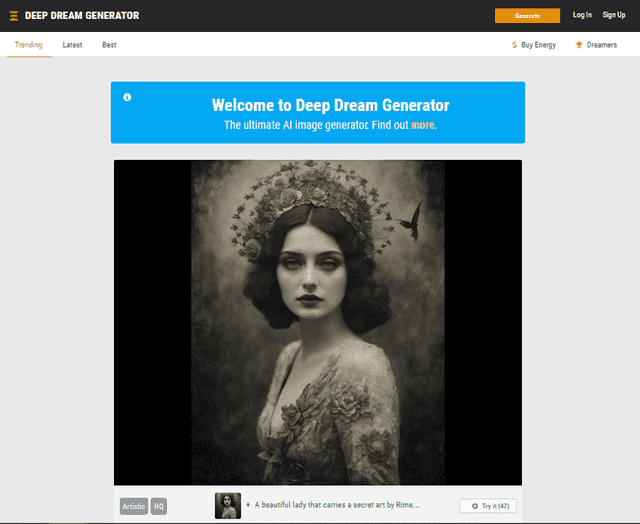
The Deep Dream Generator is an AI-powered platform developed by Google that opens the door to a fascinating realm of artistic possibilities. It harnesses Google’s deep dream neural networks, enabling artists to transform ordinary images into mesmerizing, often surreal visual masterpieces.
This tool elevates and expands the horizons of digital artistry, revealing patterns and designs that are deeply entrenched within the neural networks.
Specifications
Deep Dream Generator is rooted in Google’s deep learning algorithms. These algorithms, known as convolutional neural networks, are trained to detect and interpret patterns in images.
When provided with an image, the platform accentuates the inherent patterns, often leading to intricate and sometimes dream-like visuals.
Features
The Deep Dream Generator offers an assortment of features that cater to the creative desires of artists:
- Layer Selection:
- Artists can choose the layers of the neural network to activate, influencing the depth and intricacy of the designs.
- Style & Strength Control:
- Users can adjust the intensity of the transformation, from subtle enhancements to extreme, surreal modifications.
- Community Gallery:
- A showcase of creations from around the world, offering inspiration and a sense of the platform’s potential.
- Custom Filters:
- Beyond the default settings, artists can apply a range of filters, further refining their creations.
Pros
- Enables artists to create unique visuals that are often unattainable through traditional means.
- Highly customizable, giving users control over the final output.
- Provides a fresh perspective on images, revealing hidden patterns.
Cons
- As with any AI tool, the results can sometimes be unpredictable.
- There might be a learning curve for those unfamiliar with deep learning concepts.
Pricing
Deep Dream Generator offers a free tier, allowing anyone to experiment with the platform. For users looking for higher resolution outputs and faster processing times, premium plans are available.
How does it compare to other tools?
The Deep Dream Generator is distinguished by its unique approach to visual artistry, converting seemingly ordinary images into deep dream-infused wonders.
While other platforms might focus on specific art styles or mediums, Deep Dream offers a dive into the subconscious of AI, revealing captivating patterns that stand out in the realm of digital art.
7. DALL·E
From the renowned research institution OpenAI comes DALL·E, an avant-garde AI model with a flair for creativity.
DALL·E goes beyond conventional AI capabilities, offering the remarkable ability to generate intricate images based solely on textual prompts. This tool redefines the intersections of language, art, and machine learning.
Specifications
DALL·E is built upon the GPT-3 framework, an advanced language model also developed by OpenAI. It operates on a variant of the GPT-3 transformer model that consists of 12 billion parameters.
DALL·E is optimized to handle both language processing and image generation, delivering a harmonious blend of text-to-image conversions.
Features
DALL·E’s prowess is not just limited to translating text into images. Its expansive features cater to artists and tech enthusiasts alike:
- Dynamic Image Creation: Simply input a textual description, and DALL·E will craft a corresponding image, often with surprising creativity and whimsy.
- Multiple Interpretations: For a single textual prompt, DALL·E can render multiple image variants, giving users diverse visual interpretations of their input.
- Conceptual Imagery: The tool can handle abstract concepts, not just concrete descriptions. For instance, “a two-headed flamingo” or “a skyscraper in the shape of a teacup” are rendered with startling accuracy.
- Integration with Other Tools: DALL·E can be combined with other AI tools for extended functionalities, such as animating the created images or integrating them into larger projects.
Pros
- Offers a novel approach to image generation that’s not based on pre-existing images.
- Can handle complex and abstract prompts with remarkable fidelity.
- Harnesses the robustness of the GPT-3 framework.
Cons
- As it’s still in research stages, availability for commercial use might be limited.
- The unpredictability of outputs, while creative, may not always align with user expectations.
Pricing
As of the last update, DALL·E’s direct usage is primarily for research purposes, and OpenAI hasn’t announced a specific pricing structure.
However, OpenAI has a history of launching API access for their models, so it’s plausible that DALL·E might follow suit in the future.
How does it compare to other tools?
While there are various AI image generation tools out there, DALL·E stands out due to its ability to create from scratch based on textual prompts.
Instead of relying on pre-existing databases of images, it crafts novel visuals, making it a unique tool in the realm of AI-augmented artistry.
Music
8. AIVA (Artificial Intelligence Virtual Artist)
In a world where art and technology increasingly intertwine, AIVA stands as a testament to this fusion. It’s not just any software; it’s a composer, capable of crafting symphonic pieces that resonate with emotion.
Built on deep learning algorithms, AIVA has been trained on centuries of classical music, enabling it to produce compositions that can stir the soul, all without human intervention.
Specifications
AIVA operates on complex deep learning models, specifically recurrent neural networks (RNNs). These RNNs have been trained using a vast library of sheet music from classical maestros, from Bach to Beethoven.
The result is a sophisticated AI that understands the nuances, structures, and dynamics of symphonic music. It’s an online platform, ensuring widespread accessibility and real-time music generation.
Features
AIVA’s repertoire is not just impressive, but also extensive:
- Composition Generation: With a few inputs, artists can guide AIVA to generate symphonic pieces tailored to specific moods or themes.
- MIDI File Export: Once satisfied with a composition, artists can export it as a MIDI file, allowing further editing in digital audio workstations.
- Sheet Music Production: AIVA can transcribe its compositions into sheet music, enabling orchestras to bring AI-composed pieces to life.
- Adaptive Learning: As more music is fed into AIVA, it continually refines its composition skills, ensuring an evolving musical style.
Pros
- A breakthrough tool for musicians, offering a new way to compose and experiment.
- Seamlessly integrates AI with the intricacies of music composition.
- Facilitates rapid prototyping of music pieces for various projects.
Cons
- While innovative, purists may argue it lacks the true emotion of human-composed music.
- Limited to the styles and structures present in its training data.
Pricing
AIVA offers several pricing tiers:
- Free Plan: Limited access to the basic features for individual experimentation.
- Premium Plan: Offers extended capabilities, more downloads, and higher quality exports, suitable for professional musicians and content creators.
- Enterprise Plan: Tailored for businesses, this plan provides unlimited access, premium support, and custom integrations.
Each tier caters to different user needs, ensuring both hobbyists and professionals can leverage AIVA’s capabilities.
How does it compare to other tools?
In the domain of AI-driven music composition, AIVA holds a distinctive position. While there are other tools that generate ambient soundscapes or beats, AIVA focuses on symphonic compositions, bringing the grandeur of orchestral music to the AI realm.
It is particularly beneficial for content creators, filmmakers, and musicians looking for unique pieces to accompany their projects.
9. Jukebox
Jukebox, developed by OpenAI, is an innovative tool that has significantly transformed the music creation landscape. Using the power of artificial intelligence, it can generate raw audio in a plethora of genres and styles.
Beyond merely generating melodies, Jukebox crafts intricate compositions, embodying the nuances of various musical genres, making it a boon for musicians, content creators, and hobbyists alike.
Specifications
Jukebox is founded on deep learning models, particularly neural networks, which have been trained on a vast assortment of songs spanning diverse genres and eras.
This extensive training allows Jukebox not just to create novel songs, but also to emulate specific styles and even voices to some extent.
Features
Jukebox offers a range of unique capabilities tailored to the world of music:
- Diverse Genre Creation:
- From jazz, blues, and classical to rock, pop, and electronic, Jukebox can generate music across the board.
- Users can specify a genre or let the AI choose one, leading to unexpected and delightful compositions.
- Raw Audio Generation:
- Not just limited to MIDI or simple tunes, Jukebox crafts raw audio, capturing the essence of real instruments and vocals.
- Lyrics Integration:
- Users can input custom lyrics, and Jukebox will craft a song around them.
- Perfect for musicians seeking a unique melody for their words.
- Style Emulation:
- If users have a specific artist or band in mind, Jukebox can attempt to emulate that style, bringing a familiar touch to new compositions.
Pros
- Extensive genre range offers versatility in music creation.
- Ability to generate high-quality raw audio, eliminating the need for post-processing.
- OpenAI’s reputation and research ensure a top-tier AI-driven music experience.
Cons
- As with any AI tool, it might not always capture the nuanced emotions of human compositions.
- Requires computational power and might not be readily accessible for real-time generation to all users.
Pricing
Being a research project by OpenAI, Jukebox’s accessibility might vary. As of the last update, Jukebox was primarily available for research purposes.
Interested users and institutions may need to liaise with OpenAI directly or access through platforms that integrate Jukebox.
How does it compare to other tools?
Jukebox, with its raw audio generation capability, stands out in the crowd of AI music tools. While there are numerous AI-driven music generators, few match the intricacy and quality of Jukebox.
Its backing by OpenAI, a renowned name in the AI space, further assures users of its capabilities and potential.
10. Amper Music
Amper Music is an AI-driven platform designed to revolutionize the way we create and perceive music. It simplifies the process of music composition and production, enabling both novices and professionals to produce high-quality tracks tailored to specific moods and styles.
This level of customization and quality is achieved without any compromise, making it a sought-after tool in the realm of digital music production.
Specifications
Amper Music is based on advanced algorithms and neural networks that have been trained with vast amounts of musical data.
This background allows the platform to recognize, understand, and recreate nuances from various musical genres, translating users’ inputs into finely-tuned musical pieces.
Features
The offerings of Amper Music are as diverse as they are intuitive:
- Mood & Style Selector:
- Choose from an array of moods and styles, from calm and serene to upbeat and energetic.
- Whether it’s pop, classical, rock, or ambient, Amper has got it covered.
- Real-time Music Generation:
- Tracks are composed on the fly, offering users an immediate sense of how their selections shape the music.
- Custom Instrumentation:
- Users can select specific instruments or allow the AI to make the choice, ensuring the track resonates with their vision.
- Easy Export & Integration:
- Once satisfied, users can easily export their creations or integrate them into videos, games, and other digital projects.
Pros
- Eliminates the need for extensive musical knowledge, democratizing music creation.
- Offers a vast array of styles and moods, catering to diverse requirements.
- Quick and efficient, producing tracks in a fraction of the time a human composer might need.
Cons
- The AI-generated music, while advanced, may not always capture the depth and intricacies of human compositions.
- Some users might prefer more granular control over compositions.
Pricing
Amper Music offers varied pricing plans to cater to different needs:
- Free Tier: Provides basic access with limited features.
- Professional Tier: Priced at a monthly fee, it offers more features, higher quality audio, and commercial usage rights.
- Enterprise Tier: Custom pricing for businesses with extensive requirements, providing API access and bulk creation capabilities.
How does it compare to other tools?
While there are several AI music tools available, Amper Music’s focus on user-friendliness and quality makes it stand out.
Its intuitive interface combined with its ability to cater to specific moods and styles positions it as a preferred choice for many in the digital content creation space.
11. LANDR
LANDR revolutionizes music production by leveraging the power of artificial intelligence. Offering a suite of tools tailored for both amateur and professional artists, the platform streamlines the production process and ensures top-tier audio quality.
Specifications
LANDR’s AI-driven framework encompasses various aspects of music production. The automatic mastering tool intuitively adjusts levels, equalization, and compression, bringing out the best in any track.
Additionally, its digital audio workstation (DAW) integration simplifies the workflow, allowing artists to directly access LANDR’s capabilities within their preferred software environment.
Features
- Automated Mastering: AI-powered adjustments for optimal track quality.
- DAW Integration: Seamless interfacing with popular digital audio workstations.
- Sample Library: An extensive collection for artists to explore and incorporate.
- Collaboration Tools: Share projects and receive feedback directly on the platform.
Pros
- Streamlined music production process.
- High-quality mastering results.
- Extensive sample library for added creativity.
- Collaborative features enhance team projects.
Cons
- Some artists might prefer manual mastering for specific nuances.
- Subscription model might not appeal to all users.
Pricing
LANDR offers various pricing tiers, catering to different needs:
- Basic: Free access with limited mastering and storage.
- Advanced: Enhanced mastering capabilities and more storage space for a monthly fee.
- Pro: Access to all features, including unlimited mastering, extensive storage, and priority support.
How does it compare to other tools?
LANDR stands out in the music production landscape due to its unique AI-driven mastering capabilities.
While there are other tools available for mastering, LANDR’s integrated approach, combined with DAW integration and collaborative features, positions it as a comprehensive solution for artists seeking an all-in-one platform.
12. Mubert
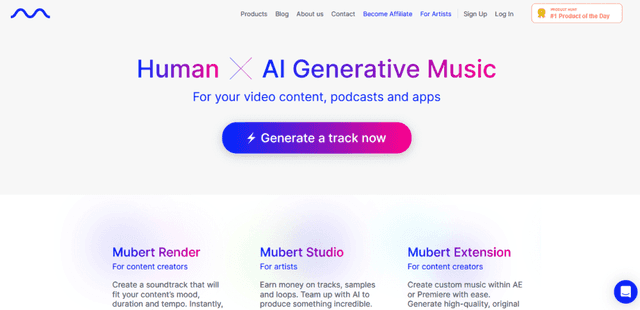
Mubert emerges as a game-changer in the domain of music generation, pioneering the use of artificial intelligence to produce an array of royalty-free tracks.
Designed for versatile applications, whether it be videos, games, or a plethora of other content, Mubert ensures users have the perfect auditory accompaniment to enhance their creations.
Specifications
At its core, Mubert relies on advanced algorithms that weave together various musical elements, creating compositions that resonate with the intended mood or theme.
The platform dynamically generates music, ensuring that every piece is distinct and tailored to the user’s requirements.
Features
Mubert brings a suite of capabilities to the table for its users:
- Dynamic Generation: Produces unique tracks every time, eliminating repetitive or overused compositions.
- Mood & Genre Selection: Users can specify the emotion or genre they want, from upbeat electronic to mellow jazz.
- Integration Capabilities: Easily embed Mubert’s AI-generated music into videos, games, and other platforms.
- Royalty-Free Usage: Bid adieu to licensing headaches. Every track is free to use without any copyright issues.
Pros
- Instantaneous music generation speeds up the content creation process.
- A vast library of sounds and styles caters to diverse needs.
- User-friendly interface makes it accessible to both novices and professionals.
Cons
- While AI-generated, some tracks might lack the emotional depth of human-composed pieces.
- The variety, though extensive, might not encompass extremely niche genres.
Pricing
Mubert operates on a freemium model:
- Basic Tier: Access to a limited range of sounds and styles with some usage restrictions.
- Premium Plan: Unlock the full spectrum of Mubert’s capabilities, from diverse sounds to unrestricted usage.
- Enterprise Solutions: Custom plans designed for businesses with bulk requirements.
How does it compare to other tools?
Mubert shines in its ability to deliver quick, royalty-free music that aligns with specific moods and genres.
While there are other AI-driven music generators, Mubert’s emphasis on ease-of-use, coupled with its dynamic generation capabilities, positions it as a preferred choice for content creators seeking hassle-free auditory solutions.
Conclusion
As we’ve journeyed through the marvels of AI-enhanced artistry, it’s evident that the future holds boundless possibilities. These tools are more than just digital aids; they’re catalysts propelling artists into a new age of creativity.
Now, it’s your turn. Dive in, experiment, and embrace the digital revolution. Let your artistry shine brighter than ever before. Don’t just witness the future; be an active creator in it.