Table of Contents
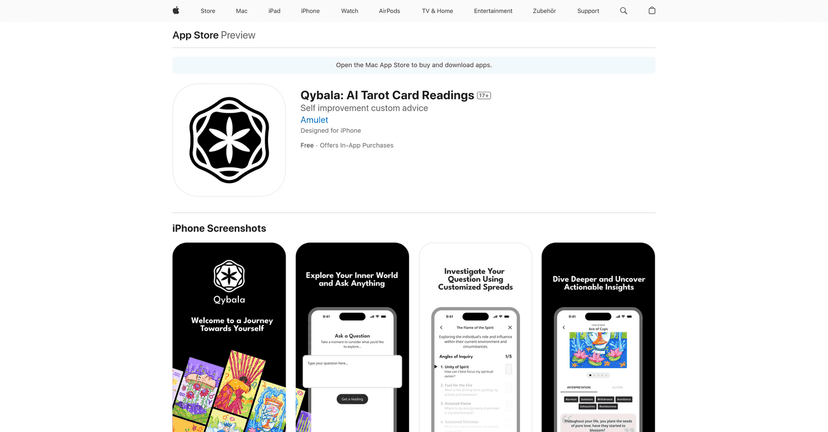
I’ve tried my fair share of tarot apps, and most of them feel like they’re doing the same thing: pick a spread, get a meaning, move on. Qybala is different. It adds an AI layer that actually responds to what you type, so the reading feels more like a conversation than a static “here’s your card meaning” moment.
When you ask a question, the app builds a reading in real-time. That’s the big hook. Instead of just listing interpretations, it leans into story and reflection—like it’s trying to help you connect the cards to what’s going on in your life. In my experience, that narrative style makes the whole session feel less robotic, even if you already know the basics of tarot.
Qybala Review: a more personal AI tarot experience
Qybala’s main idea is simple: you ask a question, and the app responds with an AI-generated reading that’s meant to feel tailored to you. What I noticed right away is that it doesn’t just throw a meaning at you—it tries to connect the reading to your context. That’s where the “personal” part comes in.
It also leans on a narrative-based psychology approach. I’m not saying it replaces therapy (please don’t treat it like that), but it does encourage you to think about patterns, motivation, and how you might be interpreting a situation. If you like tarot that feels grounded and reflective, you’ll probably enjoy this style.
On top of that, there’s a library of tarot card interpretations and spreads. In practice, this matters because you can go deeper than a single question. For example, if you pull a card and want to understand how it’s being framed, the app’s card correspondences and meanings make it easier to follow along without constantly googling.
And then there are the self-reflection prompts. These are the kind of questions that actually get you writing or thinking for a minute—things like what you’re avoiding, what you’re hoping for, or what change might be uncomfortable but necessary. Sometimes that’s the difference between “cool reading” and “okay, this hit me.”
Key Features I’d actually use
- Personalized AI Readings: you type your question, and the reading is generated around it.
- Narrative-Based Psychology Approach: the app frames the cards through reflection and mindset, not just symbolism.
- Comprehensive Qybala Card Correspondences: helpful if you want more context than a one-line meaning.
- Unique Tarot Spreads for Deep Exploration: more than just a quick “one-card” pull.
- Self-Reflection Questions for Growth: prompts that push you to think, not just read.
- Amulet of Life Framework for Guidance: a structured way to think about themes over time.
- Free and Subscription Access Options: you can test it first before committing.
Pros and Cons (my honest take)
Pros
- It feels interactive. The reading changes based on your input, so it doesn’t feel copy-paste.
- Nice visuals and a user-friendly interface. It’s easy to start a session without getting lost in menus.
- More than just “card meanings”. You get supporting material and articles that help you connect the dots.
- Instant readings. I didn’t have to sit around waiting forever for a response, which makes repeat use realistic.
- Self-reflection prompts are genuinely useful. They nudge you toward action or at least clearer thinking.
Cons
- Free version feels limited. If you want the deeper stuff consistently, you’ll likely end up wanting premium.
- Some tarot knowledge helps. If you’re brand new, you may still need to learn basic structure and symbolism to get the most out of it.
- Readings depend on your input. If your question is vague, the output can be too. Garbage in, garbage out—same as any AI tool.
- Not everyone will love the “psychology” framing. If you prefer purely traditional interpretations, this approach might feel a bit more modern than you expect.
Pricing Plans: what you get for free vs premium
Qybala offers a Free Version with basic functionality. From what I’ve seen, it includes things like card keywords and sample readings, which is enough to test whether the style works for you.
If you want more depth, Qybala uses in-app subscriptions. The listed options are:
- Qybala Tree Monthly Subscription: CHF 8.00
- 6 Months Subscription: CHF 40.00
- Yearly Subscription: CHF 60.00
Personally, I like that you can try it without paying first. If you’re using tarot occasionally, the free tier might be fine for you. If you’re doing readings regularly and want the expanded experience, the subscription options make more sense.
Wrap up
Qybala is a solid option if you want tarot that feels more personal and reflective. The AI isn’t just there to generate text—it’s used to respond to your question and keep the reading tied to your situation. And the psychology-style prompts are a big part of why it can feel more meaningful than a quick “here’s your card” result.
That said, it won’t magically replace your own judgment. If you ask vague questions, you’ll get vague guidance. And if you’re brand new to tarot, you might want to pair it with a basic learning resource so the meanings land faster.
If you’re curious, start with the free version, try a couple of different questions, and see whether the tone matches what you like. If it does, Qybala could become one of those apps you open when you want clarity—without overthinking it.