Table of Contents
Color is one of those things that sounds simple… until you actually try to match it to a mood, a brand, or a specific idea. I’ve definitely stared at Canva palettes for way too long, thinking, “Why does everything look off?” That’s where Text2Color for Canva caught my attention.
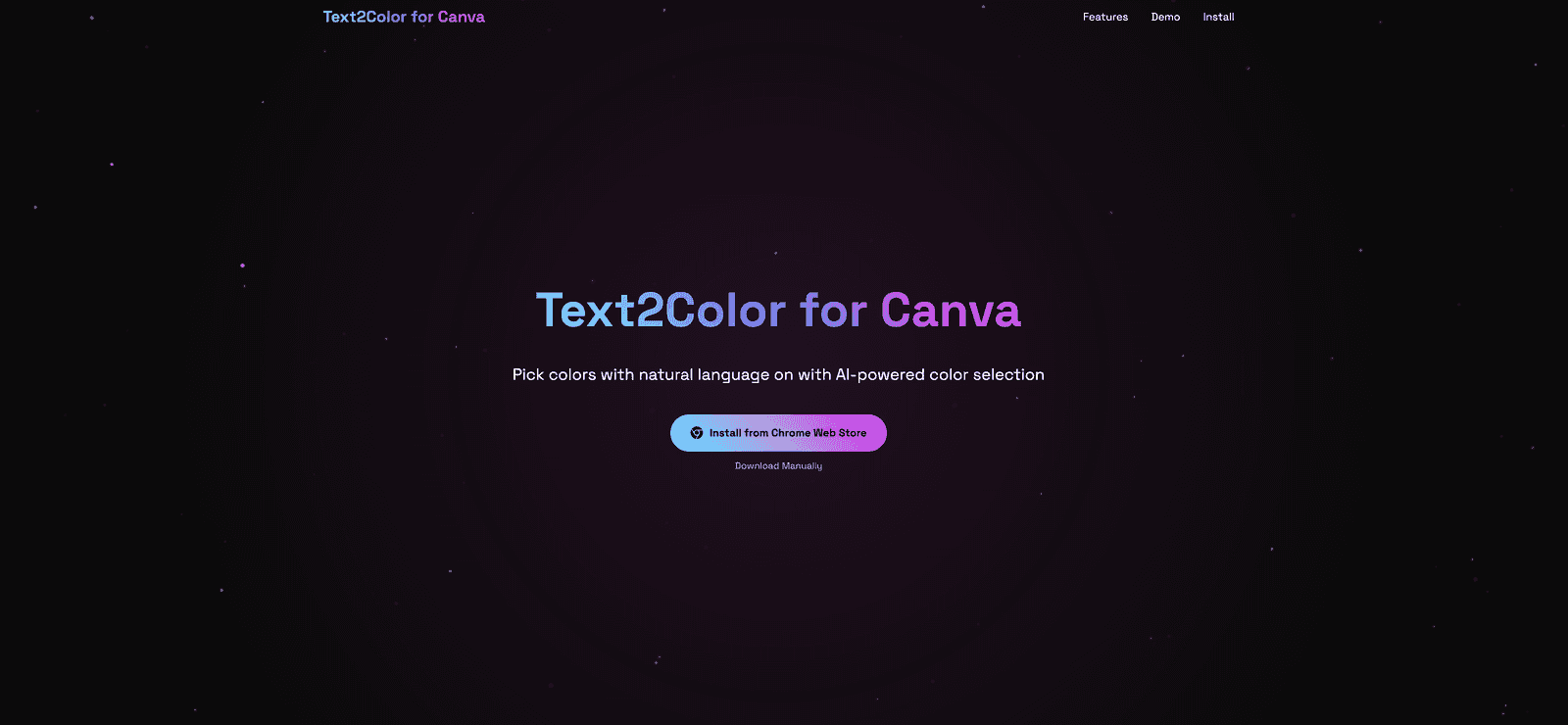
Instead of hunting for the “perfect” hex code, you describe the color in plain language. You type what you’re going for—like “sunset orange with a warm glow” or “soft ocean blue, slightly muted”—and the extension generates color options right inside Canva. The best part? It saves time. Not because it magically makes you a designer overnight, but because it removes that annoying blank-canvas moment where you don’t know where to start.
In my experience, it’s especially useful when you’re working fast: social posts, quick promos, thumbnails, or any design where you need a cohesive palette without spending 30 minutes clicking around. It won’t replace a good eye, but it does give you a solid starting point in seconds.
Text2Color Review: How I’d Use It to Find Better Colors Faster
Let’s be real—most color tools either make you pick from a palette (which you still have to judge) or they spit out random swatches that don’t match your vibe. Text2Color for Canva works differently. You describe the color you want, and it generates options you can apply without leaving your project.
What I noticed right away is how easy it is to steer the results. If you’re vague, you’ll get vague-ish colors. But if you add a little context—like “dark forest green, matte” or “pastel lavender, airy”—the output tends to feel more intentional.
Here’s a practical way to test it in your own workflow: pick one element you always struggle with. For me it’s usually button colors or headline text. Try generating 3–5 variations, then reuse the best one across your design (background, buttons, accents). That’s where the time savings really show up.
Key Features That Matter in Canva
- Word-to-color generation — You type a description, and it turns that into usable color suggestions.
- Fast results — It’s built for speed, so you’re not stuck waiting while you’re iterating designs.
- Direct Canva integration — You can stay in Canva instead of bouncing between tools just to find a hex code.
If you’re the type who likes to experiment (I am), this is the kind of feature that encourages more iteration. You try a color, see how it looks with your layout, and move on quickly.
Pros and Cons (The Honest Version)
Pros
- Quick color ideas — You get suggestions fast enough to keep your momentum.
- Works inside Canva — No extra tabs, fewer steps, less “tool switching.”
- Better prompts = better results — I found that adding texture words (matte, glossy), mood words (calm, bold), or temperature (warm, cool) makes a noticeable difference.
Cons
- API key requirement — This is a real barrier if you just want to try it casually. It’s not the most beginner-friendly setup.
- Canva-only — If you design in Figma/Photoshop/other software, you’ll either need a workaround or you’ll be out of luck.
- Not a full palette solution by itself — You may still want to adjust shades for readability (especially for text). In other words: it gives you a starting point, not guaranteed contrast.
Pricing Plans: What I Can Tell From the Setup
You can install Text2Color for Canva via the Chrome Web Store or by following the manual install option on the official site. Pricing details aren’t clearly laid out in the content I reviewed, but there is a key requirement: you need an API key from the official Text2Color website.
That usually means there’s some form of cost tied to usage (or at least a paid tier after a free allowance). If you’re planning to use it heavily—like daily client work—make sure you check what the API usage translates to for your budget before committing.
Also, if you’re just testing it, I’d recommend using it to generate a few color sets and then locking in the ones that actually work with your design. Don’t keep regenerating endlessly—your best colors are usually the first few rounds.
Wrap up
Text2Color for Canva is one of those tools that feels simple, but it actually solves a real pain point: getting to a usable color idea quickly. I like that it’s integrated into Canva, because it keeps you in the flow. The biggest downside is the API key requirement, and it’s also limited to Canva, so it won’t help if your main design tool isn’t Canva.
If you spend time tweaking colors (or you often get stuck at the “what should this look like?” stage), Text2Color is worth trying. Just go in with a decent prompt, test a few variations, and pay attention to contrast for text so you don’t end up with pretty colors that are hard to read.
Promote Text2Color