Table of Contents
SEO can feel like one of those never-ending chores—keyword research, content updates, link building, reporting… it all stacks up fast. In my experience, the biggest problem isn’t that SEO is “hard.” It’s that it’s time-consuming. You can do everything manually, sure, but you’ll spend your whole week just keeping up.
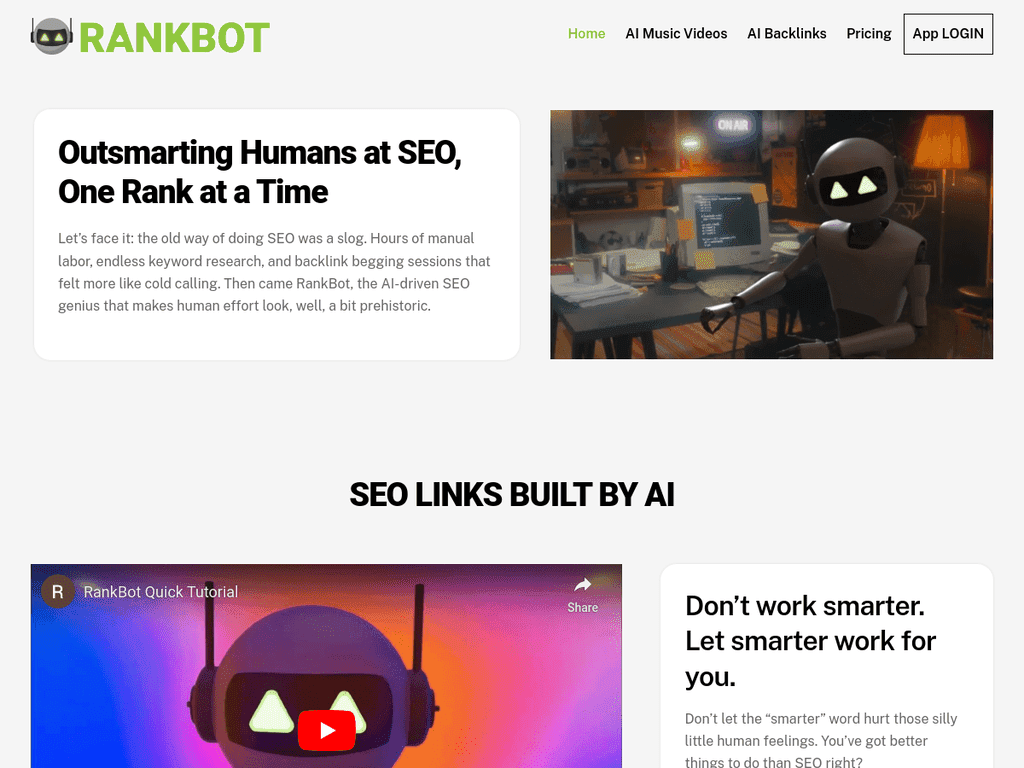
That’s why I took a closer look at RankBot. The pitch is simple: automate more of the routine stuff and keep your site moving in the right direction without constantly babysitting dashboards. If you’re a small business owner, a solo marketer, or even an agency juggling multiple clients, that’s a pretty attractive promise.
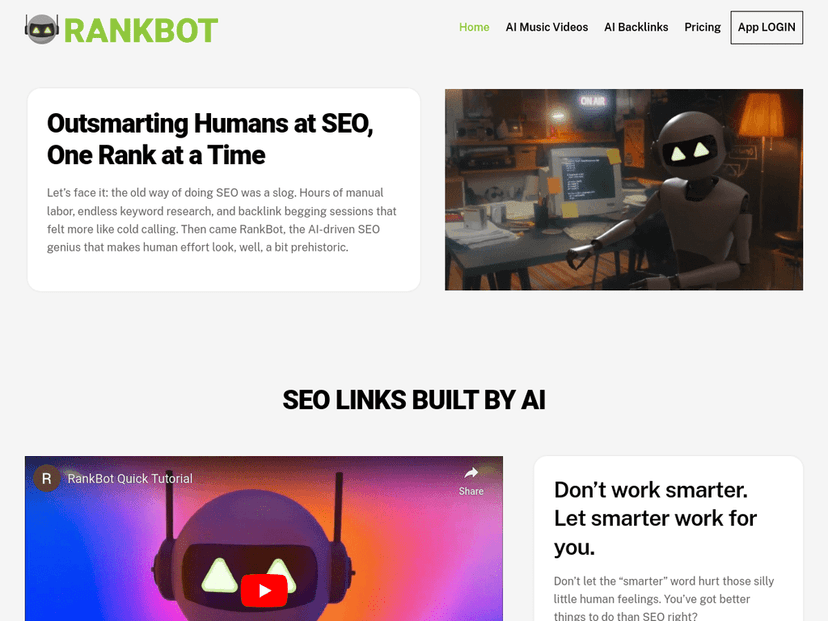
What I liked right away is the “set it up and keep going” vibe. RankBot focuses on ongoing optimization and reporting, so you’re not stuck doing one-off tasks and then forgetting about them. Instead of treating SEO like a one-time project, it’s more like a system that keeps checking your site and nudging performance over time.
Another thing I noticed is how the tool frames results. SEO reports can get overwhelming—tons of charts, confusing metrics, and not enough plain-English context. RankBot aims to translate that into something you can actually use when you’re updating a team or deciding what to work on next. Is it perfect? No tool is. But if you’ve ever stared at a report thinking “okay… so what do I do now?”, you’ll probably appreciate the simpler approach.
RankBot Review
Here’s the honest version: I don’t expect any SEO tool to magically rank my site overnight. What I do look for is whether it reduces the boring work and helps me stay consistent. RankBot seems built for that—continuous optimization, automated checks, and reporting that doesn’t require an SEO degree to interpret.
If you’re trying to grow organic traffic, consistency matters more than most people want to admit. You can publish great content, but if you’re not monitoring performance and adjusting, you’ll eventually hit a wall. RankBot’s approach is basically “keep the momentum going” by handling recurring tasks in the background. That’s especially useful if you’re managing SEO alongside other responsibilities like content writing, client work, or product updates.
One practical example: I’ve used tools before where the “report” is just a list of numbers. It’s not actionable. With RankBot, the goal is to make the metrics easier to digest so you can spot what’s improving (and what needs attention) without spending an hour translating data. Even if you don’t love every metric, at least you’re not stuck guessing what to do next.
Still, I’d keep expectations grounded. Automated SEO can help you stay on track, but it won’t replace strategy—things like picking topics with real search demand, writing content that matches intent, and building links that are actually relevant. Automation is the engine. Strategy is the driver.
Key Features
- Customized Plans for specific site needs
- Ongoing optimization instead of one-time fixes
- Simple reporting for keyword performance
- Task automation for routine SEO work
What those features look like in real use
When I evaluate an SEO tool, I ask: “Will this save me time next week?” RankBot’s feature set is aimed at repeat tasks—monitoring, optimization cycles, and reporting. That means you’re less likely to forget important checks or fall behind because life got busy.
Also, if you work with a team, reporting matters. It’s one thing to track rankings for yourself. It’s another to explain progress to someone who doesn’t live in SEO tools. RankBot’s simpler reporting approach is designed to make that communication easier.
Pros and Cons
Pros
- Saves time by reducing manual SEO tasks you’d otherwise repeat every week.
- More tailored than generic setups, since the tool focuses on your site’s needs instead of a one-size-fits-all checklist.
- Ongoing optimization (not just “do this once and move on”). That consistency is a big deal.
- Reporting feels easier to use, especially if you want something you can share without drowning in jargon.
Cons
- May not match agency-level depth for highly competitive niches where you need advanced technical audits and hands-on link strategy.
- AI can miss nuance—for example, edge cases in content intent, brand voice, or local SEO quirks that a human would catch.
- Over-reliance is real. If you stop doing strategy work and just “let the tool handle it,” you’ll eventually hit diminishing returns.
Pricing Plans
RankBot’s exact pricing isn’t clearly listed here, so I can’t give you a precise number without guessing. What I can say is that the tool is positioned as a more affordable alternative to traditional SEO agency retainers. The original claim suggests it could be around 30% of the cost of agency work.
My advice? Check the official RankBot site for current plans and any trial/demo options. Pricing can change, and the only way to know if it fits your budget is to compare what’s included (like reporting frequency, optimization scope, and any limits on projects or keywords).
Wrap up
RankBot feels like the kind of SEO tool I’d recommend if you want less manual busywork and more consistent optimization. It’s not going to replace smart content planning or high-quality link building, but it can help you stay disciplined—especially if you’re juggling SEO with other priorities.
If you’re curious, I’d try it with a clear goal in mind (more tracked keywords, better reporting for your team, or just reducing weekly SEO tasks). Then you’ll know pretty quickly whether it’s actually useful for your site, not just a nice idea on paper.
Promote RankBot