Table of Contents
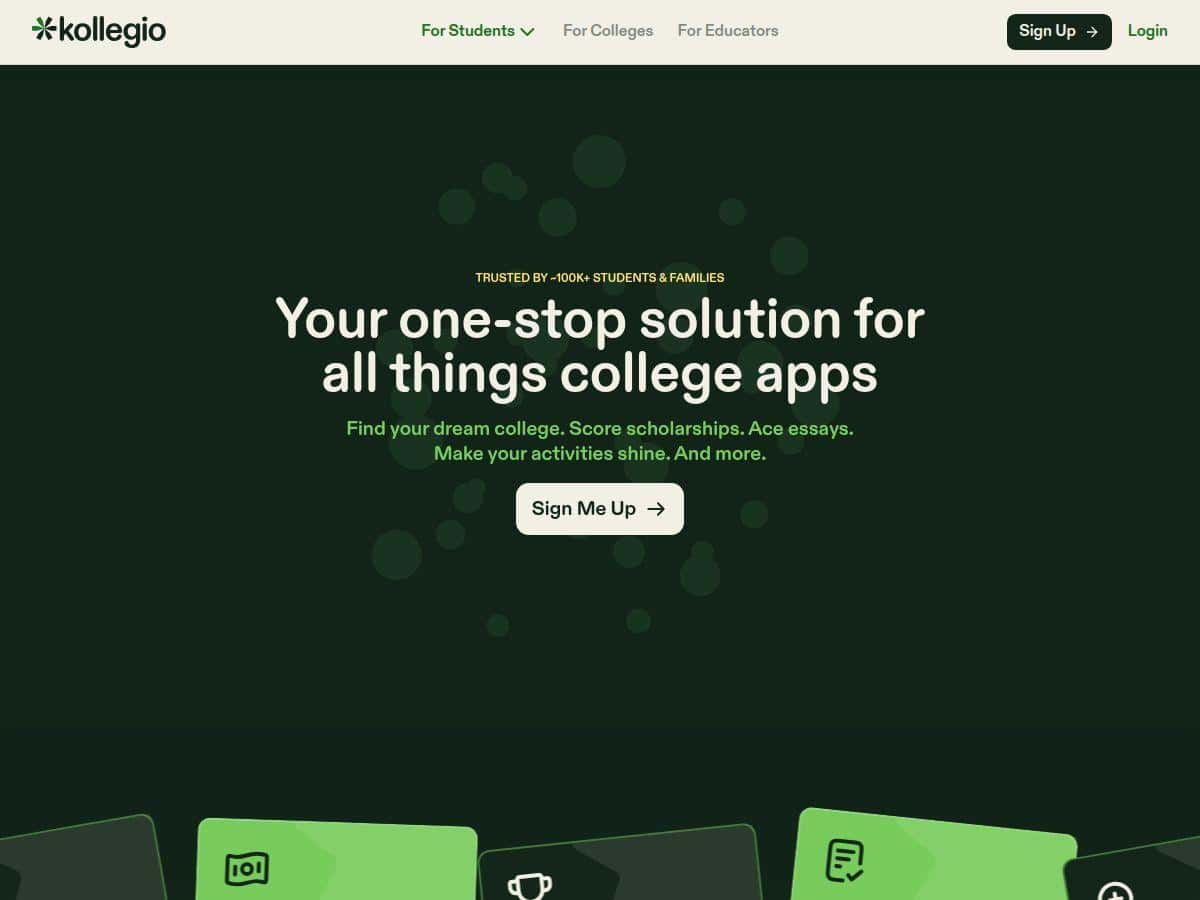
If you’ve ever stared at a college application portal at 1 a.m. thinking, “Wait… what am I supposed to do next?” you’ll probably get why I tried Kollegio AI in the first place. I wanted to see if it’s actually useful for students—or if it’s just another “AI will help you” pitch.
In my experience, Kollegio AI is one of the cleaner, easier-to-use college assistant tools I’ve tested. The interface feels straightforward, and the recommendations + essay help are fast enough that you don’t lose momentum. That said, it’s not magic, and the quality depends a lot on how specific your inputs are. When I gave it vague details, the output was vague. When I gave it concrete info, it got noticeably better.

Kollegio AI Review (2026): What I Actually Saw After Testing It
I tested Kollegio AI during the kind of busy window most students hit—when deadlines start stacking and you’re juggling essays, activities, and forms. I used it on a laptop in a normal browser session (no special setup), and I spent about 45–60 minutes total running through the main workflows: profile → recommendations → essay feedback → timeline.
What I entered (so you know what “personalized” means here)
I kept my test inputs realistic but simple so it wasn’t doing anything “magical” with my info. I gave it:
- Intended major interest (I used computer science + education as a combo interest)
- Grade range (roughly top-middle rather than “perfect”)
- Extracurriculars (I listed a couple: coding club + volunteering/tutoring)
- A short “goal” statement (what I wanted to study and why)
What the recommendations looked like
After the profile step, Kollegio AI generated a shortlist of colleges with “why this fits” style notes. The schools weren’t just random names—it tried to connect interests to programs and campus offerings. One of the first things I noticed: when I wrote my activities in plain language (what I actually did, not buzzwords), the suggestions got more specific.
When I intentionally tested a weaker input (I gave it a very broad “I like tech”), the output leaned generic and the “why” statements sounded like template explanations. So yeah—garbage-in, garbage-out still applies.
Essay feedback: where it helped (and where it didn’t)
The essay feedback tool is the part I paid the most attention to, because “step-by-step” can mean anything. I used a common prompt-style setup: I pasted a rough personal statement paragraph (the kind of draft that’s mostly ideas, not polished prose) and asked for feedback.
What I liked:
- It flagged areas that felt too broad and suggested making the moment more concrete (specific scene, clearer stakes)
- It pushed for stronger transitions between thoughts
- It recommended tightening sentences that read like summary instead of reflection
What I didn’t love:
- If your draft is too short or missing context, the suggestions can become “add more detail” without telling you exactly what detail to add
- It sometimes over-corrects tone—like making a voice sound more formal than I intended
Timeline management: practical, not just motivational
For deadlines, Kollegio AI helped me turn the chaos into a checklist. Instead of vague reminders, it organized tasks by stage (things like essay work and application steps) and surfaced deadlines in a way that felt easy to scan.
One thing I specifically tested: I asked it what I should do next during a “late” phase. It responded with a prioritized set of tasks—what to focus on first vs. what could wait. That’s the kind of guidance that actually reduces stress.
Bottom line from my test
Kollegio AI is a solid assistant for organizing your application and giving you feedback you can iterate on. It’s not a replacement for a real counselor or teacher. But if you’re looking for a free tool that helps you move faster and think more clearly, it earns its place.
Key Features (With Real Examples From My Test)
- Personalized college recommendations
- Instead of only listing schools, Kollegio AI tries to connect your interests and activities to potential fit. In my run, when I provided a clear interest (computer science + education) and specific activities (coding club + tutoring), the “why” notes were more relevant. When I kept details vague, the recommendations became less helpful.
- Step-by-step essay feedback
- I tested it by pasting a draft paragraph and asking for improvements. The tool suggested changes in a way that didn’t feel like it was just praising me. It pointed out what was unclear, recommended adding specificity, and suggested a tighter structure.
- Example of what it pushed for: moving from “I’m passionate about tech” to a more vivid “here’s the moment I realized it mattered” style explanation. That’s the difference between an essay that sounds generic and one that sounds like you.
- Scholarship finder matching
- I didn’t spend hours on scholarships, but I did check how the tool approached matching. It uses student info to narrow options. In practice, it works best when your profile includes concrete details (interests, background factors, goals). If you only provide broad statements, the matches won’t feel very targeted.
- Extracurricular activity guidance
- This part is useful if you’re stuck on how to describe your activities. I noticed the tool pushes you to focus on impact and what you learned—not just what you joined. That’s a real differentiator for applications.
- Application timeline management
- I specifically tested the “what should I do next” scenario. Kollegio AI organized tasks in a sequence that made sense for a student trying to catch up. It felt more like a guided checklist than a motivational quote.
- Practical tip: if the timeline feels overwhelming, ask it to prioritize the next 7 days. Don’t try to do everything at once.
- 24/7 AI support
- Even when I had quick questions—like how to improve clarity in a sentence or what to focus on first—it answered quickly. The speed matters when you’re on a deadline.
- Interview prep + college comparison
- It can help you think through common interview angles and compare schools based on your stated priorities. I found it most helpful for brainstorming questions to ask and for organizing what I cared about (program fit, campus culture, learning style).
- AI co-pilot for recommendation letters (counselor use)
- This is aimed more at counselors than students, but the concept matters. It can help generate structured drafts or outline points so the counselor isn’t starting from scratch. Still, the final letter should reflect the student—so treat any AI output as a starting point, not the finished product.
Pros and Cons (What I Liked vs. Where It Struggled)
Pros
- Free access: In my testing, there weren’t paywalls blocking the main features I tried.
- Easy to use: The flow is simple. You don’t have to hunt through tabs to figure out what to do next.
- Good for iteration: Essay feedback is the kind you can revise and re-run, which helps when you’re stuck.
- Timeline reduces panic: Having a “next steps” view was genuinely helpful during busy moments.
- Works globally in the sense that it’s accessible online, which matters if you don’t have local counseling support.
Cons
- Quality depends on your inputs: If you give generic info, you’ll get generic recommendations and feedback.
- It can miss nuance: For highly complex situations (special circumstances, unusual academic paths, tricky context), a human counselor still has the edge.
- Internet required: It’s a web tool, so you’ll need a stable connection to use it smoothly.
Pricing Plans
Kollegio AI is completely free. No premium tiers showed up in my testing, and I didn’t hit “upgrade to continue” prompts while working through the main features.
Wrap up
So… is Kollegio AI actually worth it for college applications? If you want something free that helps you organize your timeline, brainstorm essay ideas, and get feedback you can revise quickly, I think it’s a worthwhile tool. Just don’t expect it to replace human guidance when it matters most.
If you try it, my best advice is simple: be specific in your profile, paste your real draft (even if it’s messy), and ask for concrete next steps. That’s when Kollegio AI feels less like “AI help” and more like a practical study partner you can use right now.