
Table of Contents
So you’re looking for a Book Bolt alternative. Totally fair. When you’re trying to publish on Amazon KDP, you don’t just want “a tool.” You want something that actually helps you finish the job—cover, interior, formatting, and the boring-but-important stuff like keywords—without turning your evenings into a never-ending tutorial marathon.
In my experience, Book Bolt is great for a lot of people, but it’s not automatically the best fit for every workflow or budget. Sometimes you need more control. Sometimes you want something simpler. And sometimes you just want a tool that doesn’t make you feel like you need a design degree.
Below are alternatives I’d seriously consider depending on what you’re trying to do: AI-assisted writing, ebook/PDF formatting, keyword research, and interior design templates. I’ll also call out the trade-offs, because no tool is perfect, right?
Book Bolt Alternative

Yep—this is the part where we stop talking in hypotheticals and actually look at options that can replace Book Bolt depending on what you’re trying to build.
Because one author might want AI to generate an outline fast. Another might just need keyword research and category guidance. And if you’re building low-content books, interior templates matter a lot more than “cool features.”
So let’s break it down by what the tool is really good at.
Top AI Powered Alternatives
Let me be honest: AI can save you hours. But it can also produce content that sounds generic if you don’t steer it. That’s why I like tools that give you structure—outlines, chapter breakdowns, and export options—so you’re not staring at a blank page wondering what to do next.
Here are three AI-first alternatives that focus on turning ideas into something you can actually polish and publish.
1. AI Automateed
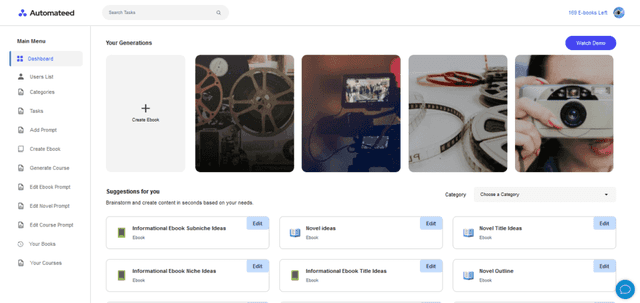
AI Automateed is one of those tools that feels built for people who want momentum. If you’ve ever opened a blank document and immediately felt stuck, you’ll probably get why I’m recommending it.
It’s positioned around generating books (fiction and nonfiction) from your input—so you’re not writing from scratch every time you start a new project.
Features
What stood out to me is the “one-click” approach. You give it a title, define your target audience, and pick a tone/style. Then it generates a full outline—commonly 15 chapters with subchapters (in the range of 3 each).
In practice, that matters because you’re not trying to invent a structure and the content at the same time. You can start editing the outline first, then move into writing. That’s usually where quality improves—when you guide the direction early.
After the outline, the tool can generate a full manuscript (it mentions something like ~90 pages) including a table of contents, chapters, images, and even a cover. That’s a lot bundled into one place.
I also liked the image workflow. You can describe what you want, and it creates images. Then you can go back and edit elements on the cover—like your name, book title, date, and whatever text you want on the design.
One thing to keep in mind: “ready to publish under your name” is great, but you still want to review everything. I’d personally skim for consistency (tone, terminology, and any sections that feel too “template-like”).
If you’re stuck on what to write, the idea generation feature can help with niche and title ideas. It can also suggest marketing angles for social media—useful if you’re trying to plan launch content while the book is still being finalized.
Good news: there’s a free trial. And for paid users, it mentions access to a rich database of course content and videos without extra cost—something that can actually justify the subscription if you’re learning as you publish.
Pros
- Simplifies the book creation process: You go from idea to a full draft without jumping through the usual hoops.
- Fully automated: Outline, chapters, and even cover/image generation are handled in one workflow.
- Versatile: Works for both fiction and nonfiction, so you’re not locked into one type of project.
- Customizable: You can steer output using tone/style and audience inputs.
- Complete package: Includes images and cover elements, not just text.
Cons
- May need your “voice” added: Efficient, but you’ll likely want to edit to make it feel like you.
- Learning curve: Getting the best results takes a little experimenting with prompts and settings.
- Output depends on input: If your audience/tone guidance is vague, the book will be vague too.
What I noticed most is how quickly it turns a messy idea into a coherent outline. That alone can be the difference between “I’ll write later” and “I’m actually publishing.”
It breaks the process into manageable steps: generate structure, then personalize. You still do the last-mile editing, but it doesn’t feel like you’re starting from zero.
Is it perfect? No. But for authors who want speed without completely sacrificing control, AI Automateed is a strong pick.
2. Designrr
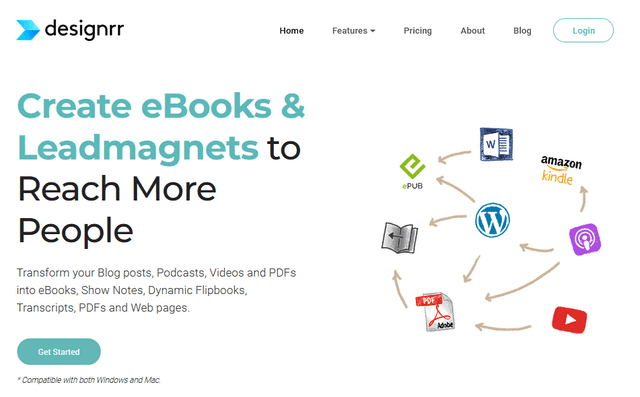
If you’ve got content already—blog posts, a Word doc, maybe even a podcast transcript—you might not need AI writing at all. You might need formatting and layout that doesn’t look like it came from the year 2007.
That’s where Designrr fits. It’s built around turning existing content into ebooks and PDFs without forcing you to learn a complicated design tool.
Features
Designrr’s import options are a big deal. You can bring content in from a blog, Word documents, PDFs, or even directly from a webpage. That means less copy/paste pain.
Then you pick a template—lead magnet, ebook, product guide, etc. The templates aren’t just placeholders either. They’re designed layouts you can customize.
The drag-and-drop editor is the part most people will care about if they’re not designers. In my experience, the interface is intuitive enough that you can build something decent in one sitting.
It also generates an automatic table of contents. If you’ve ever had to manually format TOCs, you already know why that’s a win.
One feature I think is underrated: audio/video transcription. If you’ve got podcast episodes or video scripts, being able to convert them into text and then format them into an ebook gives you a real content repurposing path.
Pros
- Simplifies ebook creation: Turning content into a polished ebook/PDF is straightforward.
- Diverse import options: Pull from blogs, Word, PDFs, and webpages.
- Wide range of templates: You can match different content types without starting from scratch.
- User-friendly editor: Drag-and-drop makes customization quick.
- Audio/video transcription: Great for repurposing existing content.
Cons
- Learning curve: Even if it’s easy, there are enough features that you’ll want to spend a little time exploring.
- Subscription required: Full functionality isn’t free.
- Can feel like too many options: Templates and settings can be overwhelming at first.
I used Designrr to turn a set of blog posts into a lead magnet ebook. I was honestly expecting it to be fiddly—like I’d spend hours adjusting fonts and spacing.
Instead, the workflow was pretty smooth: import, choose a template, tweak to match my branding. It saved time and kept me from getting stuck in “formatting purgatory.”
If you want ebook/PDF output without wrestling with complex design software, Designrr is one of the better alternatives.
3. Ebookmaker.ai

Ebookmaker.ai is for the times when you’ve got an idea, but the steps between “idea” and “ebook that looks right on every device” feel exhausting.
It leans into AI to help with content generation and then uses automation for design/formatting so you’re not stuck doing tedious layout work.
Features
The headline feature is AI-driven content creation. Instead of you manually assembling everything, you can input a topic and get a structured outline and/or full sections you can polish.
Then it moves into design automation. It provides templates and AI recommendations for layout and design, so the ebook starts looking more “finished” without you tweaking every little detail.
Formatting and conversion tools are where this kind of product earns its keep. If you’ve ever tried to manually format an ebook so it looks good on phones, tablets, and ebook readers, you know the pain.
Ebookmaker.ai aims to automatically format for multiple platforms (including Amazon and Apple Books). That’s useful if you don’t want to rework the file multiple times.
It also supports integrating content from blogs/websites/documents, which makes it easier to repurpose what you already have instead of rewriting from scratch.
Pros
- Saves time with AI drafting: Great for getting a solid starting point fast.
- Simplifies design and layout: Less fiddling, more “looks professional” out of the box.
- Automates formatting: Helps reduce device/reader formatting headaches.
- Easy content integration: Import from multiple sources and keep moving.
- User-friendly: Even with advanced features, it’s not overly complicated to navigate.
Cons
- AI limitations: You’ll still need to add your voice and check for accuracy.
- Advanced features take time: You may need a bit of trial-and-error to get the best results.
- Subscription model: Premium features can cost extra over time.
I tested Ebookmaker.ai on a project I’d been avoiding because formatting/design was the part I dreaded. The AI-generated content gave me a foundation quickly, and the automated design suggestions made it look better than I expected.
It felt less like “build an ebook from scratch” and more like “guide the process and refine.” That’s exactly what I want from a tool like this.
Just remember: AI drafts are a starting point. If you want your ebook to sound like a real human wrote it, plan to edit.
Top Alternatives for Keyword Research and Analytics
Now for the part that actually affects sales: keywords. If your book is hard to find, none of the writing matters as much as you’d like.
In my opinion, keyword tools fall into two categories: (1) tools that help you find keywords and (2) tools that help you understand competition and category fit. Ideally, you want both.
Here are four options that cover those needs—mostly with Amazon in mind.
1. Publisher Rocket
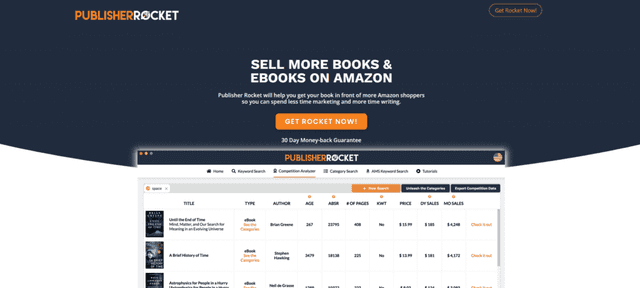
Publisher Rocket is built for authors who want fewer guesses and more “here’s what people are searching and what it’ll take to rank.”
If you’ve ever stared at Amazon categories thinking, “How do I even know which one is right?” then you’ll probably like what it does.
Features
Publisher Rocket helps you find keywords that real Amazon shoppers are searching for. You enter a seed word, and it returns related terms along with search volume and competition level.
It also shows competition details—other books ranking for your keywords, plus sales-related info and even estimates about earnings. That last part is useful because it helps you understand whether a keyword is worth chasing or just looks good on paper.
Category selection is another big feature. It suggests categories and subcategories and helps you estimate how many sales you’d need to hit top ranking (like #1) based on the market it’s showing you.
If you’re running Amazon ads, the AMS keyword feature is handy too. It helps generate keyword lists for ad targeting, which can improve visibility faster than “hoping your organic ranking kicks in.”
Pros
- Find keywords easily: Less guessing about what readers search for.
- Spy on the competition: See what’s already working in your niche.
- Pick the right category: Better category decisions based on rank/sales estimates.
- Boost your ads: Keyword lists for Amazon advertising.
- One-time payment: Pay once and keep using it (no subscription treadmill).
Cons
- Bit of a learning curve: There are features to learn, especially if you’re new to keyword tools.
- Upfront cost: The initial payment can be a barrier for some.
- Amazon-first: Best if your focus is mainly Amazon versus other platforms.
I tried Publisher Rocket when I was preparing to launch a new novel. The keyword and competition analysis was the part that really changed my approach. Instead of throwing keywords at the wall, I could compare options and make a more informed pick.
It’s not “instant magic,” but it does give you data that makes decisions easier. For serious Amazon authors, it’s one of the better investments.
2. KDSPY
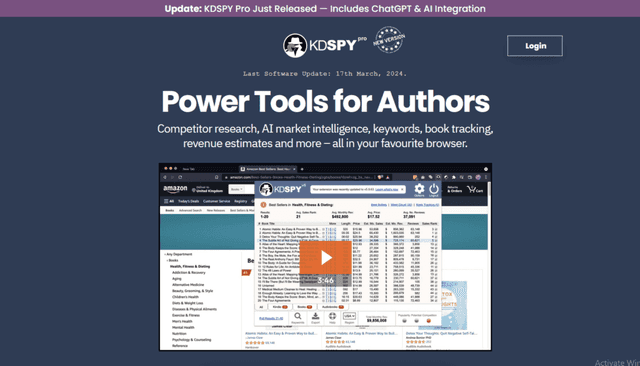
KDSPY is basically a “show me what’s happening on Amazon” tool. If you’ve felt lost trying to understand keywords, competition, or what categories you should target, KDSPY can make it feel a lot more obvious.
Features
For keywords, it provides a research view so you can see what people are searching for on Amazon instead of guessing. It then layers in competition analysis.
What I like about the competition side is that it doesn’t just show you a list of titles—it gives you signals like sales estimates, estimated earnings, and review counts. That helps you understand what kind of books you’re up against.
It also supports category discovery. You can find categories where your book might have a better shot, and it helps estimate how many books you may need to outsell to reach a top spot.
Pros
- Super intuitive: It’s easy to use even if you’re not a data person.
- Saves tons of time: Faster keyword and market understanding.
- Helps with strategy: More clarity on where your book has the best chance.
- Direct Amazon data: Feels like legit insider info (without being sketchy).
- One-time payment: No subscription required, which is a nice change.
Cons
- Amazon-only focus: Great for Kindle authors; less useful if you publish broadly elsewhere.
- Can be addictive: It’s easy to spend hours digging into research.
- Chrome required: It’s a Chrome extension, so you’ll need that browser.
I used KDSPY when launching a cookbook. Being able to pinpoint keywords with real signals helped a lot. I wasn’t just hoping my categories and keywords matched what readers want—I had data to back it up.
If you want clarity and speed for Amazon keyword research, KDSPY is worth looking at. Just be ready to fall into the rabbit hole a little.
3. KeywordTool.io
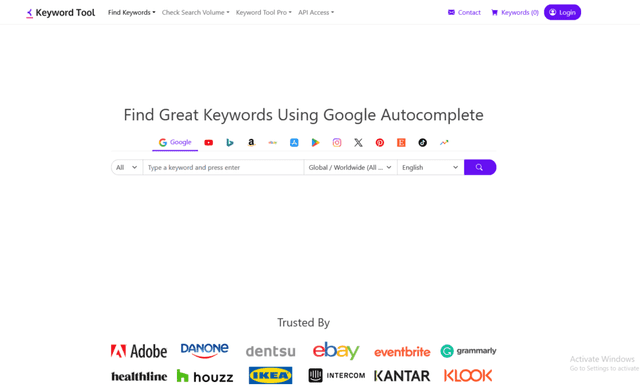
KeywordTool.io is great when you want keyword ideas beyond a single platform. If KDSPY feels like it’s laser-focused on Amazon, KeywordTool.io feels more like a Swiss Army knife for keyword research across the web.
I’ve used it for content planning around book topics, not just for Amazon listing keyword hunting.
Features
At its core, KeywordTool.io generates a lot of keyword ideas from a seed keyword. You’ll get related variations, questions, and more—pulled from search behavior across platforms like Google, Bing, YouTube, and yes, Amazon too.
One standout is the Google Autocomplete-based approach. It uses autocomplete data to surface commonly searched terms, which is often exactly what you want when you’re trying to match real reader intent.
It also offers competitor keyword analysis. If you enter a competitor’s URL, it can show keywords they rank for—useful if you want to reverse-engineer what’s working.
Pros
- Versatile: Research keywords across multiple platforms, not just Amazon.
- Easy to use: The interface is simple enough that you won’t get stuck.
- Comprehensive suggestions: Includes questions, variations, and prepositions.
- Free tier available: You can start without paying immediately.
- Great for content ideas: Works well for blogs and video topics too.
Cons
- Premium features locked: For the best data, you’ll likely need the paid version.
- Can overwhelm you: The number of keyword suggestions is… a lot. You’ll need to filter.
- Digital-content leaning: It’s geared more toward online creators, so Amazon-specific strategy may require extra work.
I spun up KeywordTool.io while brainstorming blog posts tied to my book series. Seeing the questions people ask around my topic gave me a clearer angle for both the book description and the blog content.
If you want broad keyword discovery (and not just Amazon-only metrics), KeywordTool.io is a solid option—even if you start with the free tier.
4. Amazon Suggestion Expander
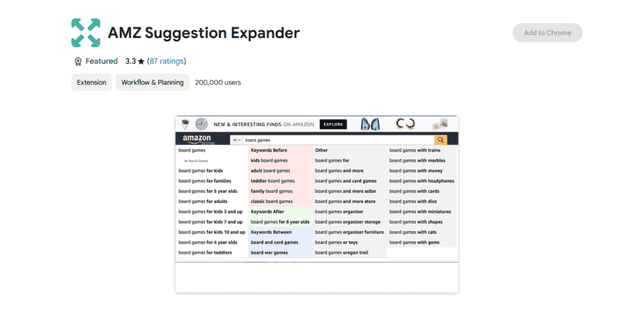
Have you ever started typing a keyword in Amazon and thought, “There’s no way those few suggestions are everything people search”?
That’s exactly what Amazon Suggestion Expander is for. It expands the autocomplete suggestions so you get more keyword ideas right in the search bar—no complicated dashboards.
Features
It hooks into Amazon’s search bar. Type a keyword related to your book, and it expands the auto-suggest list into more search term variations.
What I like is that it’s simple. There’s no setup beyond installing the extension, and there’s basically no learning curve. You’re just searching and collecting ideas as you go.
More suggestions means more angles—sometimes you’ll find keyword phrases you wouldn’t have considered otherwise, which can help you refine your title/subtitle, description, and backend keywords.
Pros
- Straightforward to use: It’s basically “search on Amazon” plus extra suggestions.
- Expands keyword possibilities: Helps you see variations you might miss.
- Free: More keyword ideas at no extra cost.
- Great for brainstorming: Useful when you’re building your keyword list from scratch.
- Directly integrated into Amazon: You don’t have to bounce between tools.
Cons
- Limited to Amazon search: It won’t help beyond Amazon’s search bar.
- Basic tool: If you want deep analytics or sales estimates, this isn’t that.
- Browser-specific: You’ll need Chrome (at least based on how it’s distributed/used).
I found Amazon Suggestion Expander while trying to tighten up keyword choices for a fantasy novel. It was surprisingly helpful because it gave me a wider lens on what readers might actually type—not just what I assumed they’d search.
It’s not a full analytics platform. But for free and simple keyword discovery, it’s a handy add-on.
Top Alternatives for Design and Template
Let’s talk design—because a book can be the best story in the world and still lose clicks if the cover looks off or the interior feels messy.
These tools are more about templates, layout, and assets. If you’re not trying to become a full-time graphic designer, you’ll probably like this section.
1. Canva

Canva is one of those tools that’s everywhere for a reason. It’s not trying to be “for designers only.” It’s for normal people who want their work to look clean.
I use it for covers and quick marketing graphics all the time. If you’re not confident with design software, it helps you get to a professional-looking result faster than you’d expect.
Features
Templates are the first thing you notice. There are tons of options for social posts, presentations, and yes—book cover designs.
They’re not just empty layouts either. You can customize fonts, colors, text placement, and images without needing advanced skills. The drag-and-drop editor is genuinely easy to learn.
Canva’s asset library is another big win. You get access to a large collection of images, graphics, and icons, and the quality is usually solid enough that you don’t feel like you’re using “random internet stock.”
Collaboration is useful too. If you’re working with a cover designer or a marketing partner, it’s easy to share a link, leave feedback, and iterate.
And if you want to go deeper, you can upload your own assets, tweak filters, and use more advanced tools. It’s flexible—beginner-friendly, but not stupid.
Pros
- Easy to use: You can get productive quickly even if you’re not techy.
- Huge template library: Covers social media posts, presentations, and book cover formats.
- Free to start: You can do plenty on the free plan.
- Collaboration-friendly: Great for teams and feedback loops.
- Looks professional: Exports often come out crisp enough for real use.
Cons
- Pro features locked: Some of the best assets/tools require Canva Pro.
- Too many options: If you don’t know what you’re looking for, it can be overwhelming.
- Advanced users may want more: Canva is great, but it’s not a replacement for pro design software.
I’ve used Canva for everything from quick blog graphics to the cover for my first self-published ebook. The best part wasn’t just “making something.” It was how fast I could iterate until it looked right.
If you need a practical design tool for self-publishing (without turning it into a full-time job), Canva is hard to beat.
2. Book Bird
Book Bird is one of those tools that makes sense if you’re building low-content books—journals, planners, coloring books, that whole world.
If you’ve ever tried to design interiors from scratch for something like a workbook, you know how quickly it turns into a time sink. Book Bird focuses on KDP interiors and templates so you can move faster.
Features
The main strength is KDP interior templates. They’re customizable, and they’re targeted toward niches that are known to sell. That reduces guesswork—something I really appreciate when you’re trying to publish consistently.
It also includes tools beyond design, like niche research and royalty calculations. That’s useful if you’re trying to estimate whether a book idea is actually worth your time.
Another thing I like: it stays updated. When you’re in publishing, “outdated templates” can be a real problem. Book Bird keeps adding new designs and tools based on what’s working.
Pros
- Niche-focused templates: More “proven” starting points, less random experimenting.
- Easy to use: Quick to pick up, even if you’re new to KDP interiors.
- One-time payment: Access everything with a single purchase (no recurring fee in the pitch).
- More than templates: Includes market research and profit/royalty calculations.
- Regular updates: New templates/tools help you stay current.
Cons
- Limited to KDP formats: Great for Amazon, but less helpful if you’re going wide immediately.
- Lots of options: It can feel like too much if you’re totally new.
- Niche-specific: If you don’t do low-content books, some features won’t matter much.
I came across Book Bird when I was considering a planner series. The idea of designing everything from scratch felt brutal. With Book Bird, it felt more like a shortcut to a usable interior.
The templates were on point, and the extra tools gave me insights I didn’t know I needed—especially around planning and profit expectations.
So yeah, it’s not a one-size-fits-all tool. But for KDP low-content, it’s a strong alternative to Book Bolt.
3. Creative Fabrica
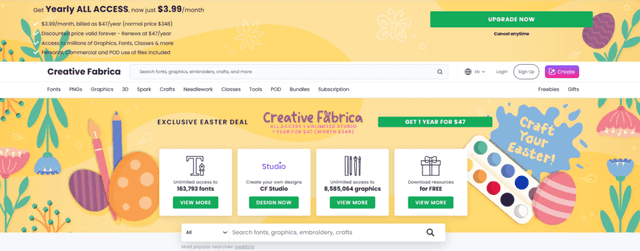
Creative Fabrica is more of a “resource marketplace” than a single-purpose book tool. But honestly? That’s a big deal when you’re publishing and you need assets fast.
When I’m building children’s books or covers that need a specific vibe—fonts, illustrations, themed graphics—Creative Fabrica often has what I’m looking for.
Features
The big thing here is the massive library of digital assets: graphics, fonts, templates, and more. You can find styles for almost any theme, and it’s easy to keep your projects moving when you don’t want to hunt across 10 different sites.
They also offer subscription options for Fonts & Graphics, which can be worth it if you’re creating regularly and need access to lots of high-quality files without paying individually.
There’s also Craft Club, which gives you tutorials and community resources. That’s helpful if you want to learn better workflows, not just download files.
For POD and commercial use, they mention POD subscription options with commercial licenses. That matters because licensing is one of those things people ignore until they get burned.
Finally, their Tools section includes things like a Webfont Generator and Shape Cloud, which can help you create/adjust assets without jumping into complicated software.
Pros
- Huge variety of assets: Fonts, graphics, SVGs, templates—lots of options in one place.
- Flexible subscriptions: You can pick subscriptions based on what you need (fonts vs POD assets, etc.).
- Community + tutorials: More than downloads—you get guidance.
- Commercial licenses: Helps you sell your designs with more confidence.
- Frequent updates: New assets keep showing up, so you’re not stuck with the same library forever.
Cons
- Subscriptions can add up: If you need multiple memberships, costs can creep.
- Overwhelming choices: The amount of content can be intimidating if you don’t know what you want.
- Learning curve: It takes time to figure out what to use and how to use it well.
I used Creative Fabrica while exploring assets for a children’s book series. I needed playful fonts and specific graphic styles, and it delivered.
More than that, I found resources that made the final product feel more polished than my initial drafts. It’s one of those places where you can get “unstuck” quickly.
If you’re a self-publisher who wants better assets without building everything from scratch, Creative Fabrica is absolutely worth a look—just keep an eye on subscription costs.
Conclusion
Finding a Book Bolt alternative really comes down to what part of publishing you’re trying to fix. Do you need faster drafting? Better formatting? Keyword research that stops you from guessing? Or templates and assets so your interiors and covers don’t look slapped together?
In my view, the best tool is the one that matches your workflow. Canva is great when you want quick, clean design without a steep learning curve. Publisher Rocket and KDSPY are solid if you want Amazon keyword + competition clarity. And for content creation and ebook building, AI Automateed, Designrr, and Ebookmaker.ai can help you move from idea to publishable files faster—just remember to review and edit so it sounds like you.
Pick the tool that removes the bottleneck you’re currently stuck on. That’s the real shortcut.