
Table of Contents
Picking one of the best online writing courses can honestly feel like a lot at first. There are so many platforms, so many course titles, and everyone seems to promise the same thing: “learn to write better.” But when you choose the right one, it’s a huge boost—especially if you’re trying to build momentum.
In my experience, the best courses have three things in common: solid teaching, real practice (not just watching videos), and some kind of structure that keeps you moving. The nice part? Most of these are flexible enough that you can work them into a busy week without quitting your life to do it.
Below, I’m sharing eight courses I’d actually recommend. I paid attention to course quality, instructor credibility, what students say in reviews, and whether the format helps you write consistently. You’ll notice I’m not pretending every class is perfect—because none of them are. Still, each one has a strong reason to be on this list.
Best Online Writing Courses (My Shortlist)
If you’re trying to start writing—or you’ve been writing for a while and want to level up—these are some of the most practical options I’ve seen. The “best” choice depends on what you need most: inspiration, structure, feedback, or a specific genre focus.
I looked at content quality, instructor experience, and how the course actually feels to use. The goal here isn’t to overwhelm you with 50 choices. It’s to help you pick one you’ll stick with.
1. MasterClass: Writing

MasterClass is one of those platforms that feels “premium” the moment you start. The lessons are taught by famous authors and screenwriters, and that matters. When you hear Dan Brown or Margaret Atwood break down craft, you don’t just get tips—you get perspective.
For me, MasterClass works best when you want to learn from the best and you don’t necessarily need someone to grade your work. It’s more about craft, voice, and storytelling thinking than it is about personalized critique.
MasterClass covers fiction, non-fiction, screenwriting, and poetry, so you can pick the lane you’re in right now (or explore a couple lanes before committing).
Features
What I like most is the production quality and the way each course is built like a guided experience. You’ll usually get video lessons plus workbooks and prompts. There are interactive assignments too, and they’re actually useful—at least, they were for me—because they push you to write something instead of just taking notes.
Courses also tend to include “how they work” type content—process, routines, and what the instructor struggled with. That’s the kind of stuff that helps you stop thinking writing is magic and start treating it like a skill you can practice.
Pros:
- Exceptional Instructors: You’re learning from world-famous authors and writers who’ve built real careers.
- Comprehensive Content: The lessons range from fundamentals to genre-specific craft.
- Flexibility: You can watch when you want—no live schedule required.
Cons:
- Cost: The membership adds up if you only want one class.
- Lack of Personal Feedback: You won’t get assignment-by-assignment critique, so you’ll need to self-edit or find peer groups elsewhere.
Honestly, the depth surprised me. I went in expecting “inspiring videos,” but I got a lot more craft detail than I thought I would.
Margaret Atwood’s creative writing lessons, for example, aren’t just “here’s how to write.” They dig into storytelling choices and how meaning gets built on the page. I found myself pausing to re-read parts because the ideas were that practical.
And yes, the no-personal-feedback thing is real. I didn’t love it either. I want to know whether my draft is improving in the right direction. Still, the community forums can help if you’re willing to share and learn from other students.
If you want beautifully taught writing courses with strong craft lessons and you’re okay doing feedback work yourself, MasterClass is a solid buy.
2. Gotham Writers Workshop
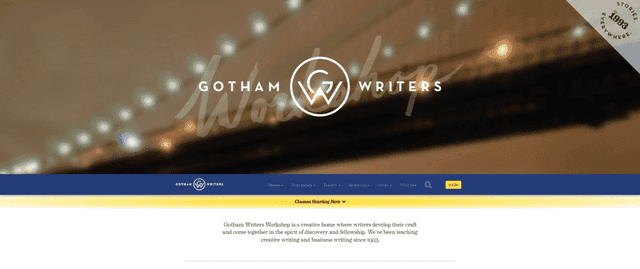
Gotham Writers Workshop is based in New York City, but its online courses bring the workshop vibe to wherever you are. That “workshop” part matters, because it usually means you’re writing real pieces and getting feedback—not just absorbing theory.
They offer classes across genres like fiction, non-fiction, screenwriting, and poetry. And from what I’ve seen, Gotham leans into technique and critique, which is exactly what most writers need if they’re serious about improving.
So if you like structure and you want other people to read your work, this is a great direction.
Features
Gotham’s online classes are interactive and designed to feel close to an in-person workshop. In my experience, that means you’ll be doing writing exercises, attending lectures, and discussing work with peers.
Most courses include detailed critiques from instructors, plus peer feedback. There are also specialized options like children’s books, articles, and memoir writing—so you’re not stuck with only the “big general writing” stuff.
They also offer extra resources like writing contests, webinars, and occasional free events, which can be a nice bonus if you want more than just the course content.
Pros:
- Diverse Course Offerings: Beginner-friendly options up through more advanced classes.
- Interactive and Community-Oriented: You’ll get feedback from instructors and peers, and the community keeps you accountable.
- Expert Instructors: Published authors and experienced educators who know what “good” looks like.
Cons:
- Cost: Some classes are pricey, especially if you’re paying out of pocket.
- Time Commitment: Because it’s interactive, you’ll need to keep up with deadlines and discussions.
- Limited Personal Attention: In larger classes, you might not get as much one-on-one critique as you’d hope.
I’ll be honest: taking a Gotham-style workshop changed how I wrote. When you’re working alone, it’s easy to keep rewriting the same draft forever. In a structured course, you get pushed forward.
The instructor feedback was the big win for me, but the peer critiques were valuable too. Sometimes another student points out the exact thing you didn’t notice—like a scene that drags or a character who suddenly feels inconsistent.
Yes, it took effort to balance the coursework with my day-to-day responsibilities. But the progress was worth it.
If you want a structured online workshop with feedback and a real learning community, Gotham Writers Workshop is a strong pick.
3. The Novelry
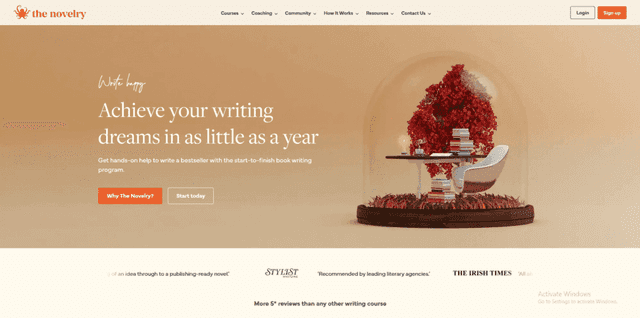
The Novelry is for people who already know they want to write a novel—or at least they’re pretty sure. It’s an online writing school built specifically around novelists, from idea to final polish.
Founded by bestselling author Louise Dean, it has a practical vibe. Not “hype,” not fluff. Just a lot of guidance for getting a manuscript finished.
Features
They offer courses for different parts of the novel-writing process—idea development, drafting, and editing. One of their most popular programs is the “Book in a Year” plan, which focuses on helping you complete a manuscript in twelve months.
What I like about that structure is the daily lesson approach. It’s much easier to keep going when you’re not staring at “write a novel” as one giant, scary task. You’re working toward specific goals day by day.
They also offer one-on-one coaching sessions with published authors. That’s a big deal if you want feedback that’s actually tailored to your draft, not just general advice.
Plus, there’s a community element where you can share progress and get encouragement. That part sounds small until you’re the one stuck in the middle of a draft.
Pros:
- Tailored to Novel Writing: The lessons match the reality of writing novels, not generic “creative writing.”
- Flexibility: Daily lesson structure makes it easier to fit in writing time.
- Personalized Support: One-on-one coaching with experienced authors helps you fix the right things.
Cons:
- Cost: Between the program structure and coaching, it’s not a “cheap course.”
- Intensive: Especially for the “Book in a Year” program, you’ll need to put in consistent time.
- Focused on Novels: If you write short stories, scripts, or nonfiction, this might feel too narrow.
Starting Book in a Year was a turning point for me. The structure took the overwhelm out of novel writing. Instead of asking, “How do I even begin?” I had daily goals that made progress feel real.
The coaching feedback helped me sharpen things quickly. General writing advice is fine, but direct notes on your actual manuscript are on another level.
Yes, it’s a serious investment—time and money. But finishing a draft feels like a real accomplishment, not just “I watched some lessons.”
If your goal is to write a novel and you want structure plus personalized support, The Novelry is one of the better options out there.
4. Coursera: Creative Writing Specialization
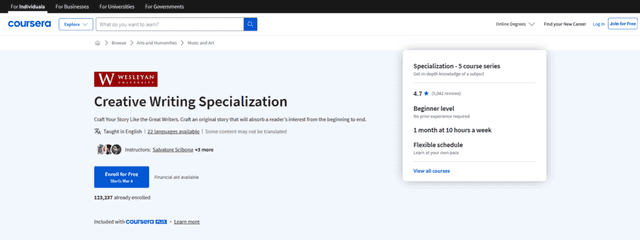
Coursera’s Creative Writing Specialization, created in partnership with Wesleyan University, is a really accessible way to learn the fundamentals of creative writing. If you’re not sure what you want to write yet, this is a good place to start.
The specialization runs through four core courses that cover narrative, short story, memoir, and novel writing. Then you wrap it up with a capstone project where you produce a polished piece.
Features
Each course focuses on practical elements you’ll actually use: character development, plot structure, and how to craft stronger prose.
You’ll watch video lectures from experienced authors and Wesleyan faculty, then complete interactive assignments. There are also peer feedback sessions, which is helpful if you’re willing to read other people’s drafts and be honest about what’s working.
It’s also self-paced, so you can work through it around your schedule instead of rearranging your life.
Pros:
- Comprehensive Curriculum: You get a broad foundation across major creative writing areas.
- Flexibility: Self-paced learning makes it easier to keep going long-term.
- Peer Feedback: Reviewing classmates’ work can sharpen your editorial instincts fast.
Cons:
- Lacks Personalized Instructor Feedback: Peer reviews are useful, but you won’t get direct, tailored guidance from instructors.
- Certification Cost: Financial aid may be available, but if you want certification, you may need to pay.
- Self-Motivation Required: If you’re not disciplined, it’s easy to fall behind in self-paced courses.
When I worked through this kind of Coursera track, the biggest benefit was how it made the craft feel “structured.” Writing can be chaotic. Here, you’re learning in a sequence, and that helps.
The peer feedback was definitely useful, though I sometimes wanted deeper instructor-level critiques. Still, the capstone project pushed me to take what I learned and actually finish something.
If you want an organized introduction to creative writing, Coursera’s specialization is a solid option—especially if you’re okay with peer-based feedback.
5. Udemy: Writing Courses
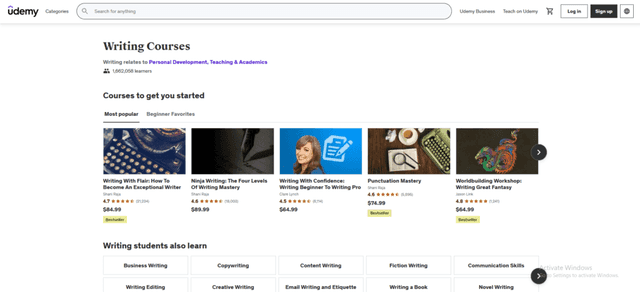
Udemy is basically a giant marketplace of writing courses. And that’s both the beauty and the problem. You can find almost anything—fiction, non-fiction, copywriting, blogging, screenplay writing—but you have to be a little picky.
In my experience, Udemy is best when you know what you want to learn. Want to tighten dialogue? Improve scene structure? Learn copywriting fundamentals? There’s probably a course for it.
Features
Udemy courses are usually built around video lectures plus written materials, assignments, and sometimes quizzes. Another advantage is lifetime access to purchased courses, which means you can revisit lessons when you’re stuck on a draft later.
Just keep in mind: Udemy is a platform, not one single school. That means quality varies a lot.
Pros:
- Wide Range of Topics: There’s something for almost every writing interest and skill level.
- Affordable Pricing: Many courses are priced reasonably (and often go on sale).
- Lifetime Access: You can go back to the material whenever you need it.
Cons:
- Variable Course Quality: Since anyone can create a course, some are great and some are… not.
- No Accredited Certification: If you need formal credentials, Udemy usually won’t replace that.
- Self-Motivation Required: You’ll need to practice on your own, not just watch.
I remember browsing Udemy and feeling both excited and overwhelmed. I finally picked a course focused on creative writing techniques, and it was solid—especially because the instructor was practical and the lessons were easy to follow.
What I had to do myself, though, was feedback. Udemy typically doesn’t provide structured critique, so I ended up using peer groups to sanity-check my progress.
Bottom line: Udemy is a great “grab a course for a specific goal” platform, as long as you read reviews carefully and choose something with a clear syllabus.
6. Scribble: Writing for New Writers
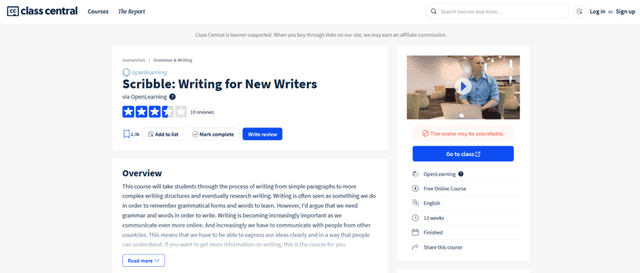
Scribble: Writing for New Writers is one of the friendliest starting points I’ve seen. It’s designed for beginners—people who feel stuck, intimidated, or like they “don’t know where to begin.” If that’s you, this course is meant to make writing feel simpler.
The focus is on fundamentals: storytelling basics, character creation, and what makes writing stronger across different genres. It’s not trying to throw you into advanced craft terms right away.
Features
Scribble is structured to be approachable. You get video tutorials, writing prompts, and exercises that guide you through plot development, character building, and crafting engaging narratives.
It also emphasizes practice and feedback, including opportunities to share work with peers. That matters a lot for beginners, because you need momentum more than you need “perfect” writing advice.
Pros:
- Beginner-Friendly: Clear guidance that helps you build confidence without feeling overwhelmed.
- Interactive and Engaging: Prompts and exercises force you to write, not just learn.
- Community Support: A safer space to share and get constructive critique.
Cons:
- Limited Advanced Content: If you already write regularly, you may outgrow it.
- Self-Paced Learning Requires Discipline: Without live structure, you’ll need to keep yourself on track.
- Feedback Quality May Vary: Since it’s peer-based, it depends on who’s active in the community.
As a newer writer, Scribble felt exactly like the kickstart I needed. The lessons weren’t too dense, and the prompts helped me actually start writing on days when my brain wanted to “think about writing” instead of doing it.
I did want more in-depth feedback at times, but overall the community energy was supportive, and that helped me keep going.
If you’re brand new and you want a welcoming course that teaches the basics and gets you writing quickly, Scribble is a strong place to start.
7. Reedsy Learning
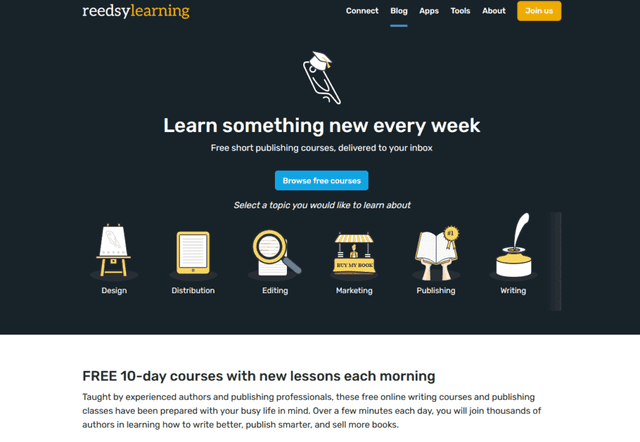
Reedsy Learning is a different kind of writing education. Instead of a full course dashboard, it sends bite-sized lessons by email. Honestly? I love that format when life gets busy, because it doesn’t demand big time blocks.
They have free courses for both new and experienced writers, covering writing, editing, publishing, and marketing. Each lesson is designed to be actionable—so you can apply what you learn right away.
And the instructors are industry professionals, which helps because you get real insight into the manuscript-to-published-book journey.
Features
The standout feature is the email delivery: short daily emails you can read in a few minutes. That’s perfect if you can’t commit to a weekly live class or a long self-paced video library.
Courses cover everything from novel writing fundamentals to self-publishing and book marketing strategies. You can also start at any time, which is great if you don’t want to wait for a cohort.
Pros:
- Accessibility: Quick daily emails make it easier to learn on the go.
- Free Courses: You can get writing and publishing education without paying.
- Expert Instructors: Content is built by people who work in the industry.
Cons:
- Limited Interaction: You won’t get much back-and-forth with instructors or classmates.
- No Personalized Feedback: It’s more “learn and apply” than “learn and get critiqued.”
- Broad Overview: Great for learning basics, but not always enough for deep, advanced training.
Reedsy Learning worked well for me as a “keep the habit alive” tool. The daily emails acted like a gentle nudge. I didn’t always have time to write a full chapter, but I could always read a lesson and take one small action—like revising a blurb, tightening a paragraph, or thinking differently about audience.
Yes, I sometimes wanted to go deeper and talk with other writers. Still, the convenience and quality of the content made it worth keeping in my routine.
If you want free, practical writing and publishing lessons with minimal time commitment, Reedsy Learning is a smart pick.
8. Writers.com
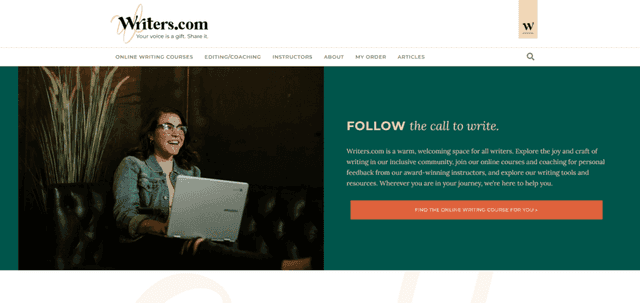
Writers.com has been around since 1995, which I always take as a good sign. It’s not some brand-new platform that might disappear next month. They offer a wide range of courses for writers at different levels, across fiction, non-fiction, poetry, and more.
What stands out is the workshop-style approach and the focus on small class sizes and personal attention. If you’ve ever wished your writing course would actually tell you what to fix next, this is the direction to look at.
Features
Writers.com leans into interactive, workshop-style courses. You’ll typically get written lectures, assignments, and peer critiques in a supportive online classroom.
They also have a strong instructor lineup—published authors and experienced teachers who know how to teach craft, not just share opinions.
Another plus: course topics are regularly updated, including specialized areas like memoir writing, flash fiction, and narrative poetry.
Pros:
- Experienced Instructors: Published writers and educators who can mentor you through the process.
- Personalized Feedback: Small classes help make feedback more detailed and useful.
- Wide Range of Courses: Different genres and goals, so you can find something that matches your interests.
Cons:
- Course Fees: Pricing varies by course length and level, so it can be a consideration.
- Self-Discipline Required: You’ll need to keep up with assignments and actively participate in peer critiques.
- Limited Instant Interaction: If you prefer real-time discussions, asynchronous formats may feel slower.
My experience with Writers.com was genuinely motivating. I enrolled in a short story writing course, and the structured feedback helped me improve specific parts of my technique instead of guessing what was wrong.
The classroom atmosphere also made it easier to learn from other students. You start noticing patterns—like what makes a scene feel clear, or what causes readers to lose interest.
Sure, the fees required some budgeting. But I saw my writing improve, and that made the investment feel justified.
Writers.com is a strong choice if you want workshop-style learning with instructor engagement and feedback, not just passive lessons.
Just make sure you’re ready for the effort it takes to participate consistently. If you show up and engage, the course format can really pay off.
Conclusion
Choosing the right writing course doesn’t have to be scary. Start with what you actually need right now—feedback, structure, genre-specific help, or just a beginner-friendly path to get writing consistently.
These best online writing courses can give you more than “motivation.” They teach craft, build habits, and—if you pick the right format—connect you with other writers who keep you accountable. Take your time, read what fits your goals, and commit to the one you’ll actually finish. That’s where the real progress happens.