Table of Contents
Have you ever finished a chapter and thought, “Wait… did I just miss something?” That gut feeling usually means the narrator is doing more than simply tell the story. They’re distorting, hiding, or spinning what happened—sometimes on purpose, sometimes because they genuinely can’t see the full picture. That’s what people mean by an unreliable narrator, and once you start noticing the patterns, reading gets a lot more fun (and a lot less passive).
Key Takeaways
- An unreliable narrator is a storyteller whose version of events can’t be trusted—because of exaggeration, limited knowledge, mental instability, deliberate deception, or plain self-interest.
- Using William Riggan’s (1981) classic breakdown, the most common “big five” are: Picaros, Madmen, Naifs, Clowns, and Liars. Each one shows different warning signs in language, timeline, and what they choose to mention (or skip).
- To spot unreliability fast, look for contradictions, timeline slips, emotional mismatch, and missing context. The narrator’s “tone” is often the giveaway.
- Writers use unreliable narrators to build suspense, deepen themes (truth, memory, perception), and force readers to do real interpretation instead of just consuming facts.
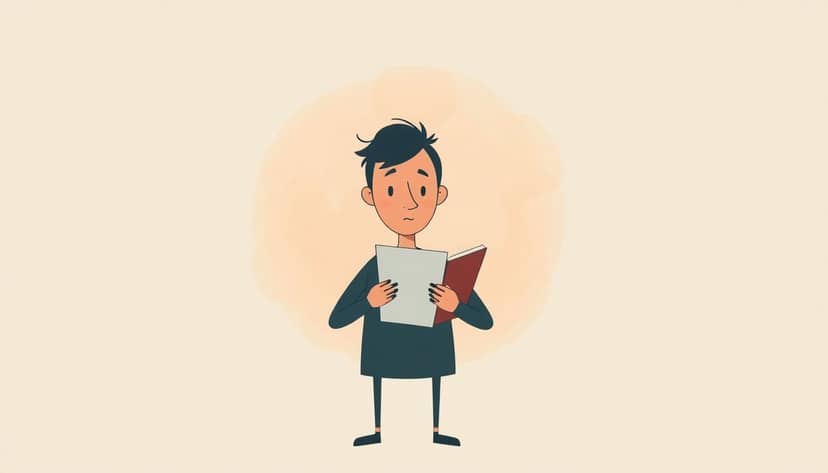
So what exactly are the types of unreliable narrators? In plain terms, it’s a way to categorize *how* a narrator’s account goes off the rails. Sometimes it’s because they’re trying to entertain (or manipulate). Other times it’s because their mind isn’t stable, or they’re too inexperienced to understand what’s really happening.
In my own teaching and editing work, I’ve noticed readers don’t struggle because they can’t “spot” unreliability—they struggle because they don’t know what evidence to collect. My approach is simple: when I read, I mark (1) what the narrator claims, (2) what the text later confirms or contradicts, and (3) what the narrator does with details—do they over-explain, under-explain, or just refuse to look at certain parts?
Here’s the practical part: below are the five main categories of unreliable narrators, plus what to look for in each one. I’ll also point out concrete cues you can use right away.
How to Recognize an Unreliable Narrator Quickly
When I’m scanning a new book (or revising a draft), I don’t start with “Are they unreliable?” I start with: What’s the narrator asking me to believe? Unreliable narration usually shows up in the gaps between belief and evidence.
1) Watch for inconsistencies (the “wait, didn’t you just say…” problem)
If the narrator’s details wobble—names, locations, the order of events—that’s a major red flag. Sometimes the book will later correct them. Other times, the contradictions will be the whole point.
2) Compare their story to any “anchor” facts
Look for established facts like dates, physical descriptions, or what other characters confirm. A narrator who repeatedly “forgets” key things is often avoiding accountability.
3) Pay attention to language cues
Overly dramatic phrasing, constant self-justification, or suspicious confidence can all be signals. A narrator who keeps insisting “I’m fine” while behaving like they’re not? That mismatch matters.
4) Track the narrator’s emotional logic
This one surprised a lot of my students. Sometimes the facts aren’t the first thing to break. Instead, the emotions don’t track. If they react with the wrong intensity—or with no reaction at all—that can hint at denial, manipulation, or detachment.
5) Notice what they omit
Withholding information isn’t only a separate category—it can show up inside the main five. If the narrator never describes something crucial, ask why that absence is convenient.
Why the “Big Five” Types Matter (and How Writers Use Them)
Writers don’t use unreliable narrators just to be clever. They use them to create pressure. When you can’t fully trust the voice, you start actively reading: rereading, comparing timelines, and asking what the narrator gains by telling the story this way.
In practice, this does a few concrete things:
- It forces interpretation. You’re not only following plot—you’re evaluating truth.
- It creates suspense without “mystery for mystery’s sake.” The suspense comes from uncertainty about reliability.
- It deepens character. A narrator’s distortions often reveal their values, fear, or agenda.
- It makes twists feel earned. When the text plants clues early, the twist lands harder because you can look back and see the trail.
For example, I often tell writers: if you want a twist to feel fair, you need “evidence crumbs,” not just a last-minute reveal. Unreliable narration is one of the best ways to plant those crumbs.
1) Picaros (the Embellishers)
What they’re like: Picaros exaggerate, polish, and dramatize. They’re not always lying in a strict “I invented facts” way—they might bend reality because that’s how they see it, or because they want the story to sound impressive.
Common cues to look for:
- Over-the-top description that sounds rehearsed or “too good” for the situation.
- Loose cause-and-effect (“then everything magically worked out”) with missing details.
- Self-mythologizing—they frame themselves as the hero, even when evidence suggests otherwise.
Annotated example (Don Quixote): Don Quixote regularly treats ordinary events like epic battles. Even when the world refuses to cooperate, his narration insists on a grand interpretation. What I notice in the text is the pattern: he doesn’t just misread reality—he re-names it. Windmills become giants. Common travel becomes a quest. The unreliability isn’t only in facts; it’s in the narrator’s confidence that his interpretation is the “real” truth. That’s classic picaro energy: style and self-image override accuracy.
2) Madmen (the Mentally Unstable Narrators)
What they’re like: Madmen narrators are unreliable because their mental state distorts perception—through delusions, paranoia, hallucinations, or a breakdown in coherence.
Common cues to look for:
- Perception shifts (the narrator describes things others don’t).
- Time and logic blur—events don’t align cleanly with cause and consequence.
- Escalating certainty paired with fragile reasoning (“I know this is true because I feel it”).
Annotated example (a quick mini-scene I use in workshops): Imagine a first-person narrator walking home at night. They say they “hear footsteps behind every door,” and they describe a shadow moving with intention. Then, in the next paragraph, they claim they saw the same figure twice—once at the corner and again outside their apartment—without showing how time could possibly work. The unreliability shows up in the gap: the narrator’s certainty keeps rising, but the timeline can’t hold. That contradiction is the signal you should track.
Important boundary: Madmen aren’t automatically “lying.” They’re often reporting what they truly believe. The unreliability comes from perception breaking, not from an agenda.
3) Naifs (the Innocent or Inexperienced Narrators)
What they’re like: Naifs misunderstand because they’re young, sheltered, emotionally immature, or simply lacking the knowledge to interpret events correctly.
Common cues to look for:
- Literal interpretations of things that are symbolic or socially coded.
- Missed subtext—they treat obvious tension as harmless politeness.
- Overconfidence in their own conclusions despite limited information.
Annotated example (coming-of-age narration): In many stories, a teen narrator describes a parent’s silence like it’s normal routine. They might interpret a sudden change in behavior as “just stress,” while the reader sees fear, grief, or conflict. The unreliability is subtle: the narrator isn’t contradicting facts; they’re interpreting them with the wrong mental model. In my edits, I look for moments where the narrator’s worldview explains everything—too neatly. That “neatness” is often the clue.
Quick tip: If the narrator’s language is simple, the missing context might be the real problem—not the narrator’s honesty.
4) Clowns (the Deliberate Deceivers)
What they’re like: Clowns intentionally mislead. They may lie for entertainment, to control the narrative, or to buy time. Their humor can mask manipulation.
Common cues to look for:
- Performance tone—they sound like they’re acting for an audience.
- Selective detail—they include information that flatters their version and skip what would expose them.
- Calculated emotional framing—they steer your sympathy with jokes, charm, or theatrical remorse.
Annotated example (Gone Girl): Amy Dunne’s diary entries in Gone Girl are a great example of deliberate fabrication. The diary doesn’t merely tell events—it curates them. What I notice is the precision of tone: it reads like a crafted narrative designed to provoke a specific reaction from readers and investigators. She anticipates what people want to believe, then supplies it in a neat, emotionally persuasive package. That’s unreliability as a tool: the narrator isn’t confused; they’re controlling.
5) Liars (Intentional Dishonesty, Straight-Up)
What they’re like: Liars don’t just distort—they actively misstate. Their unreliability is often easier to detect because the text eventually reveals contradictions that can’t be explained by perception or ignorance.
Common cues to look for:
- Direct factual claims that later collapse under new evidence.
- Convenient timing—they “remember” details only when it benefits them.
- Escalating defenses—as contradictions appear, their explanations get longer, not clearer.
Annotated example (a short mini-scene you can recognize): A first-person narrator says, “I never touched the key.” Later, a witness describes seeing them unlock the door. The narrator responds by changing the story: “I picked it up, but I didn’t use it.” Then the narrator adds a new detail—something that wasn’t mentioned before—like “the key was already inside.” That’s a tell. The lie isn’t only the first false statement; it’s the way their story keeps rewriting itself to avoid consequences.
Boundary note: Liars and Clowns can overlap, but Clowns often feel like they’re performing the deception, while Liars feel like they’re protecting themselves through outright falsehood.
Where Do Withholding and Biased Narrators Fit?
People often mention “additional types” like withholding narrators and biased narrators. That’s fair—but the tricky part is distinguishing them from the five main categories.
Here’s a quick rule of thumb I use when I’m helping writers revise:
- Withholding is about what the narrator leaves out. You’ll see gaps, sudden jumps, or “I can’t say.” It can happen in Picaros, Naifs, Clowns, or Liars—because omission is a tactic.
- Bias is about how the narrator filters events. Their emotions and judgments color everything. Bias can show up even when they’re technically telling “true” facts.
If you want a simple decision path:
- If the narrator’s facts contradict the world later → you’re likely dealing with a Liar or Clown.
- If the narrator’s perception is warped → Madman.
- If the narrator’s interpretation is missing context → Naif.
- If the narrator’s style inflates reality → Picaros.
- If the narrator’s main problem is what they don’t say → consider withholding (often layered onto one of the five).
That taxonomy is useful because it keeps you from treating “unreliable” like one vague label. It’s not just unreliable—it’s unreliable in a specific way.
Spotting Unreliability: A Quick Checklist
If you want something you can actually use while reading, here’s my go-to checklist. When you check off 2–3 items, I start paying closer attention to the narrator’s “voice.”
- Do they contradict themselves within the same chapter?
- Do they omit key details right when you’d expect clarity?
- Does their emotion match the situation—or feel oddly mismatched?
- Does the story’s timeline wobble when they explain it?
- When challenged, do they rewrite the narrative instead of clarifying?
- Do other characters’ accounts undercut theirs?
And here’s the real payoff: once you start doing this, your interpretation changes. You stop asking, “What happened?” and start asking, “What is the narrator trying to make me believe happened?” That shift is where the twist becomes meaningful.
For more perspective on narrative craft, you might also like how to write a compelling foreword. It’s not the same topic, but it helps you think about voice and trust—exactly what unreliable narration plays with.
FAQs
An unreliable narrator is a storyteller whose account can’t be fully trusted—because of bias, limited knowledge, mental instability, or intentional deception. The result is that readers have to work to figure out what’s true.
They’re a built-in suspense engine. Unreliable narrators can reveal character flaws, create mystery, and make readers interpret meaning instead of taking everything at face value.
Start with inconsistencies, contradictions, and missing context. Also watch for biased language, emotional mismatches, and moments where the narrator’s perspective seems limited or convenient.
Common types include naive narrators, deliberate deceivers, mentally unstable narrators, embellishers, and self-interested liars. Each one signals unreliability through different patterns in language and plot evidence.
If you’re writing and want to build richer “voice-based” uncertainty, it can help to study how other genres structure tension. You may also find how to write dystopian stories useful—dystopian narration often depends on unreliable framing and restricted perspective.