Table of Contents
Online reviews can make or break a business. I’ve seen it happen—one bad experience posted publicly can snowball, and suddenly you’re spending your week trying to “put out fires” instead of running the actual company. That’s why I took a close look at TrustLoop.
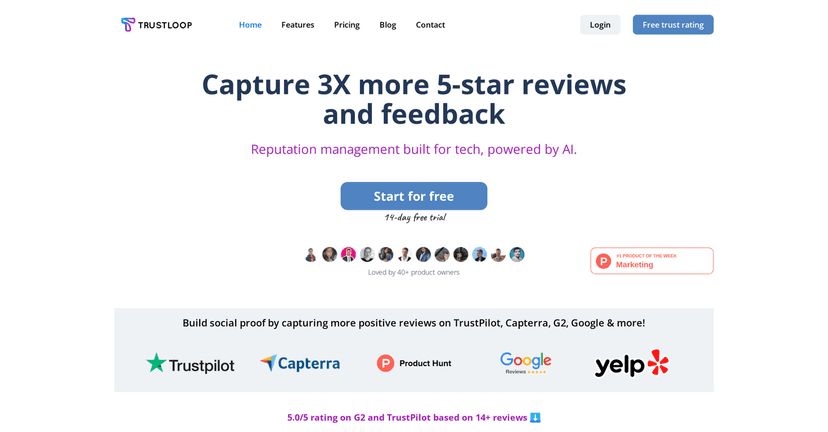
TrustLoop is a review management tool that focuses on two things at once: getting more positive reviews and handling negative feedback privately. The pitch is simple, but the setup matters—because if you’re going to request reviews, you need it to feel natural to customers and not like spam. In my experience, that’s where tools like TrustLoop either win or lose.
TrustLoop Review
Here’s the real-world idea behind TrustLoop: instead of waiting for customers to vent publicly, you collect feedback right after the experience. If it’s positive, you guide them toward leaving a review. If it’s negative, you keep the conversation private so you can actually fix the problem.
During setup, what I noticed most was the “guided” nature of the flow. You’re not just blasting everyone with a review link. You’re collecting sentiment first, then routing people based on how they feel. That’s a big deal because it changes the tone of your review volume—more of your reviews come from people who genuinely had a good experience.
TrustLoop also leans on AI to help make sense of what customers say. That matters if you’re getting feedback from multiple channels and you don’t want to read every single comment manually.
Key Features
- Accelerated Product-Market Fit through internal feedback collection: you’re not only collecting “reviews,” you’re capturing the reasons behind them.
- Increased Positive Reviews with guidance for content customers: customers who are happy are nudged toward reviews, instead of being mixed into the same request flow.
- AI-Enhanced Insights for actionable feedback analysis: instead of staring at a spreadsheet of comments, you get help spotting patterns.
- Simple Integration with just two lines of code: if you’ve ever dreadfully wrestled with tracking scripts, this is the kind of claim I actually look for.
- Autopilot Functionality for independent management: you can automate parts of the process so you’re not manually triaging every response.
- Customizable Surveys and Widgets for tailored feedback collection: you can match your brand and ask the right questions.
- Dedicated Landing Pages for customized feedback gathering: useful when you want different flows for different products, services, or campaigns.
Pros and Cons
Pros
- It’s easy to manage: the interface is straightforward enough that a non-technical person can handle day-to-day review monitoring.
- AI helps you move faster: you’re not just collecting data—you’re getting insight into what people actually mean.
- Pricing scales with your volume: if you’re a smaller business, you won’t start at an enterprise-only price.
- Integration is relatively painless: the “two lines of code” approach is what I’d expect from a modern tool.
- Autopilot saves time: routing and follow-ups reduce the amount of manual work you’d otherwise do.
Cons
- It may feel expensive if you’re a brand-new startup and you’re not generating much review volume yet.
- Lower tiers can be limiting: if you grow quickly, you might hit review caps sooner than you planned.
- Higher volumes push you toward Enterprise: if you’re running a large operation, you’ll likely need the higher tier to avoid constraints.
Pricing Plans
TrustLoop offers a 14-day free trial, which I think is fair—enough time to test the review flow and see whether the feedback routing makes sense for your customers.
After that, paid plans start at $27/month for startups with up to 50 reviews. It scales up to $67/month for businesses needing 500 reviews. There’s also an Enterprise option for unlimited reviews and custom features, but pricing requires direct contact.
One practical tip: before you commit, estimate your monthly review count (not just your total customers). If you’re only expecting a handful of reviews per month, the lower tiers can be fine. If you’re already getting steady review volume, you’ll want to price it against how fast you think you’ll grow.
Wrap up
Overall, TrustLoop feels like a solid option if you care about reputation management and you want a cleaner feedback process. The biggest win is the split between collecting sentiment and handling negative feedback privately—because that’s where most “review tools” fall short. If you’re aiming for more consistent positive reviews and faster insight into what customers really think, TrustLoop is worth putting through your own workflow and seeing how it performs for your business.