Table of Contents
Learning a new language is supposed to be exciting… but honestly, it can also feel like a never-ending pile of flashcards. I’ve been there—memorize a bunch of words, freeze when someone actually talks to you, then wonder why it didn’t “stick.” That’s why I was curious about Talk to Tala.
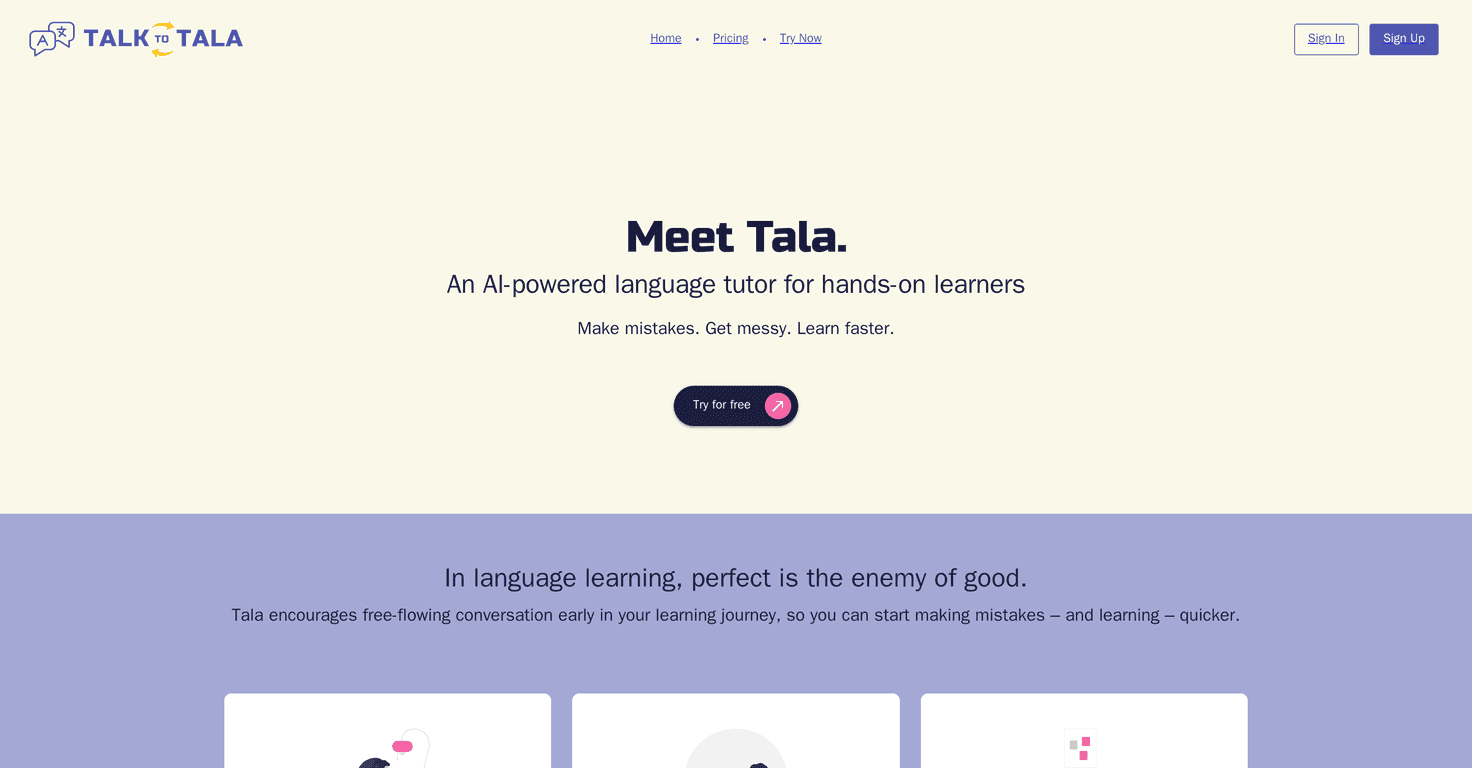
Talk to Tala is an AI-powered language tutor built around real conversation. Instead of drilling vocabulary in isolation, it pushes you to speak and respond like you would in everyday life. In my experience, that changes the whole vibe—less “test yourself,” more “talk it out.” The platform also leans on speech recognition so you can practice pronunciation while you’re learning.
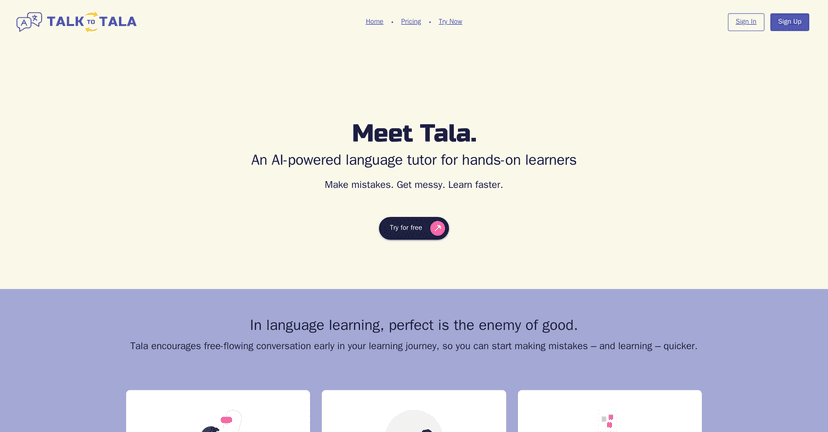
One thing I appreciated right away: it doesn’t punish you for making mistakes. It treats errors like part of the process. That matters, especially if you’re the type who gets nervous speaking out loud. Who wants to sound awkward in front of a screen? Not me. But the way Tala handles feedback feels designed to keep you moving forward instead of stopping you every few seconds.
Another practical win is the built-in ability to adjust listening speed and do quick lookups. When you’re in the middle of a conversation and you catch a phrase you don’t fully understand, it’s helpful to be able to check it without derailing the entire session. You can build vocabulary while still keeping the conversation flowing.
Talk to Tala Review: What It Feels Like to Use
So what’s it actually like day-to-day? I found the biggest difference is that you’re not waiting for the “right” moment to practice. The app basically puts you into short, ongoing exchanges. You speak, it responds, and you keep going.
That matters because language learning isn’t just knowing words—it’s using them under pressure. In a real conversation, you don’t get to pause and think for 30 seconds. Tala encourages that same kind of momentum. And when you mess up? It’s less of a stop sign and more of a nudge.
Speech recognition is a key part of the experience. You don’t just read pronunciation tips—you try saying things and get feedback. In my testing, the feedback was most useful when I focused on a smaller chunk (like repeating a phrase a couple times) rather than trying to “perfect” everything in one go.
Also, the platform’s confidence-building approach is real. If you’ve ever felt embarrassed speaking a language you’re still learning, you’ll probably appreciate that Tala doesn’t judge you like a human might. It’s there to help you practice, not to evaluate you.
Quick tip from me: if you want better results, don’t treat each conversation as a one-and-done session. Do the same type of dialogue twice. The second time, try to reuse the same structures you got corrected on. That’s when you start noticing improvement.
Key Features of Talk to Tala
- AI-powered personalized language tutoring that adapts to what you say and how you respond.
- Free-flowing conversations so you practice real communication instead of isolated drills.
- Speech recognition for pronunciation, with feedback that helps you adjust how you sound.
- Adjustable listening speeds so you can slow things down when you need to catch up.
- Instant feedback during conversations to keep you learning in the moment.
- Voice recognition for practice (not just typing), which is where pronunciation actually improves.
- Easy phrase look-up so you can expand vocabulary without breaking the flow.
Pros and Cons (Honest Take)
Pros
- Engaging conversations that feel closer to real life than typical language apps.
- Great for confidence—you can practice without the fear of embarrassment that comes with speaking to people.
- Practical language use since it pushes you to form responses instead of just recognizing words.
- Affordable options compared to many tutoring alternatives.
- Works for different levels because you can keep practicing even when you’re not “ready” yet.
Cons
- It can’t replace a human tutor—there’s no real emotional connection, and you won’t get the same cultural context or nuance.
- Technology isn’t perfect. If your microphone setup is off or your accent is very different from what the system expects, feedback can feel inconsistent.
One limitation I noticed: if you’re the kind of learner who wants structured grammar lessons (like clear rules and exercises), Tala might feel a bit more “learn by doing” than “learn by studying.” It’s not a bad thing—just different.
Pricing Plans for Talk to Tala
Talk to Tala offers a monthly subscription for $4.99. If you’re ready to commit longer, the yearly plan is the better deal—it includes 3 months free, which brings the effective monthly cost down compared to paying month-to-month.
If you’re unsure, I’d treat it like a “test drive” for a couple weeks. Use it consistently (even 10–15 minutes a day) and pay attention to whether your speaking confidence actually improves. That’s the real metric that matters here.
Wrap up
Talk to Tala is a solid option if you want to practice speaking right away and you don’t want your study sessions to feel like homework. The conversation-first approach, pronunciation practice, and confidence-focused design are the big strengths. And at $4.99/month, it’s priced in a way that many learners can actually stick with.
Just keep expectations realistic: it won’t fully replace a human tutor, especially if you want deep grammar explanations or nuanced cultural feedback. But if your goal is to get more comfortable speaking and to learn through real back-and-forth practice, it’s absolutely worth considering.
Give Talk to Tala a try and see if it matches your learning style—you might be surprised how quickly you start talking more naturally.