Table of Contents
If you’ve ever walked into a behavioral interview with a half-written STAR story in your notes, you already know the problem: you can have great examples… and still fumble the delivery. That’s why I tried the STAR Method Coach—to see if it actually helps you tighten your answers, not just “practice more.”
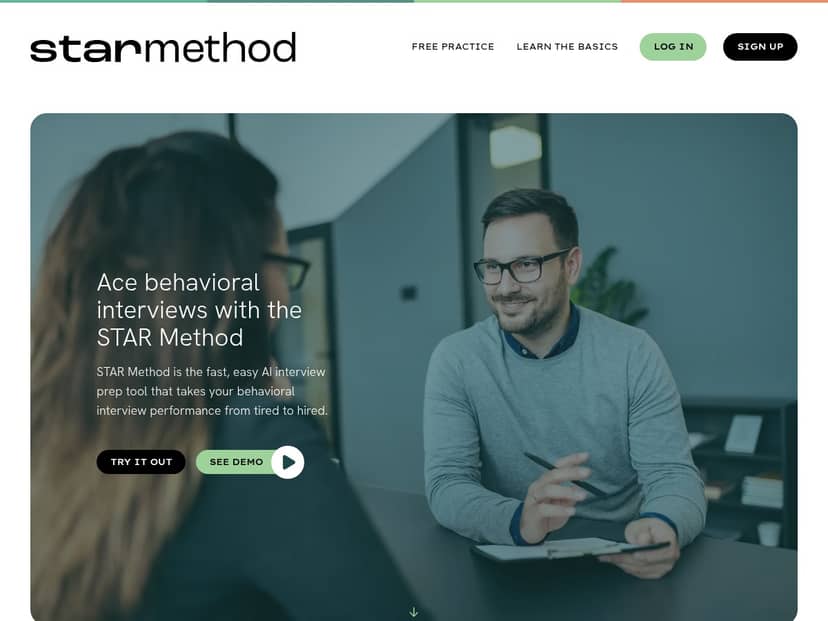
STAR Method Coach Review
I tested STAR Method Coach for behavioral interview prep using the built-in practice flow (and its simulated mode). My goal was simple: see whether it helps you produce cleaner STAR answers faster—especially the part most people mess up: making the outcome and your actions crystal clear.
Here’s what I noticed right away. The setup feels straightforward, and the questions don’t feel random. You can generate prompts based on job roles/skills, and then you record your response in “Coach Mode.” Afterward, you get feedback tied to the STAR structure. That matters because it forces you to stop rambling and start labeling what you did, why you did it, and what changed because of it.
What the practice actually looked like (my test)
I ran through a handful of practice prompts over multiple sessions (not one long grind). The biggest difference compared to free-form interview practice was how quickly I could iterate. Instead of rewriting an answer from scratch, I’d adjust based on the feedback, then re-record.
Two examples of the kinds of issues it flagged for me:
- Weak “R” (Result): In one attempt, my result was basically “things went better.” The feedback nudged me to be more specific—what metric improved, what the timeline looked like, and what impact I personally drove.
- Missing “A” (Action) details: Another time, I described the situation and the problem-solving approach, but I didn’t name the exact actions I took (e.g., what I communicated, what trade-offs I made, what I decided to do first).
After those runs, my next responses were noticeably tighter. Not “perfect,” but more interview-ready. The simulated interview mode also asked follow-up questions that forced me to adapt on the fly (which is where most people get caught). I found that useful because it mirrors the real back-and-forth you get when an interviewer says, “Okay—what did you personally do?”
One honest limitation
I’ll be straight with you: the AI feedback is great at structure, but it doesn’t replace human coaching. It can’t fully read your tone the way a real interviewer would, and it won’t help with things like “how to sound confident without sounding rehearsed.” If you’re expecting empathy, coaching presence, or nuanced emotional judgment, you may still want a person in the loop.
Key Features
- Role/skill-based question generation: You can tailor prompts to the kind of job you’re targeting, so you’re not just answering generic “tell me about a time…” questions.
- Coach Mode (record + STAR-based feedback): Record your response and get feedback focused on the STAR technique—what’s missing, what’s unclear, and where your story needs more specificity.
- Interview Mode (simulated Q&A with follow-ups): It doesn’t just ask the first question and stop. The follow-up questions push you to clarify your decisions and your personal actions.
- Performance Reports: You get scores plus improvement tips. The useful part is that it helps you decide what to revise next instead of guessing.
- On-demand practice: 24/7 accessibility means you can do short sessions when you actually have time (I did better with multiple shorter runs than one marathon).
Pros and Cons
Pros
- Flexible practice timing: You can fit it around work and still get reps. That’s huge if your schedule is chaotic.
- Good coverage of behavioral patterns: It’s not limited to one “style” of question, so you can practice multiple STAR formats.
- Actionable feedback: The feedback isn’t just “good job.” It points out what part of STAR is weak (usually Result specificity and Action clarity).
- Fast iteration: You can record, review, adjust, and re-record without waiting for another person.
- Follow-up practice helps: The simulated mode is where you build the habit of answering direct questions, not just telling stories.
Cons
- No true human judgment: It can’t replace a recruiter or coach who can evaluate presence, tone, and whether your story feels natural.
- Emotional nuance is limited: If you’re trying to nail “how I felt” or demonstrate empathy in a very specific way, the AI may miss the subtle intent.
- Pricing clarity isn’t upfront: The free tier is clear, but the details for ongoing plans aren’t fully spelled out in the same place I reviewed.
Pricing Plans
When I signed up, I saw an initial 10 free practice sessions for new users. After that, I didn’t see a fully detailed pricing breakdown in the same area during my review—no clear “here are the exact paid tiers and costs” page was obvious.
So what can I confirm? The free 10-session tier is real and accessible. What I can’t confirm from my check is the exact cost of additional subscriptions (and whether limits apply after the free sessions). If you’re deciding today, I’d click through to the upgrade step and look for the pricing table before committing.
Wrap up
STAR Method Coach is best for people who want structured behavioral practice and fast iteration—especially if you struggle with making your STAR answers specific and measurable. It’s not a replacement for human coaching, but it’s a solid way to build better answers on your own schedule.
If you’re the type who learns by recording and revising (instead of just reading advice), you’ll probably get a lot out of it. Just don’t expect it to magically solve the “interview presence” part—use it to sharpen your story, then consider a human review if you can.