Table of Contents
Ever found yourself stuck with a hand-drawn sketch that could use a digital makeover? You’re not alone! Many creators face challenges in translating their ideas into clean, digital diagrams. But what if there was a solution that makes this process simple and accurate? In this SnapDiagram review, we promise to explore a remarkable tool designed for transforming your sketches into polished digital formats. Let’s take a closer look at what SnapDiagram has to offer.
SnapDiagram Review
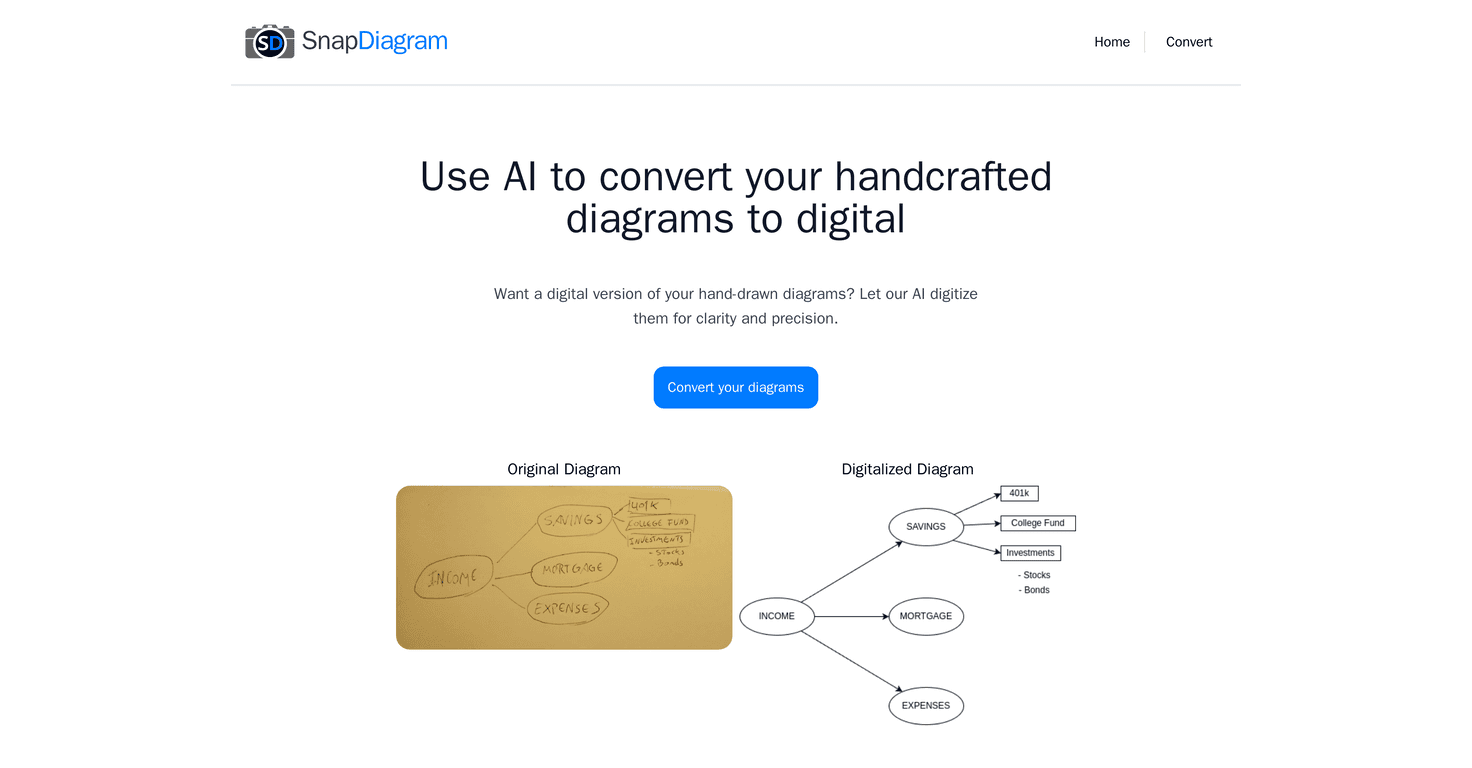
SnapDiagram is a unique web application that uses AI technology to convert hand-drawn diagrams into digital diagrams seamlessly. As someone who loves to sketch ideas before bringing them to life, I found SnapDiagram to be a game-changer. The process is incredibly straightforward and user-friendly, ensuring that everyone can benefit from it, whether you’re a student, a professional designer, or just someone with a creative streak.
The key feature of SnapDiagram is its advanced AI conversion capabilities. It truly understands the essence of your hand-drawn sketches. I have tested it with various doodles, and the results were surprisingly accurate. Each diagram translated beautifully into digital format, retaining its clarity and detail, allowing for easy modifications and enhancements.
So, how does it measure up? SnapDiagram supports multiple output formats, including PNG and JPG, which provides flexibility for how you want to use your diagrams. This is particularly beneficial if you need to include them in presentations, reports, or social media posts. The user interface is designed to be intuitive, making the transition from paper to digital a hassle-free experience that I would recommend to anyone with sketching skills.
Key Features
- AI Conversion that accurately transforms hand-drawn sketches into digital diagrams
- Supports multiple output formats such as PNG, JPG, and editable files
- User-friendly interface that simplifies the conversion process for everyone
Pros and Cons
Pros
- Easy conversion of hand-drawn sketches to digital diagrams
- Supports multiple file formats for greater flexibility
- High accuracy and clarity in the digitalized representations
Cons
- Effectiveness of conversion can depend on the quality of sketches
- Limited information available regarding pricing or subscription plans
Pricing Plans
Currently, the specifics of SnapDiagram’s pricing plans are not provided. For detailed pricing information, visiting the SnapDiagram website or contacting their support directly would be the best approach.
Wrap up
In conclusion, SnapDiagram offers a fantastic solution for anyone looking to digitize their hand-drawn sketches. With its advanced AI technology, user-friendly interface, and support for multiple formats, it stands out as an essential tool for creatives. Although there’s limited information on pricing, the benefits of using SnapDiagram for your digital diagram needs are certainly worth exploring!
Promote SnapDiagram