Table of Contents
Ever wish you could go back and “talk to” the version of you that knew everything? That’s basically the hook behind Sensay: using AI replicas to help preserve memories, knowledge, and even the way you respond when you’re thinking out loud. I’m not going to pretend it’s magic, but the concept is genuinely compelling—especially if you care about privacy and you don’t want every scrap of your life floating around the internet.
Sensay Review
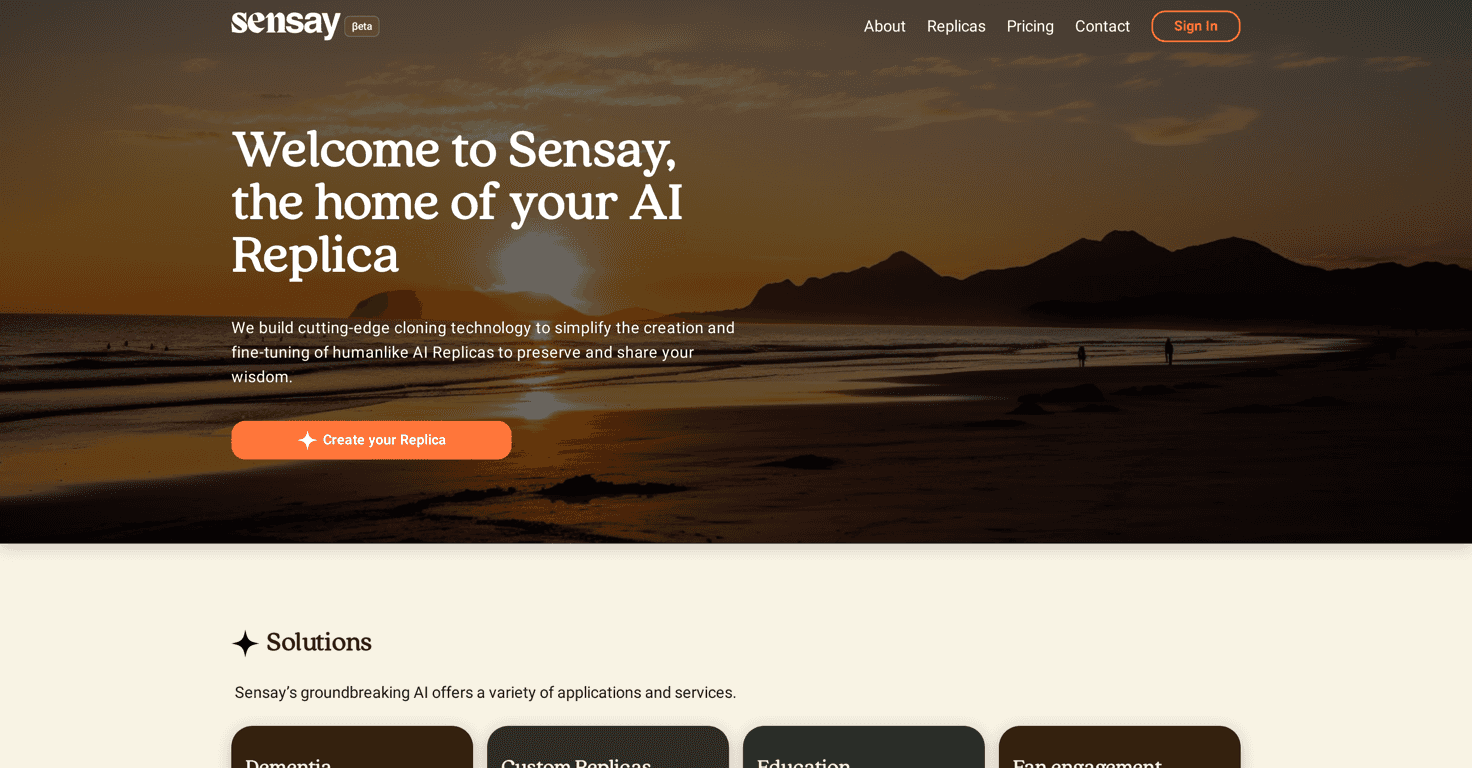
Sensay feels aimed at people who want more than a generic chatbot. The pitch is that you can create an AI replica that learns from you—so it can reflect your voice, your preferences, and the way you usually explain things. That “digital companion” angle isn’t new in AI, but it’s still one of the most interesting uses because it can actually be personal, not just functional.
What I like about the way Sensay is positioned is that it’s not only about entertainment. The platform mentions practical applications like dementia support and education. If you’ve ever watched someone struggle to recall familiar stories, you know how hard it is for family members too. A tool that can help surface memories or keep conversations going could be meaningful. Still, it should be treated as a support tool—not a replacement for care, relationships, or medical advice.
The “continuous learning” part is another big claim. In my experience with AI tools, continuous improvement is where things either get impressive or get messy. If the replica keeps updating based on new inputs (and does it consistently), the conversations can start to feel more natural. But if updates are too aggressive or you feed it low-quality or contradictory info, the replica can drift. So I’d pay attention to how Sensay handles training data and what controls you get.
Privacy and security are also front and center. That matters a lot here because memory-preservation tools are inherently personal. I don’t want to build a digital version of myself and then wonder where the data goes, who can access it, or how long it’s stored. So anytime a product emphasizes security, I treat that as a real selling point—especially in a world where breaches happen too often.
Bottom line: Sensay is trying to help you preserve your essence in a digital form. If you’re curious about building a personalized AI replica for reflection, education, or support, it’s worth checking out. Just go in with realistic expectations about what a replica can and can’t do.
Key Features
- AI Replicas that mirror user behavior — designed to reflect how you typically think, talk, and respond.
- Multiple applications — including dementia support and education, not just “chat for fun.”
- Continuous learning — intended to improve interaction quality over time as the replica gets more context.
- Always accessible digital presence — meaning you can engage with the replica when you want, rather than waiting for a specific moment.
- Tools for memory preservation — built around capturing knowledge and experiences so they can be revisited later.
Pros and Cons
Pros
- Personalization feels like the point: the replica concept is built around tailoring responses to individual users, not generic answers.
- Security and privacy emphasis: this is especially important for memory/identity tools, and it’s good to see it highlighted.
- Real-world use cases: dementia support and education are practical directions—not just sci-fi vibes.
- Potential for better conversations over time: if continuous learning is implemented well, the replica can become more consistent with your style.
- Accessible anytime: it’s easier to “return” to a memory or explanation when the tool is available on demand.
Cons
- Ethical concerns around “digital immortality”: even if the goal is comfort, people still need to think about consent, boundaries, and how replicas are used.
- It can be tempting to over-rely on it: technology should support relationships, not replace them. I’d be cautious about using a replica as a substitute for real human interaction.
- Privacy isn’t just a checkbox: you’ll still want clear answers on data usage, storage duration, and who can access the information.
Pricing Plans
Pricing isn’t clearly listed here, and I don’t want to guess. From what’s available publicly, Sensay seems to offer different solutions that could vary by plan or feature set. If you want the most accurate number, it’s best to check the latest details directly on the Sensay website.
Quick tip: when you compare plans, look for specifics like how many data sources you can use, whether there are limits on training inputs, and what you get regarding privacy controls. Those details matter more than the headline monthly price.
Wrap up
Sensay is an interesting take on preserving memories and creating a more personal digital interaction. The promise is strong: AI replicas that learn, stay accessible, and (hopefully) respect privacy. Just remember—this is still a tool. The best way to use something like this is to treat it as a companion for reflection, learning, and support, not a perfect stand-in for a real person.