Table of Contents
Modern epistolary novels are basically stories told through whatever people actually use to communicate—letters, emails, diary entries, texts, and even social media posts. Instead of one all-knowing narrator, you’re reading the characters’ messages like you found them on a phone or in someone’s inbox. And honestly? That’s why it feels so immediate. You’re not being told what happened—you’re watching it unfold.
Below, I’ll walk you through the core structures, what makes the voices believable, and the practical stuff that usually trips people up when they try to write this format themselves. I’ll also include a few concrete examples of message layouts you can steal.
Key Takeaways
Key Takeaways
- Modern epistolary novels tell stories through letters, emails, texts, diary entries, and social media-style posts—so events feel “documented,” not narrated.
- The intimacy comes from technique: timestamps, partial transcripts, read receipts, redactions, and conflicting metadata that hint at what characters won’t say.
- Short, episodic entries replace traditional chapters, which changes pacing—every message has to earn its place.
- Unreliable narration is baked in: messages can be biased, missing context, or written to persuade, not to tell the truth.
- You can fit many genres into this format (music narratives, thrillers, psychological dramas), as shown by works like “Daisy Jones & the Six” and “The Silent Patient.”
- Good epistolary writing doesn’t just “show emotions”—it shows behavior: slang choices, punctuation habits, what gets deleted, and what gets repeated.
- Trends include threaded chat logs with redactions, versioned posts, and QR-linked audio or “screenshot framing” to control what readers see.
- Writing challenges are real: voice consistency, timeline clarity, and avoiding repetitive exchanges. A simple checklist fixes most of it.
- Start with a clear outline, build a voice bible for each character, and decide the message types early (email vs. text vs. audio transcript).
- Tools like Scrivener help me organize message timelines and character folders; editing tools like Grammarly/ProWritingAid help polish the micro-voice.
1. What Are Modern Epistolary Novels?
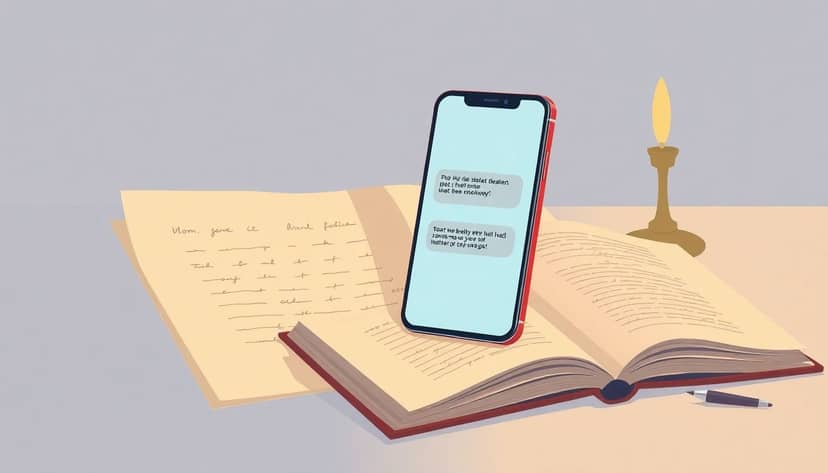
Modern epistolary novels are stories built from personal documents—letters, emails, diary entries, transcripts, and the kind of messages you’d actually find on a phone. A lot of them also borrow digital “formats” like blogs, social media posts, text threads, and chat logs, so the story feels like it’s happening in real time (or at least like it could).
What I like about this approach is that it forces specificity. You can’t hide behind vague narration. The reader sees what the character wrote, what they didn’t write, and sometimes what got edited out.
– Definition: How stories are told through letters, emails, texts, diaries, or transcripts
An epistolary novel is usually made from multiple pieces of communication. Instead of one narrator guiding you, you experience events through the character’s own words. That alone changes the reading experience—because you’re “collecting” the story rather than being handed it.
And because each message has its own agenda (confession, persuasion, self-defense, venting), you naturally get multiple viewpoints. Conflicts look different depending on who’s writing, and secrets don’t reveal themselves neatly. They leak.
– Modern elements: Includes digital communications like emails, social media posts, and chat messages
Today’s epistolary novels often use digital communications as the primary storytelling layer: emails with subject lines and timestamps, text messages with abbreviations, social posts with captions and comments, and transcripts that show pauses or interruptions.
For instance, novels and adaptations that lean into letters helped popularize the format long ago, but newer works use texts and online posts as the “scene” itself. If you want a quick reference point, take a look at “The Perks of Being a Wallflower”—it’s a strong example of how personal messages can carry voice and emotional weight.
When you do this well, casual texts can hit harder than polished narration. Why? Because they show hesitation, defensiveness, and the tiny emotional tells people usually bury.
2. Main Features of Modern Epistolary Novels
The core feature is simple: character perspective arrives through messages. That means tone, emotion, and even pacing have to come from formatting choices and word choice—not from a narrator stepping in to explain everything.
Most modern epistolary novels use short, episodic entries instead of traditional chapters. A chapter might be a “day” of texts, a week of emails, or a series of posts and comment replies. It mimics real life: you don’t get full context all at once.
Here’s the part that matters most: the format can feel intimate because the reader gets to see the process of communication. Think timestamps, read receipts, partial transcripts (“…can’t believe you said that”), redactions, or screenshot framing (“Sent from iPhone”). Those details create the illusion of authenticity—and they also create tension when information is missing.
3. Reasons Authors Use the Epistolary Format Today
Authors use this style because it creates an instant emotional connection. You’re reading private words. Even when the character is performing (like a social media post), you’re still seeing their intention.
Another reason? It’s naturally built for unreliable narration. Messages can be biased, incomplete, or strategically worded. A text can omit the apology. An email can sound calm while the writer is panicking. A transcript can be edited. The reader has to do some work—kind of like reading real conversations.
And yes, modern formats give writers more freedom with tone. A character who never uses contractions in emails might talk totally differently in texts. That contrast becomes character development without you needing to stop the story and explain it.
Finally, the epistolary approach shows relationships in a very specific way: closeness through repeated patterns (nicknames, quick replies, inside jokes) and conflict through friction (seen messages, ignored follow-ups, “Why did you send this?” screenshots).
4. Examples of Modern Epistolary Novels and Their Unique Features
*The Handmaid’s Tale* by Margaret Atwood leans into audio recordings and transcripts, which does something really clever: it makes the story feel like evidence. You’re not just reading events—you’re reading what someone saved, translated, and decided to preserve. That framing adds dread.
*Daisy Jones & the Six* by Taylor Jenkins Reid is built from interview transcripts. What I notice with this kind of structure is how it turns memory into plot. People disagree. Details shift. The “truth” becomes something you assemble from competing versions.
*The Silent Patient* by Alex Michaelides combines journal entries with a first-person angle, which helps the mystery feel personal rather than purely investigative. You get psychological depth because you’re inside the character’s private notes.
*P.S. I Miss You* by Heather Webber uses letters between sisters, and it’s a great reminder that epistolary doesn’t have to be digital to feel modern. The emotional cadence of handwritten-style communication still works—especially when the relationship is the main engine.
These examples show how flexible the format is. You can do romance, thriller, literary fiction, or music storytelling as long as the messages carry meaning.
5. How Modern Epistolary Novels Connect with Readers
In my experience, epistolary novels hook readers because they feel like evidence. You’re not watching from a distance—you’re seeing the exact phrasing someone chose.
Two techniques make that connection stronger:
- Timestamped messages (even if they’re fictional) create urgency. A reply sent at 2:13 a.m. reads differently than one sent at 2:13 p.m.
- Incomplete information keeps tension alive. A missing attachment. A redacted sentence. A “see you soon” that never arrives.
Here’s a small example of what I mean by “document feeling.” If you have two characters texting after an argument, you can show who’s hiding things without a single narrator line:
- Character A (calm, controlled): short messages, correct punctuation, no emojis, replies only after long pauses.
- Character B (emotional, reactive): longer texts, more typos, emojis or ALL CAPS when overwhelmed, and they send follow-ups immediately.
When the voices match their behavior, readers start trusting the documents—even when the story is messy.
7. Trends and Innovations in Digital Epistolary Novels
This is where the format gets fun. A lot of modern epistolary writing isn’t just “texts on a page.” It’s structured like digital media—so pacing and reveals change.
Here are a few trends I’ve seen work especially well:
- Threaded chat logs with redactions: You can show what’s been hidden (“[message removed]”) and let readers infer motive. It also gives you a natural way to control what each character knows.
- Versioned posts or edited captions: A character posts something, deletes it, reposts with a different angle. That creates plot movement without extra exposition.
- QR-linked audio or “screenshot framing”: Even if you don’t literally embed audio, framing a transcript as “audio note” changes how readers interpret pauses, stutters, and tone.
Platforms also influence structure:
- Instagram: short captions, selective details, and comment threads reveal relationships indirectly. The limitation? Readers only see what’s posted—so you have to make absence matter.
- Twitter/X: fast cadence, public statements, and replies can drive reveals quickly. The limitation? It’s easy to overdo jokes or slang and lose emotional precision.
- WhatsApp: conversational flow with quick follow-ups, “seen” status, and voice-note transcripts (if you include them). The limitation? It can get chaotic if you don’t keep the timeline tight.
What makes these innovations feel “right now” is the narrative device: timestamps, read receipts, and screenshot-like framing. They mimic the way we actually experience information online.
8. Challenges of Writing in the Epistolary Style
Let me be blunt: epistolary writing can be harder than it looks. You don’t get to hide behind a narrator when messages go flat.
Common problems I’ve run into (and fixed) include:
- Voice drift: characters start sounding the same. It usually happens when you write “what the scene needs” instead of “what this character would actually say.”
- Timeline confusion: readers can’t track who knew what, when. If you’re not careful, the story becomes a pile of messages.
- Repetition: two characters keep rehashing the same argument because it’s easy. Real conversations loop sometimes—but they also escalate.
- Over-explaining: writers slip in narrative prose to clarify things. In epistolary, those clarifications should come through documents (attachments, forwarded emails, corrections, receipts), not author narration.
The good news? Tight editing and deliberate pacing solve most of this. You just have to treat every message like a mini-scene with a job.
9. How to Successfully Write a Modern Epistolary Novel
If you want to pull this off, start with structure. Then focus on voice. Then edit like you mean it.
– Step 1: Outline the “message logic,” not just the plot
I outline the major events first, sure. But I also map how information moves. Who sends what? Who receives it? What gets delayed? What gets ignored? That’s the epistolary engine.
Quick framework (use it like a checklist):
- Event: what happens?
- Document type: email/text/call transcript/social post?
- Sender intention: confession, cover-up, request, performance?
- What the receiver believes (even if it’s wrong)
- What’s missing (attachment, context, timing, truth)
- Escalation: how does the next message change the stakes?
– Step 2: Build a voice bible (this is where drafts succeed or fail)
I keep a one-page “voice bible” per character. It’s not fancy—just rules you can check while writing.
Example voice rules (simple but effective):
- Character A (methodical): uses complete sentences, avoids emojis, corrects spelling, rarely sends more than 2 messages in a row.
- Character B (impulsive): uses fragments, typos on purpose or by habit, more punctuation (!!!, ?), sends follow-ups fast, uses emojis when emotionally flooded.
Rubric for what “natural” means (I use this when revising):
- Length match: their messages are roughly the length they’d actually send (no sudden novel-length texts).
- Punctuation habit: consistent use of commas, dashes, ellipses, or caps.
- Emotional markers: they show emotion through word choice and timing, not through repeated “I feel…” statements.
- Slang/format: if they use slang, it’s consistent; if they don’t, don’t suddenly add it.
– Step 3: Mix message types to control pacing and reliability
Don’t just use texts because they’re easy. Mix them so the story breathes:
- Texts = urgency, emotion, misunderstanding.
- Emails = explanation attempts, formal tone, plausible deniability.
- Social posts = performance, public image, indirect reveals.
- Audio transcripts = tone, hesitation, interruptions, “what was said vs. what was meant.”
What I’ve noticed: when you alternate “short and reactive” with “structured and retrospective,” the plot feels more believable because real people switch communication modes.
– Step 4: Read messages aloud (but with a purpose)
Reading aloud helps, yes—but don’t just listen for rhythm. Listen for who sounds like who. If you can swap character names and the voice still works, you’ve got a problem.
In revision, I’ll pick two characters and do a quick test: write one message from each about the same event. If they sound too similar, I adjust word choice, punctuation habits, and how quickly they reply.
10. Tools and Resources for Creating Modern Epistolary Novels
Tools won’t write the story for you, but they can make the structure manageable—especially when you’re juggling dozens (or hundreds) of documents.
In my workflow, the biggest win is organization. I’ll keep message timelines in a way that lets me reorder without losing context. That’s why I like tools designed for drafting and modular content.
- Scrivener: Great for organizing by character folders and scene/message cards. I’ve used it to keep a timeline consistent by grouping documents under date ranges.
- Atticus: Useful if you want a clean writing environment and easier export formats.
- Grammarly / ProWritingAid: Helpful for catching repetitive phrasing and basic clarity issues—especially when you’re trying to keep each message “micro-consistent.”
- Canva / Adobe Spark: Optional, but useful if you want mock-ups of social posts or screenshot-style layouts for reference while drafting.
If you’re building something multimedia-heavy, it helps to create a simple “asset list” (audio links, image placeholders, screenshot notes) so you don’t lose track of what’s referenced where.
FAQs
A modern epistolary novel uses documents like letters, emails, texts, diary entries, or transcripts to tell the story. It often includes digital-style communication such as social media posts and chat messages, so the narrative feels rooted in how people communicate today.
They rely on message-based storytelling—short entries, documents, and multiple viewpoints—rather than traditional prose chapters. The “scene” is the communication itself, which changes pacing and how information is revealed.
Because it creates intimacy and immediacy. Readers see characters’ private thoughts through what they send, post, or record—and they also get built-in ambiguity when messages are biased, missing context, or edited.
Sure. *Daisy Jones & the Six* is told through interview transcripts, and *The Silent Patient* combines journal entries with a first-person narrative to deepen the mystery.