Table of Contents
If you’ve ever sat down to “be creative” and your brain immediately starts yelling about everything else—yeah, you’re not alone. I used to think creativity was something you either had or you didn’t. But what I noticed after actually trying meditation is that it’s less about suddenly getting genius ideas on command, and more about making room for them. When your mind is calmer, ideas don’t feel so far away.
And the best part? You don’t need hours of practice. I’m talking 10 minutes, sometimes even 5, just to take the edge off the mental noise. After a few days, it becomes easier to notice when you’re stuck—and easier to move past it.
Below are the techniques I keep coming back to, plus some realistic tips for when your mind wanders (because it will).
Key Takeaways
- Meditation helps clear mental noise, so new ideas feel easier to access (and you don’t get pulled under by distractions).
- Open monitoring (OM) meditation—watching thoughts without judgment—can improve creative flexibility and originality.
- 10–20 minutes daily works well for most people, especially in the morning when your brain is less “busy.”
- Stress reduction matters for creativity. When you’re calmer, you focus better and you’re more likely to see problems from different angles.
- Meditation supports multiple creative fields by improving perspective, emotional awareness, and idea flow.
- Wandering thoughts are normal. Short, consistent sessions beat rare long sessions.
- Guided meditations (or a simple routine + quiet space) make it way easier to stay consistent.
- Once you’re comfortable, techniques like visualization or longer sessions can deepen the benefits over time.
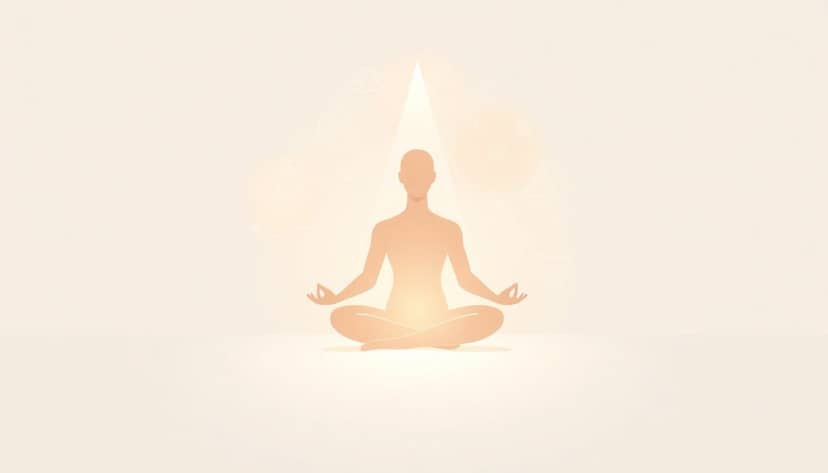
So how does meditation actually boost creativity? For me, it comes down to one thing: calming the “background chatter.” When I’m stressed or mentally scattered, I get stuck in the same loop—re-reading the same problem, forcing ideas, second-guessing. Meditation helps me slow down enough to notice what’s really there. Then the mind can do what it’s supposed to do: make connections, generate variations, and surface possibilities I was ignoring.
One technique I really like for creative work is open monitoring (OM) meditation. Instead of focusing on one object (like the breath), OM is more like observing everything that shows up—thoughts, emotions, sensations—without grabbing onto them or judging them. You’re not trying to “think better.” You’re just training your attention to stay curious.
What I noticed after doing OM before brainstorming: I still get ideas, but they come with less friction. It’s not that I instantly become a creative machine. It’s that my mind stops treating every thought like a problem to solve. That makes it easier to switch directions and explore weird-but-promising angles.
There’s also research suggesting OM can support things like divergent thinking (the ability to generate lots of different ideas). In plain terms: you’re more likely to come up with multiple options instead of only one “safe” answer. And honestly, that’s exactly what most creative projects need at the start.
Here’s a simple way to start OM: sit comfortably, close your eyes, and let whatever shows up—good thoughts, anxious thoughts, random memories—just pass through. You don’t have to label them perfectly. If your mind wanders (spoiler: it will), notice it and gently return to the act of observing. No scolding. No “I’m doing it wrong.”
Research dating back to 2012 has pointed to meditation’s influence on creativity-related processes. The key takeaway I keep in mind is that divergent thinking seems to benefit more than convergent thinking. Divergent thinking is the “many ideas” mode. Convergent thinking is the “pick the best one” mode. Meditation can help both indirectly (through mood and stress), but if you’re trying to brainstorm, OM is a strong place to begin.
Now, let’s talk routine—because consistency is where this stops being theory and starts becoming real life.
In my experience, 10–20 minutes in the morning is a sweet spot. Why morning? Your brain is usually less reactive, and you’re less likely to interrupt the practice with meetings, emails, or random life chaos. A lot of people also meditate alone, which makes sense: fewer distractions means fewer “oops, I forgot what I was doing” moments.
And if you’re wondering what “benefits” look like day-to-day, here are a few concrete signs I’ve seen:
- You catch yourself spiraling faster—and you recover quicker.
- When you sit down to write or design, you start with less dread.
- During brainstorming, you generate more variations (even if some are bad at first).
- Ideas feel more connected to your emotions instead of just your logic.
Meditation also helps creativity by lowering stress and anxiety. This part is simple but huge. Stress narrows your attention and makes your brain defensive. When you’re less tense, you can focus longer, take feedback without melting down, and stay curious. That emotional regulation is basically creativity insurance.
One practical tip: set a specific time and keep it realistic. If you can only do 5 minutes before work, do 5. I’d rather you meditate for 5 minutes daily than “save it” for weekends. Over time, your brain learns the pattern: sit down, breathe, observe, reset.
Oh—and don’t underestimate the impact of environment. A quiet spot helps. Dim lighting helps. Even turning off notifications helps. If you can, pick one place you always use for meditation. Your brain will start associating that spot with calm.
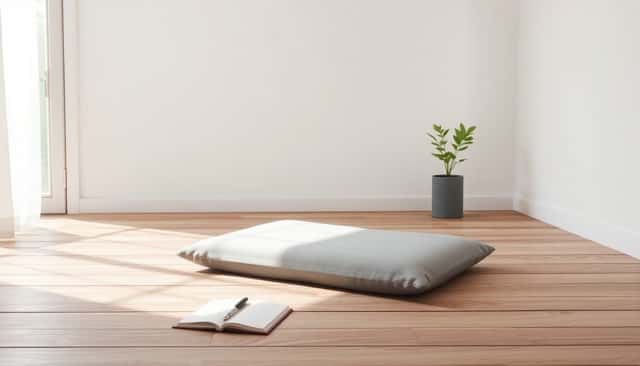
Incorporating Meditation into Your Creative Routine
If you want meditation to actually support your creativity (instead of becoming another “someday” thing), start with a routine that fits your life.
I like this setup:
- Pick a consistent time each day. Morning is popular for a reason—your mind is less cluttered.
- Choose one quiet spot so your brain learns the cue. No constant switching between rooms.
- Keep a journal nearby. When an idea pops up during or right after meditation, write it down immediately. Don’t trust your memory—creative thoughts disappear fast.
- Start small: 10 minutes is plenty. If that feels like too much, start at 5.
- Gradually increase as you get comfortable. Even adding 2–3 minutes can make a difference.
- Mix styles. Try open monitoring on brainstorming days and focused attention when you need calm concentration.
And if your mind wanders? Good. That’s part of the practice. The win is noticing it and returning—gently—to your breath or to the present moment. No judging yourself. Seriously, the judgment is what turns meditation into a chore.
One more thing: I’ve found it helps to pair meditation with a creative “follow-up.” For example, meditate for 10 minutes, then do 15 minutes of free writing or doodling. You’re basically giving your brain a runway right after you calm it down.
Consistency is the real secret. Not intensity. Regular practice helps your mind adapt so inspiration feels more accessible over time.
How Meditation Supports Different Types of Creativity
Meditation doesn’t just make you “more creative” in some vague way. It can support specific mental skills that different creative fields rely on.
Here’s what I’ve seen across different kinds of work:
- Visual arts (painting, design): meditation can help you notice details and see new perspectives instead of getting stuck on the same visual pattern.
- Writing: it can reduce mental friction—so story angles feel easier to reach and blocks don’t feel permanent.
- Music: when you’re more emotionally regulated, improvisation can feel freer and more connected to what you actually feel.
- Entrepreneurship/product development: a calmer mind tends to make problem-solving less chaotic. You can think through options without getting overwhelmed.
Whatever your craft, meditation helps by improving perspective and mental flexibility. That’s what lets you adapt when a project changes—or when you realize your first idea isn’t the best one.
Also, don’t be afraid to experiment. If you’re trying to spark ideas, guided meditation can be a friendly on-ramp. If you want deep focus, silent OM might feel better. Different styles, different outcomes.
Dealing with Common Challenges in Meditation for Creativity
Let’s be honest: meditation can be frustrating at first. Most beginners struggle with focus. Your mind will jump to random thoughts, plans, worries, and “what if” scenarios.
Here’s the simple fix I use: when you notice you’ve drifted, acknowledge it and come back. That’s it. No drama. No “I failed.”
If meditation feels unproductive, try reframing it. You’re not trying to empty your mind like a robot. You’re training attention and emotional control—skills that show up later when you’re trying to create.
Some practical things that help when you’re stuck:
- Shorter sessions (5–10 minutes) are easier to maintain.
- A dedicated space reduces distractions and signals “this is focus time.”
- Guided meditations/apps like Headspace or Calm can help you stay structured at the beginning.
- Be patient. Your practice improves with repetition, not perfect days.
And when emotions like impatience or skepticism show up? Totally normal. I’ve felt that too. The difference is you learn to notice the emotion without letting it steer your whole session.
Advanced Techniques to Deepen Your Meditation Practice for Creativity
Once the basics feel steady, you can level things up. These are the techniques I’d actually recommend experimenting with—not because they’re trendy, but because they can add variety to your mental state.
- Walking meditation: great if sitting still makes you restless. You’re still training awareness, just with movement.
- Body scan: helps you release tension and mental fatigue. I use this when I feel “stuck in my head.”
- Loving-kindness meditation: can open emotional channels—useful for character development, storytelling, or anything that needs empathy.
- Visualization: imagine your creative project going well. Not in a “fantasy” way—more like rehearsing the next step and the feelings you want.
- Binaural beats/ambient sounds: can support focus for some people. If you don’t like them, skip them. No need to force it.
- Longer sessions occasionally: try 30 minutes once in a while to reset your mental state and invite fresh perspectives.
One underrated tool: a meditation journal. After a few weeks, you start noticing patterns like “OM helps my brainstorming” or “body scans help me write.” That feedback loop is gold.
And yes, pushing your practice consistently matters. The more adaptable your attention becomes, the easier it is to access new ideas during your actual creative work—not just during meditation.
FAQs
Meditation calms stress and clears mental clutter, which makes it easier for new ideas to surface. You also get better focus and mental flexibility, so you can connect concepts and explore more creative solutions instead of defaulting to the first obvious answer.
For most people, early morning or late evening works best because the mind tends to be calmer. The real win is consistency—meditating regularly helps creative thinking feel smoother throughout the day.
Try 10 to 15 minutes a day to start. That’s long enough to settle your attention and notice changes in clarity. Over time, the benefits compound—ideas become easier to access without as much mental resistance.
Absolutely. Meditation pairs really well with brainstorming, journaling, or free writing. By clearing mental clutter first, you create space for new ideas to show up during your other creative exercises.