Table of Contents
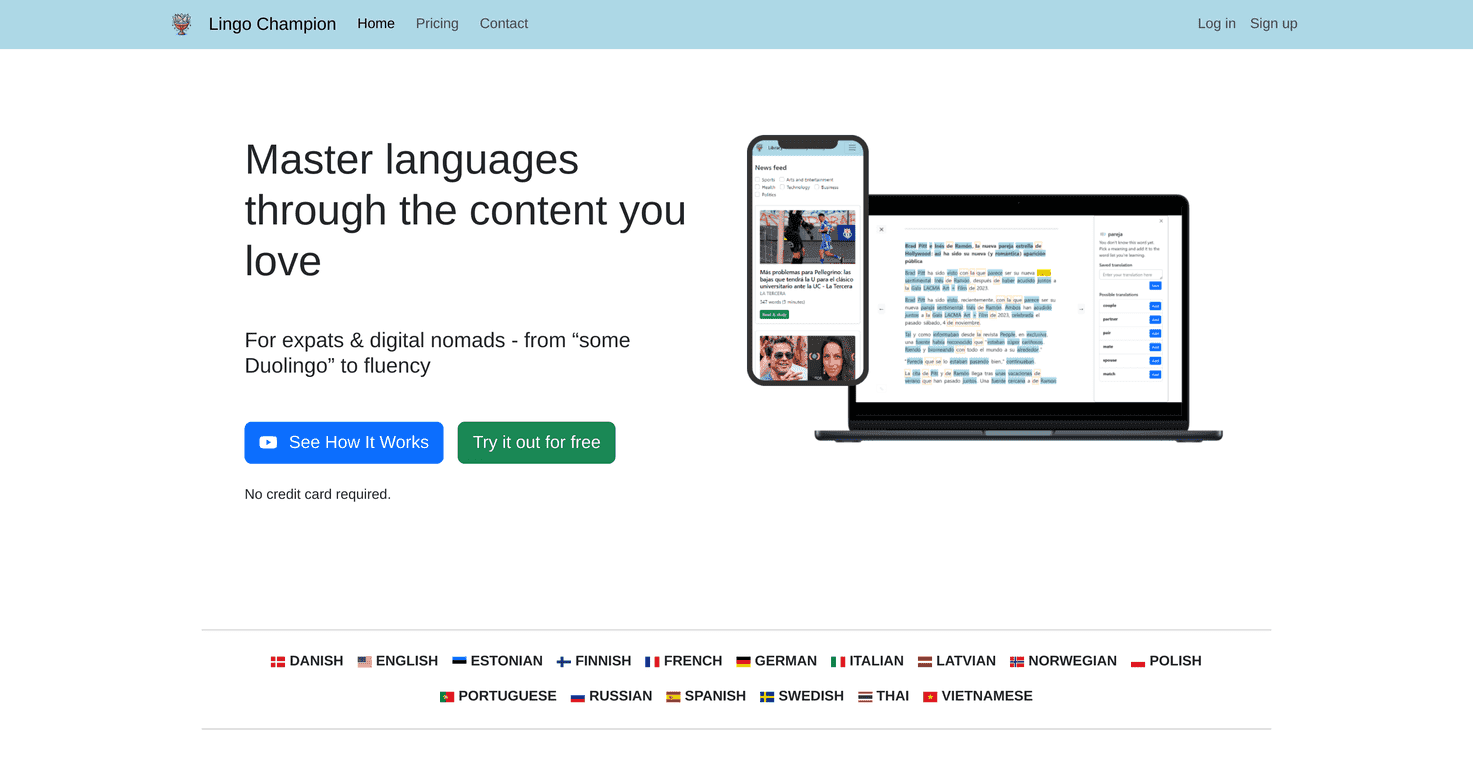
If you’ve tried the usual language-learning routine (flashcards, worksheets, the whole “memorize 50 words a day” thing) and it still doesn’t feel… real, I get it. Lingo Champion caught my attention because it focuses on learning through news articles. Not textbook dialogues. Not made-up sentences that never show up in real life.
In my experience, that difference matters. When you read something that looks like what people actually publish, you start picking up how the language flows—tone, phrasing, and the way certain words show up together. This Lingo Champion review breaks down what it does well, where it falls short, and what I’d want to see improved before I’d recommend it to everyone.
Lingo Champion Review
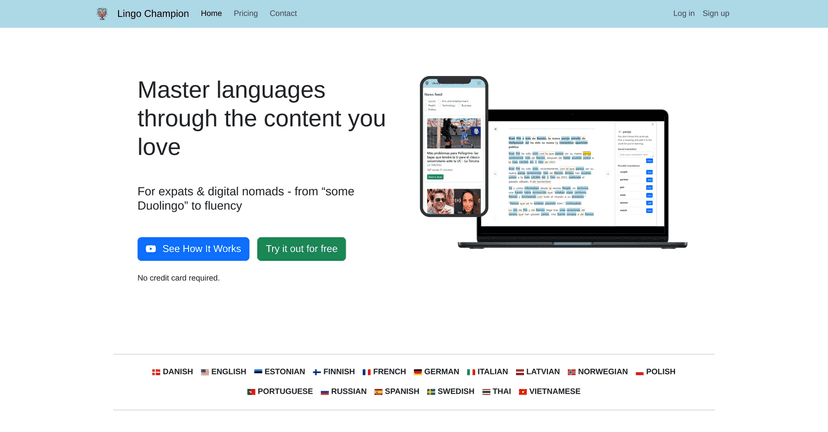
Lingo Champion’s main idea is pretty straightforward: you learn by reading real news in your target language. And honestly, that’s the part I liked most. You’re not just collecting vocabulary—you’re seeing it used. The sentences have context. The writing style feels like something you’d stumble across outside an app.
What I noticed right away is how much easier it is to remember words when they show up repeatedly in a meaningful paragraph. Instead of “word → definition → forget,” it becomes “word → idea → usage → retention.” That’s the big win for news-based learning.
It’s also fairly beginner-friendly in the sense that you can choose what to read and go at your own pace. No pressure to keep up with a classroom timeline. If you’re the kind of learner who likes to do a short session—like 10–15 minutes a day—this format fits well.
That said, I wouldn’t call it a full replacement for a complete language program. It’s more like a strong reading engine than an all-in-one speaking course. If you want conversation practice, you’ll still need to look elsewhere.
Key Features
- Authentic language through news articles
This is the core of Lingo Champion. You’re learning from content that feels current and “published,” not simplified for drills. - Simple interface for everyday use
In my experience, the layout is meant to get out of your way. You’re focused on reading, not hunting for buttons or figuring out where features are hiding. - Personalized learning path
The platform is designed to adapt to how you prefer to learn. I like that it doesn’t force one rigid route—especially if your interests change week to week.
One practical tip: when you find an article that clicks with you, don’t just skim it once. I usually re-read the same piece later (even after 1–2 days). That second pass is where the “oh, that phrase shows up everywhere” moment happens.
Pros and Cons
Pros
- More engaging than typical study content
If you get bored easily with traditional lessons, news helps. It’s easier to stay motivated when the topics feel relevant. - Real-world exposure
You’ll encounter language the way it’s actually written—phrasing, structure, and word combinations that don’t show up in “perfect” textbook examples. - Good for reading comprehension and vocabulary growth
This is where Lingo Champion shines. You can build a vocabulary foundation faster because words stick better when they’re repeated in context.
Cons
- Content quality depends on the article selection
Some weeks you might find topics you love. Other times, the available news just won’t match your interests, and motivation drops. - Not built for full speaking/listening mastery
If your goal is to hold conversations or improve listening comprehension, news reading alone won’t get you there. You’ll need extra practice (tutors, language exchange, podcasts, shadowing, etc.). - Progress may feel slower if you only read
Reading helps a lot, but if you never turn what you learn into output, speaking won’t magically follow. I recommend pairing it with writing (even short daily summaries) or conversation practice.
Pricing Plans
Here’s the honest part: the pricing details aren’t included in the text I was given, so I can’t quote numbers without guessing. What I’d suggest (and what I did) is checking the official website for the latest plans and any current promotions.
When you’re on the pricing page, I’d pay attention to a few things:
- Trial vs. paid access — if there’s a trial, use it to test how the article reading actually feels for you.
- Whether features are locked behind higher tiers — sometimes things like personalization or extra content only show up on certain plans.
- Monthly vs. yearly discounts — if you’re the “stick with it for 3–6 months” type, yearly can be worth it.
Wrap up
Overall, I think Lingo Champion is a solid choice if you want language learning that feels more like reading the real world and less like doing homework. It’s especially good for building reading comprehension and expanding vocabulary through context. But if your main goal is speaking or listening, you’ll probably want to treat it as one part of your routine—not the whole routine.
If you like news topics, don’t mind reading as your primary input, and want something more engaging than standard lessons, it’s worth trying. I’d just pair it with a speaking practice plan so your progress doesn’t stall once you hit the “I understand, but I can’t produce” stage.
Promote Lingo Champion