Table of Contents
Hiring can feel like trying to find one great person in a sea of resumes. You know the problem: everything is urgent, the inbox never stops, and somehow you still have to make fair, well-informed decisions. That’s why I wanted to take a closer look at LEVI AI Recruiting Software—to see if it actually helps, or if it’s just another “AI will fix everything” pitch.
LEVI AI Recruiting Software Review
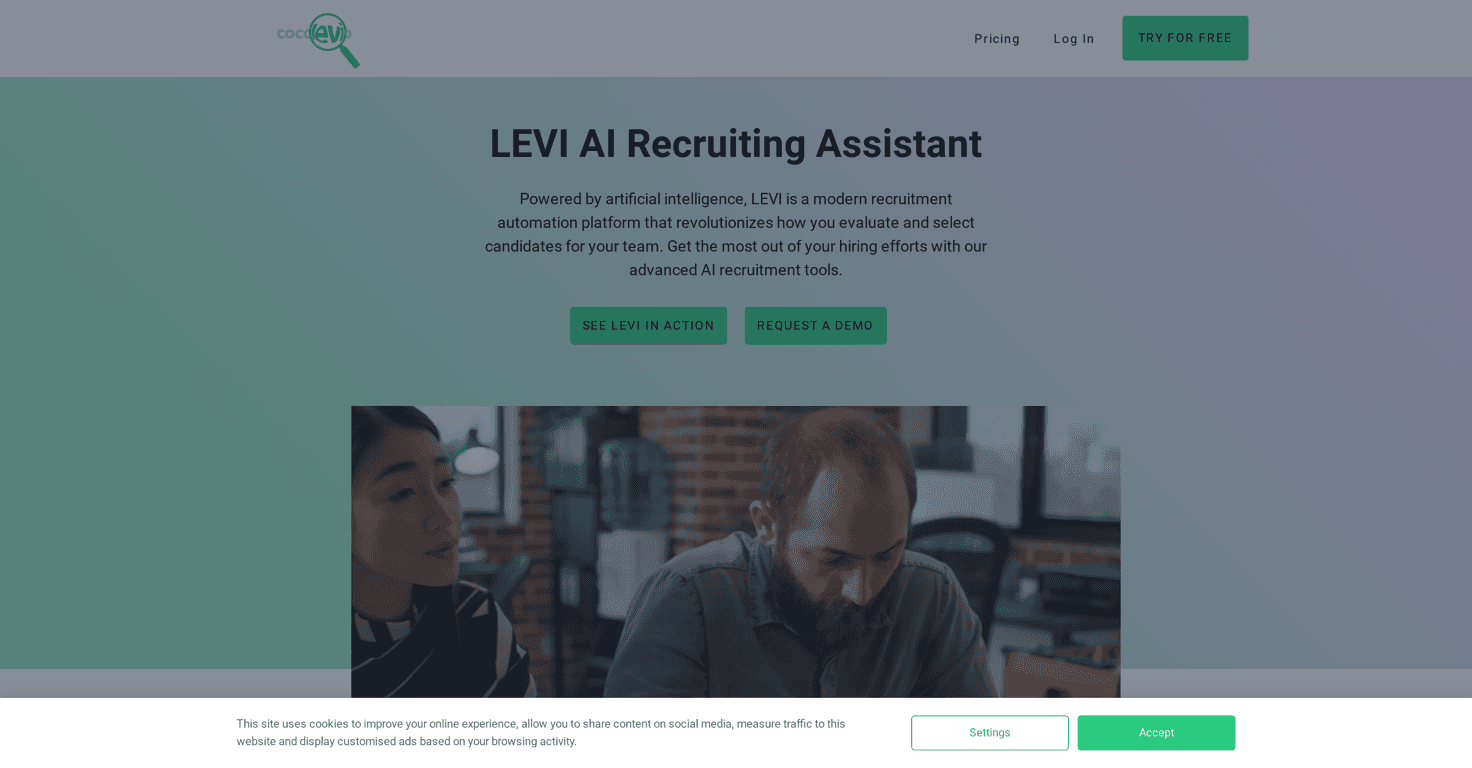
LEVI AI Recruiting Software leans on AI to support a few big pain points in recruiting: resume overload, slow screening, and messy communication with candidates. The core idea is pretty straightforward—match candidates to job roles using their skills and experience, so you’re not spending hours manually sorting through applications. In my experience, even a small reduction in “resume reading time” can feel huge once you’re hiring for multiple roles.
One feature that stood out to me is the automated interview flow. Instead of just scheduling and hoping everyone shows up on time, the platform is designed to assess candidates and produce reports that summarize strengths and weaknesses. That’s the part recruiters usually want anyway—clear signals they can act on quickly. Of course, it’s still on you to review results and decide what’s “good enough,” but it can cut down the back-and-forth and make the process more consistent.
LEVI also claims integration with applicant tracking systems (ATS). If you’ve ever tried to bolt a new tool onto an existing hiring workflow, you know how annoying it can be. Integrations matter because they help keep candidate data from living in five different places. When everything connects properly, you can automate repetitive tasks and keep your pipeline cleaner.
Another angle I paid attention to is how LEVI handles decision-making. It’s positioned as data-backed and focused on reducing bias, including efforts to promote diversity. I’m always a little cautious with “bias reduction” claims from any vendor—because real bias can creep in at the job requirements, sourcing stage, or even how the system is configured. Still, having structured assessments and standardized evaluation criteria is usually a step in the right direction.
Lastly, I like that it emphasizes candidate communication. People don’t just want speed—they want clarity. When candidates go dark for weeks, you lose top talent. Even simple updates (“we received your application,” “you’re moving forward,” “here’s next steps”) can make the whole experience feel more professional. LEVI is built to keep that momentum going.
Key Features
- AI Driven Candidate Sourcing
- Automated Interviews
- Integration with Hiring Systems
- Intelligent Recruitment Decisions
- Personalized Communication
What those features look like in practice
Here’s what I’d expect to notice if I were using LEVI day-to-day:
- Less manual sorting: Instead of scanning every resume like a full-time job, you’re working from ranked matches or structured candidate summaries.
- More consistency: Automated interview assessments can help reduce “who was the interviewer on that day?” variation—assuming the prompts and evaluation criteria are set up well.
- Fewer status update gaps: Candidate messaging tends to get neglected when teams are busy. A system that pushes updates automatically usually improves response rates and keeps candidates engaged.
- Cleaner handoffs to the recruiter: If the reports are detailed (strengths, weaknesses, fit indicators), you spend more time deciding and less time digging.
Pros and Cons
Pros
- Faster hiring workflow: AI automation helps reduce the time spent on repetitive screening tasks.
- More structured candidate evaluation: Reports can make it easier to compare candidates without relying purely on gut feel.
- Potential bias reduction: Standardized assessments can help limit some forms of inconsistency that lead to unfair outcomes.
- Integration-friendly: If your ATS is supported, you can tailor your process and avoid duplicate data entry.
- Better candidate experience: Personalized communication keeps candidates informed and reduces the “silence” problem.
Cons
- Tech dependency: If something breaks (or integrations lag), recruiting teams still have to work—so you’ll want a fallback process.
- Change management: Some recruiters just don’t trust AI-driven assessments at first. It may take time to get buy-in.
- Setup takes effort: Configuring roles, matching criteria, and interview prompts isn’t always instant. Plan for at least some upfront work.
- AI outputs still need human review: Reports are helpful, but you shouldn’t treat them as the final authority—especially for nuanced roles.
Pricing Plans
LEVI offers different pricing options, including free trials and customizable enterprise packages. For the most up-to-date numbers, check the Pricing Page. If you’re evaluating for a team, I’d also ask what’s included for integrations and onboarding—those details can matter more than the headline price.
Wrap up
LEVI AI Recruiting Software is the kind of tool I’d recommend if you’re trying to speed up screening, keep candidates updated, and make your evaluations more consistent. The biggest wins (in my view) are the automated interview support, the candidate matching workflow, and the emphasis on communication. Just don’t expect it to replace recruiters—it should make their work easier.
If you’re hiring at any meaningful volume—or you’ve been drowning in resume reviews—this is worth a look. And if you do try it, start with one or two roles so you can fine-tune the setup before rolling it out more broadly.