Table of Contents
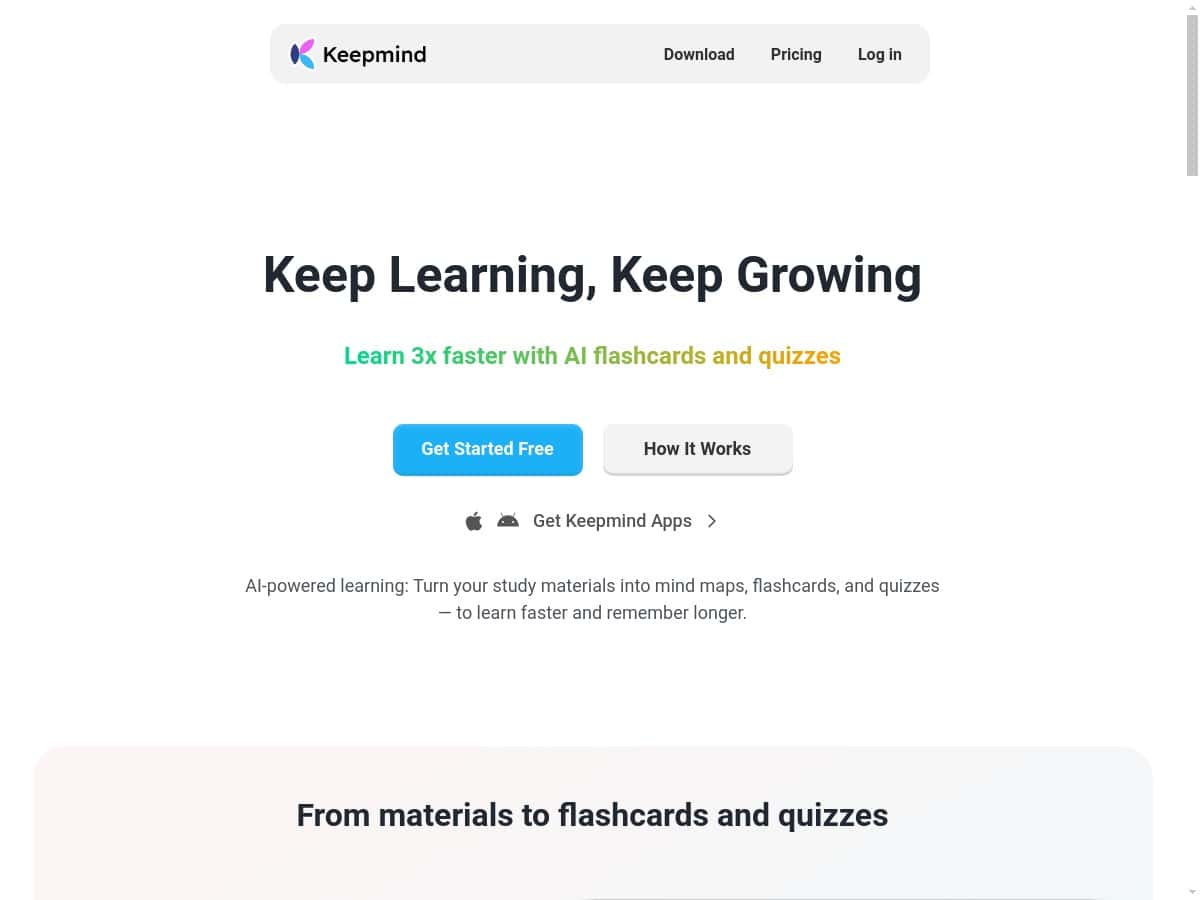
If you’re trying to learn faster without burning hours making flashcards by hand, KeepMind is the kind of app you’ll want to take seriously. I tested it like a normal student would: I uploaded my own study material, let the AI generate cards and quizzes, and then actually did the reviews for a few days to see if it stuck or if it was just another “sounds cool” learning tool.
KeepMind Review: What It Does (and How It Fits Into Real Studying)
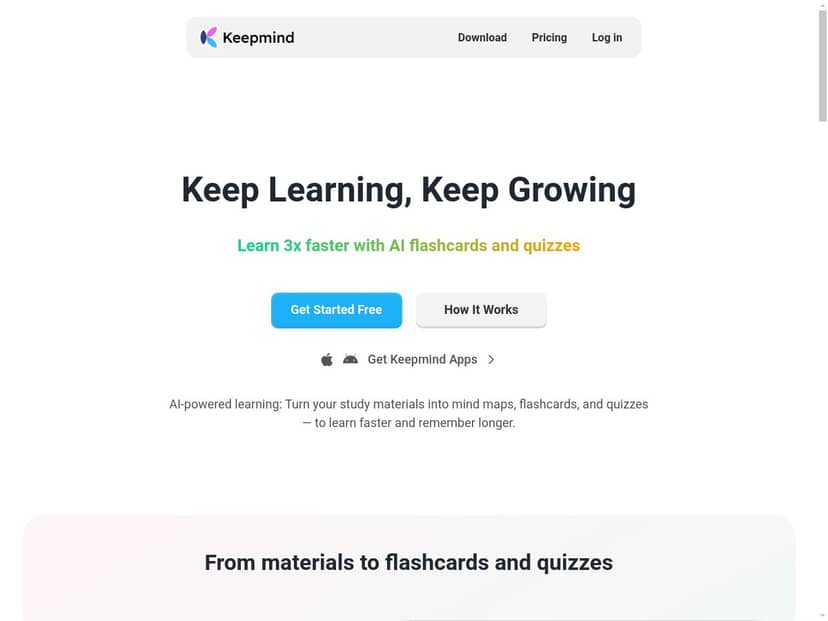
Here’s what I noticed right away: the interface is pretty straightforward. You’re not stuck digging through menus just to start studying. In my experience, the workflow is basically “add your content → generate flashcards/quizzes → review using the schedule.” That’s the whole point, and it’s refreshing when other apps overcomplicate things.
What I actually did to test it
- Device/OS: I used it on a mobile device (iOS) and also tried the same account on desktop to see if the experience was consistent.
- Study window: I did reviews for several short sessions instead of one long grind (roughly 10–20 minutes at a time).
- Content I used: I fed it text from my notes (the kind of bullet points and definitions you’d normally turn into flashcards).
- What I expected: I wanted the AI to pull out key terms, generate clear Q&A prompts, and then schedule reviews so I’d focus on the cards I kept missing.
The generation part
The AI generated flashcards and then built quiz questions based on what I provided. The quality wasn’t “perfect every time,” but it was good enough that I didn’t feel like I was wasting my time. The cards generally reflected the main ideas from my notes, and the quizzes felt like they were testing the right concepts rather than random trivia.
The review/scheduling part
This is where KeepMind either earns its keep or doesn’t. I liked that it pushes you into review sessions instead of letting you forget everything until the night before a test. The spaced repetition approach seemed to adapt to my performance—cards I missed showed up again sooner, and I spent more time on the areas that needed reinforcement.
One thing I’ll be honest about: if you don’t review consistently, spaced repetition won’t magically fix that. It helps most when you actually do the daily/near-daily reviews. When I skipped a day, I could feel it in the number of “fresh” cards that suddenly became “new again.”
Key Features: What You’ll Use Most
- AI-generated flashcards from your material
Upload or paste content, and KeepMind turns it into study cards. In my case, it pulled out definitions and key points pretty reliably. - Quizzes built from your content
Instead of only giving you flashcards, it also creates quiz-style questions. I found this helpful because it breaks the “read the card, flip, repeat” loop. - Spaced repetition scheduling
The app schedules reviews so you revisit cards right before you’re likely to forget them. That’s the whole spaced repetition idea, and KeepMind’s implementation matches the concept well. - Adaptive quiz generation
As you answer, the app adjusts what it focuses on. What I liked: it didn’t keep serving me the same easy cards while ignoring the ones I struggled with. - Simple, learner-friendly interface
No complicated setup. You can get started quickly, which matters if you’re studying between classes or at work.
Pros and Cons: The Honest Version
Pros
- Fast content-to-study workflow: I didn’t have to manually write dozens of flashcards. That alone saved time.
- Spaced repetition feels practical: The scheduling encouraged me to review consistently, and it helped me spend time where it mattered.
- Quizzes add variety: I didn’t get bored as quickly because I wasn’t only flipping cards.
- Good for structured notes: If your material is definitions, key terms, and bullet points, it’s a strong match.
Cons
- Feature details aren’t fully transparent: Some limitations (like export options, exact settings, and advanced controls) weren’t clear enough for me to confidently recommend it for power users.
- AI output quality varies by input: If your source text is messy or too broad, you’ll get cards that are less precise. You may need to edit or regenerate.
- Pricing info isn’t clearly listed here: I couldn’t confirm exact plan tiers from the content provided, so you’ll want to check in-app or on the official listing before committing.
- Consistency is still on you: If you only open the app once a week, the spaced repetition benefits drop fast.
Pricing Plans: What I Can (and Can’t) Confirm
At the moment, the pricing details aren’t included in the content I reviewed. I’d suggest checking the app store listing or the official KeepMind website for the latest subscription tiers and whether there’s a free trial.
If you’re deciding quickly, here’s what I recommend you look for before you pay:
- Whether there’s a free tier (even limited) so you can test your content workflow.
- Card/quiz generation limits (some apps cap the number of decks or uploads per period).
- Export options (PDF/CSV/Anki or similar). If you can’t export, you’re more locked in.
- Whether editing is included (being able to tweak AI-made cards matters).
Who KeepMind Is Best For (and Who Should Skip It)
KeepMind is a good fit if you want to turn notes into study material quickly—especially for subjects where flashcards work well (vocab, definitions, biology terms, history facts, exam-style concepts).
On the other hand, if you’re looking for something like full offline support, deep manual deck building, or advanced spaced repetition controls, you might feel limited. I also wouldn’t rely on it as your only study method if your class requires problem-solving (math/physics) unless you’re pairing it with practice questions.
My Setup Tips: How to Get More Out of KeepMind
Want to make this actually work? Here are a few things I did that improved results pretty noticeably:
- Use cleaner source text: If your notes are scattered, the AI has less to work with. I got better cards when I pasted sections that were already organized.
- Don’t dump everything at once: I started with one topic at a time. That made it easier to judge whether the quiz questions were targeting the right stuff.
- Review in short bursts: 10–20 minutes feels way more sustainable than trying to “catch up” for an hour.
- Watch your missed cards: If you keep missing the same type of question, that’s a sign your cards need tweaking (or your notes need refinement).
Wrap up
KeepMind is solid if your goal is simple: turn your study material into flashcards and quizzes fast, then review using spaced repetition without thinking too hard about scheduling. When the input is decent, the AI-generated cards are good enough to start learning immediately, and the adaptive review helped me focus on what I actually didn’t know yet.
Just don’t expect it to replace good notes or consistent review. And before paying, double-check pricing and limits in the app store or official listing—because the pricing details aren’t clearly stated in the info I reviewed.
If you want a smarter way to keep studying without spending your evenings building decks manually, KeepMind is worth trying—especially for terminology-heavy subjects.