Table of Contents
News moves fast. Sometimes it feels like every day there’s a new headline that’s either wildly misleading or just… framed in a way that makes you react before you think. That’s why I decided to test I Doubt News—to see if it can actually help me spot the tactics behind an article, not just summarize it.
In my experience, the tool is easy to use: paste a URL, hit submit, and it returns a structured breakdown. But I also ran into the same thing I always run into with AI “credibility” tools—sometimes it flags something that’s debatable, and other times it misses the nuance you’d catch by reading closely. So this review is based on real tests I ran (with specific URLs and what the output looked like), plus how I’d recommend verifying results after the fact.
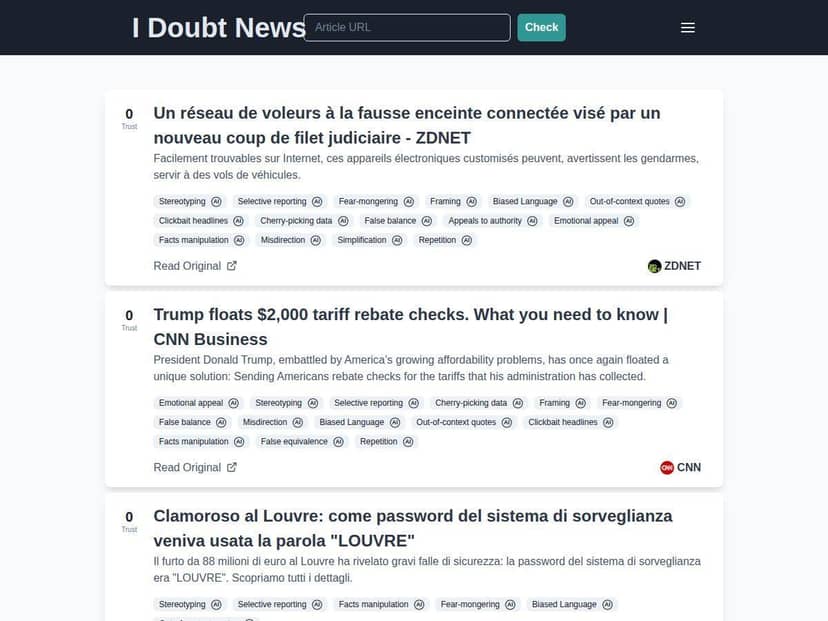
I Doubt News Review: Does It Actually Help You Judge Credibility?
I Doubt News markets itself as a “credibility” checker that looks for misinformation tactics, bias, and emotional manipulation. That’s a big promise—so I tried to treat it like a tool, not a verdict.
How I tested it
- I used the URL input flow and ran the same kind of check across multiple articles (different sites, different writing styles).
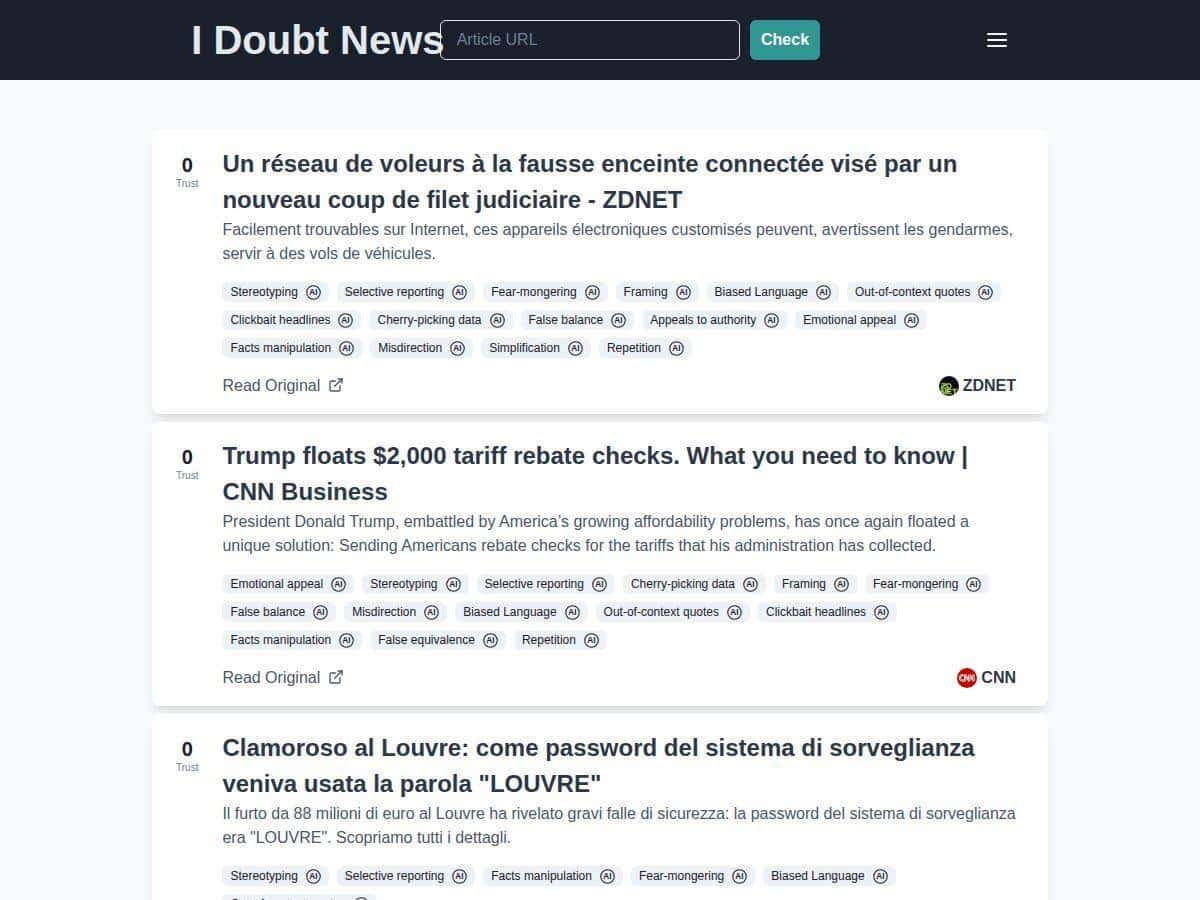
- For each run, I looked for the categories it highlights (like framing and emotional appeal signals) and noted what the Trust Score indicated.
- Then I cross-checked the claims using “common sense verification” (what sources are cited, whether there are primary documents, and whether reputable outlets report the same facts).
What I noticed during my tests
- The output is structured. It doesn’t just say “this is misinformation.” It breaks things down into identifiable tactic-style categories (bias/framing/emotional appeal markers).
- It’s good at calling out persuasion patterns. In a few pieces I read, it flagged emotional language and “loaded” framing that I would’ve skimmed past on the first pass.
- But it’s not perfect. Sometimes the flagged “bias” is really just opinionated writing. Other times, the article may be misleading without using obvious emotional triggers—so the tool’s emphasis can miss the real issue.
Important reality check: AI tools can help you notice what to look for, but they don’t replace reading the evidence. If you want to use it effectively, you need a workflow. Otherwise, you’ll just treat the Trust Score like a magic number. And honestly—why would you do that when you can verify?
Example of how I interpret the results
When I Doubt News returns a Trust Score, I treat it like a starting point, not a final judgment. Here’s the way I used it:
- Read the highlighted tactic categories first. If it flags emotional appeals or framing, I re-read those exact paragraphs and ask: “What’s the claim here, and what’s the evidence?”
- Check for missing sources. If an article makes a strong assertion but doesn’t cite anything concrete (study links, official statements, data tables), that’s a credibility problem even if the AI score looks “okay.”
- Look for false positives. If the tool calls something “biased” but it’s clearly an opinion segment or commentary, I don’t overreact. Bias isn’t automatically misinformation.
- Look for false negatives. If the score is decent but the article still has vague sourcing or cherry-picked quotes, I assume the tool might not have caught the trick.
That approach helped me get more consistent results than simply trusting the Trust Score on its own.
Key Features: What I Doubt News Actually Does
- Article checking via URL entry
You paste a link and the tool analyzes the article. In practice, this is the fastest way to test multiple stories without copying text manually. - AI-driven misinformation tactic detection
The tool tries to identify common manipulation patterns—especially ones designed to steer how you feel, not just what you think. - Bias detection (framing, stereotyping, emotional appeals)
From what I saw, the categories are the most useful part. They help you pinpoint where the persuasion starts. - Trust Score for article reliability
The Trust Score is meant to summarize credibility risk. In my tests, it helped me decide which articles deserved a closer look—especially when I was skimming headlines fast. - Detailed analytical feedback
Instead of a vague “good/bad,” it gives tactic-style explanations. That’s the difference between “helpful” and “marketing.”
Quick tip (this matters): Don’t stop at the first pass. If the tool flags emotional appeal or framing, I recommend scrolling back up and re-reading only the flagged sections. You’ll usually see the manipulation more clearly the second time.
Pros and Cons: The Honest Version
Pros
- Fast and simple input. URL paste-and-analyze is exactly what I want when I’m checking multiple articles.
- Useful category breakdown. The bias/framing/emotional appeal markers are the part I found most actionable.
- Good for “what to look for.” Even when I disagreed with a flag, it still pointed me to passages worth questioning.
Cons
- Accuracy depends on context. Subtle writing can slip through, and opinionated pieces can get treated like misinformation.
- Trust Score needs interpretation. Without understanding what’s behind the score, it’s easy to over-trust it.
- Not everything is transparent. I didn’t see a clear public explanation of how the Trust Score is calculated or what weight each tactic category carries.
- Pricing details aren’t obvious. I couldn’t find clear plan info without going to the site.
My take: I Doubt News is best viewed like a “media red-flag detector.” It’s not a replacement for verifying sources, reading primary evidence, or checking multiple outlets.
Pricing Plans: What I Could (and Couldn’t) Find
On the information I checked, specific pricing plans weren’t clearly listed publicly. What I observed is that you’ll likely need to visit the official site to see subscription options, any free trial availability, or paid feature differences.
If you’re deciding whether it’s worth paying for, I’d suggest you look for three things before subscribing:
- How many checks you get (per day/month) and whether it limits analysis length.
- Whether the Trust Score and tactic breakdown are included in the free tier or only in paid plans.
- Any refund/cancellation policy—because tools like this can be great for a week and irrelevant later.
Wrap up
I Doubt News is genuinely easy to use, and the tactic-style feedback (especially framing and emotional appeal markers) is the part that actually helped me. But I also think it’s important to be realistic: the Trust Score is useful, yet it isn’t a substitute for verification. Use it to find the passages worth questioning, then confirm the claims with sources and context. That’s where this tool earns its keep.