Table of Contents
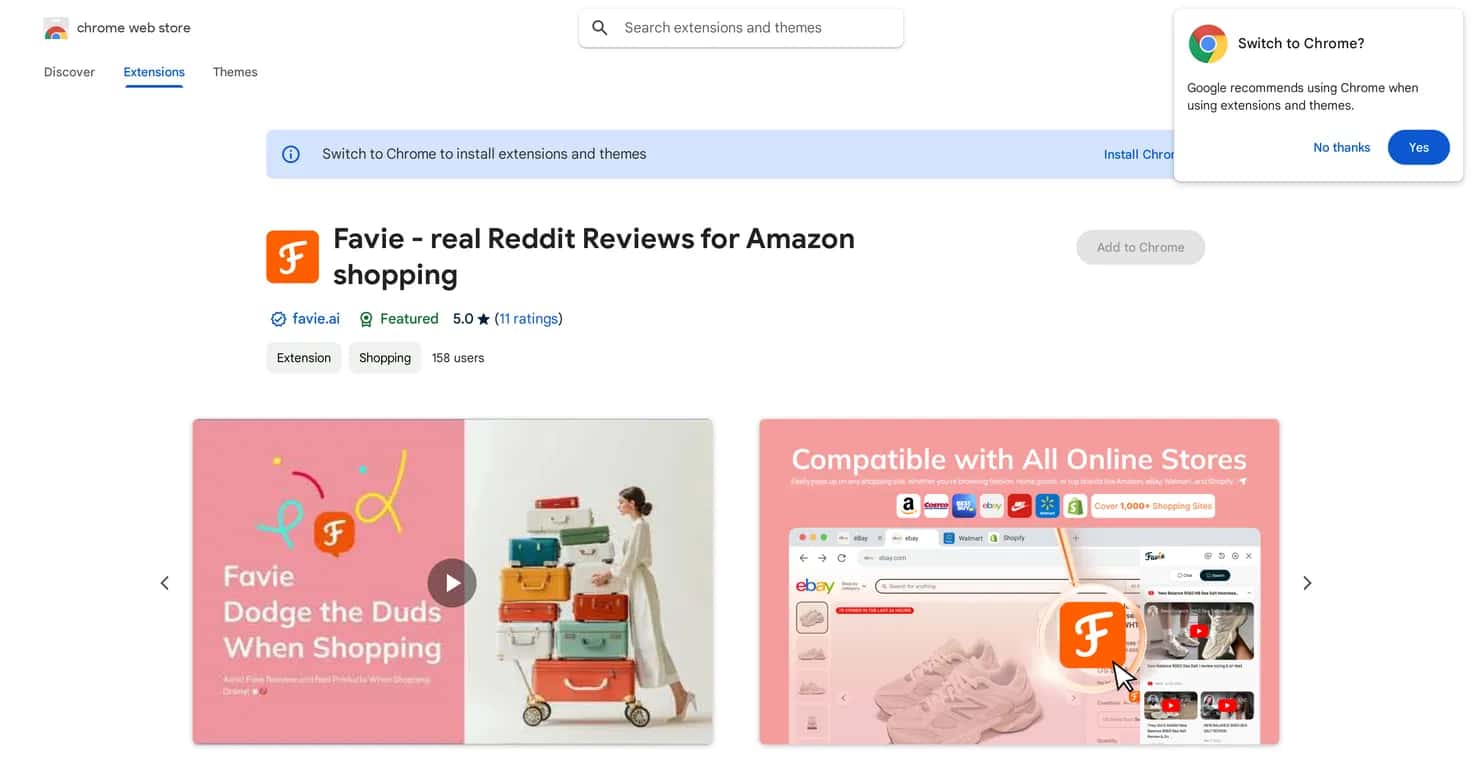
I’ve been burned by “too good to be true” reviews more times than I’d like to admit. You know the ones—tons of five-star ratings, but the comments all sound identical, and somehow nobody mentions the one thing you actually care about. That’s why I was interested in Favie.
Favie is a browser extension that aims to help you spot fake or sponsored-looking feedback by pulling in real user discussions from places like YouTube and Reddit. In my experience, that’s the key difference: instead of relying only on the product page’s review section, it points you toward conversations where people actually describe what happened after they bought the item. It’s also designed to work across major shopping sites, including Amazon, eBay, and Walmart, so you’re not stuck using it on just one marketplace.
Favie Review: Does It Actually Help You Avoid Fake Reviews?
Favie’s whole pitch is pretty simple: stop treating the product page’s star rating as the final boss. Instead, it tries to pull in real user feedback from external sources—especially YouTube and Reddit—where reviews tend to be more detailed (and less “marketing-polished”).
When I tested it while browsing different product listings, what I noticed most was how quickly it tries to get you to the “real talk” parts. You don’t always want to read 80 comments. Sometimes you just want to know, “Is this actually good for sensitive skin?” or “Does this hold up after a month?” Favie’s AI assistant is meant to answer questions like that, pulling from the conversations it finds.
It’s also built to work across multiple marketplaces. That matters, because fake reviews aren’t exclusive to one site. If you bounce between Amazon for convenience, eBay for used deals, and Walmart for everyday basics, it’s nice that the extension isn’t limited to just one storefront.
Key Features I Look For in a Shopping-Review Extension
- Real user reviews from trusted platforms
Instead of only showing you whatever the product page wants you to see, Favie focuses on feedback from places like YouTube and Reddit. In practice, those sources often include more “what happened after I used it” details. - AI-powered assistance (24/7)
The AI assistant is there to answer shopping questions while you browse. I found this most useful when I had a specific concern—like sizing, durability, noise level, or whether something is worth the price. - Works across major shopping platforms
Favie is designed for sites like Amazon, eBay, and Walmart. That’s a big deal if you don’t shop the same way every time. - Personalized recommendations
It’s not just “here are generic pros and cons.” The idea is to align what it shows with what you care about, which is honestly how I prefer to shop—less scrolling, more relevance.
Pros and Cons (The Stuff You’ll Actually Care About)
Pros
- More grounded feedback
Because it leans on user discussions from external platforms, it can help you avoid the “review echo” effect where every comment sounds the same. - Quick browsing support
I like tools that reduce time spent searching for the one answer you need. Favie aims to do that by summarizing and answering while you’re shopping. - Useful across multiple sites
If you shop on more than one marketplace, the compatibility is a real convenience.
Cons
- Coverage depends on what’s out there
If a product doesn’t have much discussion on YouTube/Reddit (or the extension can’t find strong matches), you might not get the depth you were hoping for. - Not every niche product will be easy to evaluate
For super specific or brand-new items, the external review pool can be thin. In those cases, you’ll still want to read reviews manually.
Pricing Plans: What Does Favie Cost?
I didn’t see a clear pricing number in the original info I reviewed, so I can’t responsibly quote a monthly or yearly price here. The best move is to check the official Favie website (or the extension page) for the latest plan details and any free-trial options.
If you’re comparing it to other “review helper” tools, I’d also suggest you look at what you get for the price—like whether the AI assistant limits queries, whether certain marketplaces are prioritized, or if there are premium features.
Wrap up
Overall, I think Favie is a solid idea for anyone who’s tired of getting misled by suspicious product ratings. The biggest win is that it doesn’t force you to rely only on the retailer’s own review section. By pulling in user conversations from places like YouTube and Reddit—and then using an AI assistant to help you interpret it—it can save time and help you make a more confident purchase.
Just keep expectations realistic. If a product doesn’t have enough external discussion, the extension can only work with what it finds. Still, for everyday shopping—especially when you’re trying to figure out whether an item is actually worth the money—Favie feels like the kind of tool I’d want installed.