Table of Contents
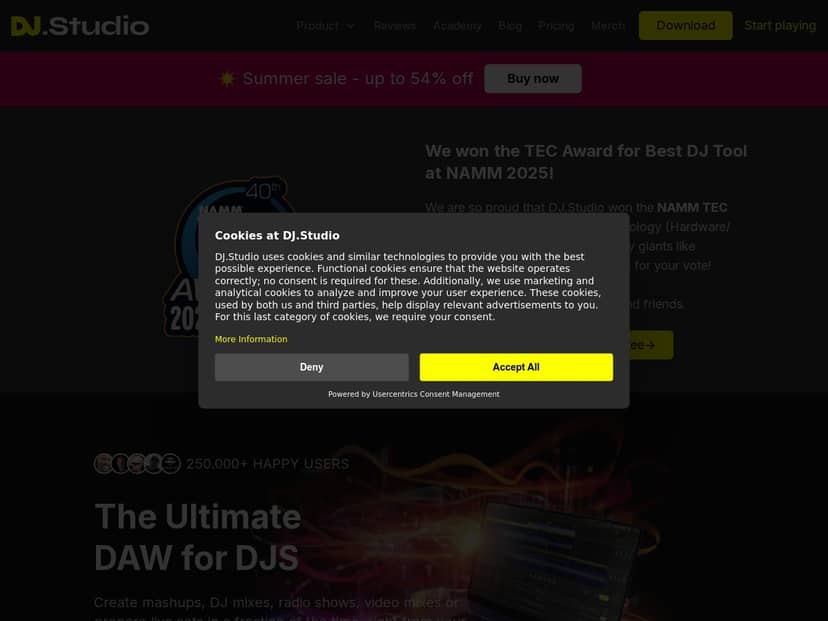
If you’ve ever tried “easy DJ software” and ended up fighting the interface, you’ll probably like what DJ.Studio is aiming for. It’s built around a timeline workflow, so instead of just mixing live in two decks, you can actually see your track arrangement and transitions like an editor.
In my experience, that’s the big difference versus a lot of entry-level DJ apps. DJ.Studio feels more “produce a mix” than “just beatmatch and hope.” I tested it on Windows 11 using a modern laptop (Intel i7-class CPU, 16GB RAM) with headphones for monitoring, and I also tried exporting a couple of test mixes to see how consistent the results were.
DJ.Studio Review
Here’s what stood out to me right away: DJ.Studio doesn’t treat beatmatching like a mysterious art you have to learn from scratch. Instead, it leans on analysis (tempo/key) and a timeline editor so you can focus on the creative part—arranging, shaping transitions, and polishing the mix.
What I actually did during testing: I pulled a few tracks from supported sources, lined them up in a sequence, and used the app’s matching tools to generate blends between songs. Then I went back and adjusted the transition points manually—because even with automation, you still want control. I also ran an export test to compare WAV vs MP3 output and checked that the transitions didn’t introduce obvious artifacts.
Two concrete outcomes I noticed:
- Faster setup: Once I used tempo/key matching, I wasn’t spending minutes nudging track alignment. For my test mixes, the “getting to a playable arrangement” step felt noticeably quicker than doing everything purely by ear.
- More consistent transitions: The timeline-based approach made it easy to choose where the crossfade/transition happens. I ended up with smoother blends because I could see the overlap visually instead of guessing timing.
That said, DJ.Studio is cloud-based, so you should assume you’ll need a stable connection. If your internet drops, you’re not going to get the same “installed software” resilience. It’s also not a one-click magic button—when tracks are wildly different or the audio analysis is imperfect, you’ll still need to tweak transition timing or EQ-style shaping.
Key Features
- Timeline-based mixing editor for smooth transitions
This is the heart of DJ.Studio. You build your mix as a sequence on a timeline, then set transition regions where one track overlaps another. In my testing, this made it much easier to plan longer fades and “story” sections (like gradually building energy) instead of only doing short, reactive beatmatching moments. - Automated playlist harmonization by tempo and key
DJ.Studio uses tempo and key information to help line tracks up. What I noticed: it works best when your library has decent metadata and the tracks are within a reasonable BPM range. If you throw in tracks that are far apart, the automation can still help, but you’ll probably want to review the transition placement rather than trusting it blindly. - Support for creating mashups, radio shows, and live sets
The workflow is flexible enough for more than “DJ mix only.” I tried structuring a short segment like a radio-style intro + main section, and the timeline made it straightforward to think in blocks (intro, drop, outro) instead of only two-deck swapping. - Integration with major music libraries such as Spotify, Beatport, rekordbox, and Serato
If you already use one of these ecosystems, this is a big deal. I didn’t have to manually convert everything just to test. The integration also matters for repeat use—less time importing, more time actually mixing. - Fast export options including WAV and MP3, plus direct uploads to platforms like Mixcloud
Exports are one of the places where you’ll feel how “ready for real use” the platform is. I tested both WAV and MP3 and found the MP3 output convenient for quick sharing, while WAV was better when I wanted the cleanest possible source for later editing. Uploading directly is handy, but keep an eye on platform limits (file size, duration, and format rules), because those can vary. - Tools for stem separation, creative effects, and customizable transitions
Stem tools are useful when you want to isolate vocals or drums for creative moments. I didn’t rely on this for every transition, but when I used it, it made it easier to create targeted effects (like bringing elements in/out during the overlap). Just remember: stem separation isn’t always perfect depending on the source track. - Educational resources and community support for all skill levels
This matters if you’re learning. The best “education” is when it shows you how to use the interface features you’ll actually touch—timeline editing, matching tools, and export settings. - Supports video integration for visual effects and transitions
If you plan to post DJ content with visuals, video integration is a nice bonus. It’s not something I used heavily during my test, but it’s the kind of feature that can save time if you already think in terms of performance + visuals.
Pros and Cons
Pros
- Timeline editing is genuinely helpful: I found transitions easier to plan and tweak because you can see the overlap.
- Automation reduces setup time: Tempo/key matching got me to a working arrangement faster than manual alignment from scratch.
- Integration with popular libraries: Importing and working with existing music sources feels less painful than starting from a blank library.
- Export and sharing options: WAV/MP3 exports are straightforward, and direct uploads (like Mixcloud) are convenient when you’re ready to publish.
Cons
- Cloud dependency: Because it’s cloud-based, you really do want stable internet—especially if you’re working on longer sessions.
- Automation isn’t “set and forget”: When tracks don’t match well, you’ll still need manual adjustments to get transitions sounding right.
- Learning curve for advanced features: Basic mixing is approachable, but mastering effects, stems, and more creative transition workflows takes some time.
Pricing Plans
I didn’t find reliable, fixed pricing numbers in the content you shared, so I don’t want to guess. What I can say is that DJ.Studio appears to offer multiple plans, and there are mentions of student discounts and an affiliate program.
For the most accurate pricing (and to check what features are included on each tier), I recommend you verify on their official site directly—especially because cloud tools and export/upload limits can change over time.
Wrap up
My verdict: DJ.Studio is a strong choice if you like the idea of mixing with a timeline and want automation (tempo/key) to speed up the “getting started” part. It’s especially appealing if you’re a bedroom DJ who wants professional results without spending hours wrestling with alignment.
Just don’t treat it like a classic fully offline DJ deck replacement. If your internet is shaky or you need heavy offline reliability, that’s where the limitations show up. Still, for arranging, polishing transitions, and exporting/share-ready mixes, DJ.Studio impressed me more than I expected.