Table of Contents
Creating a villain that feels actually believable is harder than it looks. You don’t want the “evil for evil’s sake” type who cackles through every scene, and you definitely don’t want the boring kind who’s just there to get defeated. The good stuff? The villain who makes readers pause and think, “Yeah… I get why they’d do that.”
In my experience, the difference comes down to a few practical choices: a motive that makes sense, a backstory that explains the damage, and conflicts that keep pressure on them (even when they “win”). If you nail those pieces, your villain stops feeling like a cardboard cutout and starts feeling like a person with a logic all their own.
Let me show you how I build compelling villains, step by step.
Key Takeaways
- Make your villain relatable by tying their behavior to real emotions people recognize: jealousy, insecurity, grief, humiliation, or the need to belong.
- Write a clear motivation statement (goal + fear + “what they believe”). That becomes the engine for every decision they make.
- Use backstory as cause-and-effect, not trivia. A turning point should produce a new rule they live by.
- Introduce your villain in a high-stakes moment that shows their personality and their methods.
- Balance strengths with weaknesses so they feel dangerous and human (not invincible, not pathetic).
- Give them external obstacles and internal friction. The plan should cost them something, emotionally or ethically.
- Avoid stereotypes by adding a specific, plot-relevant quirk: an unusual fear, a contradictory value, or a habit that changes how they operate.
Step 1: Make Your Villain Relatable
If you want readers to care, give them an emotional doorway into your villain. Not a “sympathy speech.” A doorway. Something a real person would recognize in their own life.
Here’s a quick method I use: pick one primary emotion and one secondary wound. The primary emotion drives their behavior. The wound explains why that emotion got so intense.
Examples of primary emotions that work well for villains:
- Jealousy: “They have what I should’ve had.”
- Insecurity: “If I’m not useful, I’ll be abandoned.”
- Grief: “I can’t accept the loss, so I’ll rewrite reality.”
- Humiliation: “I’ll never be powerless again.”
- Need to belong: “If I’m not chosen, I don’t exist.”
Now add a wound that made that emotion stick. Not “they were sad once.” Something specific and time-stamped in your story world: a betrayal, a public failure, a promise broken, a diagnosis, a theft, a death. The more concrete it is, the more believable the villain’s reactions will be.
In my own drafts, I’ve noticed that villains become instantly flatter when their “relatability” is vague. “They’re hurt” doesn’t land. “They were laughed at when they tried to protect someone” does.
Want a fast way to generate relatable traits? Use plot prompts to pull emotions out of the situation. If you don’t know where to start, try these horror story plot ideas as a springboard, then answer the questions below:
- Prompt: “The town keeps a secret to protect someone they love.” Question: What emotion would make the villain justify the lie?
- Prompt: “A friend begs the protagonist for help—and the villain ‘helps’ instead.” Question: What wound makes the villain feel entitled to decide?
- Prompt: “A ‘cure’ works, but it changes people permanently.” Question: What fear makes the villain call that ‘necessary’?”
- Prompt: “A contract is offered with one impossible condition.” Question: What does the villain believe about power and fairness?”
Relatability isn’t the same thing as being right. It just means the reader can follow the emotional logic—even when they disagree with the choices.
Step 2: Give Your Villain a Clear Motivation
“They’re evil” isn’t motivation. It’s a label. If your villain doesn’t have a reason that feels internally consistent, your plot will wobble. Scenes will feel random because the villain is making random decisions.
Here’s the framework I recommend: write a 3-part motivation statement.
1) Goal: What do they want?
2) Fear: What are they trying to prevent?
3) Belief: What do they think is true about people, love, power, or the world?
Fill it in like this (I literally keep this template in my notes):
Goal: I want ________.
Fear: I can’t survive ________.
Belief: People only ________.
Let’s make it concrete. Say your villain is a “fixer” who ruins lives to stop disasters. You might write:
Goal: I want to prevent the next catastrophe.
Fear: I can’t survive being blamed for another death.
Belief: People panic, so only control saves them.
That belief becomes the lens for everything: why they lie, why they recruit, why they choose violence, why they spare someone (or don’t).
Also: don’t skip the “cost.” In my experience, the best motivation creates friction. The villain’s plan should demand something they hate—crossing a line, betraying an ally, sacrificing a relationship, or admitting they’re wrong (and they’ll never do that easily).
If you want a character anchor, build your motivation around a simple “need → wound → lie → plan → cost” chain:
- Need: What emotional requirement drives them?
- Wound: What happened that made the need urgent?
- Lie: What wrong belief keeps them moving?
- Plan: What steps do they take to act on the lie?
- Cost: What do they lose while executing the plan?
Quick example: Darth Vader. His goal is power and control, his fear is losing what he’s built (and being powerless again), and his belief is that love/attachments are threats. That’s why his decisions keep snapping back into the same patterns. He’s not just “dark.” He’s consistent.
So ask yourself: What’s your villain fighting for and what are they terrified will happen if they fail? Answer those early, and the rest of the story becomes easier to write.
Step 3: Create a Strong Backstory
Backstory should do work. If it doesn’t change how your villain behaves, it’s probably just background noise.
What I look for is a turning point—a moment that forces the villain to adopt a new rule for surviving. That rule becomes their personality in disguise.
Use this cause-and-effect pattern:
- Before: Who were they when life was “normal”?
- Incident: What happened that shattered their old self?
- Choice: What did they do right after the incident?
- Rule: What conclusion did they form?
- Behavior: How does that rule show up in their current actions?
Let’s say your villain used to be idealistic. Then they watched someone they trusted betray them publicly (incident). They chose silence because speaking up got them destroyed (choice). Now their rule is: “Truth doesn’t save people—power does.” That rule is why they manipulate, why they stage events, and why they treat the protagonist like a resource, not a person.
In my last rewrite, I had a villain with a “sad childhood.” It read fine on paper, but the character didn’t feel different. After I changed it into a specific turning point—betrayal during a rescue—everything clicked. Their motivation sharpened. Their tactics changed. Even their dialogue got more precise, like they were always measuring risk.
Pop culture examples help, but don’t copy them directly. Oogie Boogie works because his “playful but twisted” vibe hints at a past that shaped his worldview. The takeaway isn’t “make a funny villain.” The takeaway is: let the past explain the contradiction.
If you’re stuck, you can use targeted prompts instead of generic ones. Here are a few that tend to produce tragic, believable villain histories:
- Prompt: “The villain’s biggest lie started as a promise.” Exercise: Write the promise in one sentence, then write how it was broken.
- Prompt: “They saved someone once… and it backfired.” Exercise: What was the unintended consequence?
- Prompt: “A mentor taught them a rule that later became a weapon.” Exercise: What rule is it, and how do they twist it now?
- Prompt: “They were forgiven—and it made them worse.” Exercise: Why did forgiveness feel like betrayal?
If you want more structure for darker arcs, you can also use dystopian plot generators to spark specific tragic scenarios, then plug the scenario into the cause-and-effect template above.
Step 4: Introduce Your Villain With Impact
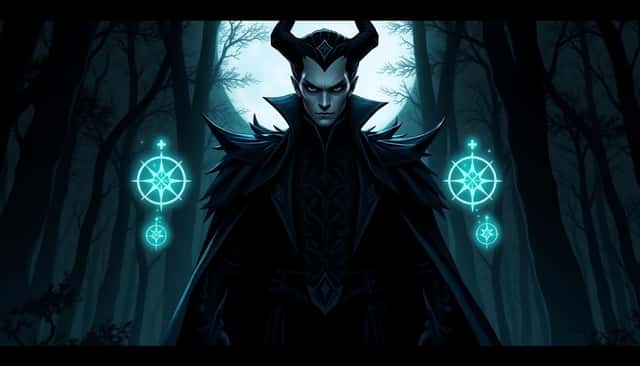
First impressions matter, but here’s the twist: for villains, the first impression should do two jobs. It should show what they want and how they operate.
When your villain walks onto the page, readers should immediately feel one of these:
- Danger: Something bad is already happening because of them.
- Control: They’ve arranged the scene like a chessboard.
- Uncertainty: You can’t tell if they’re bluffing—and that’s scary.
In other words, don’t introduce them during a calm conversation unless the conversation itself is threatening. Bring them in during a crisis, a negotiation, a reveal, or a moment of public humiliation.
Ursula in The Little Mermaid is a good example because she enters with confidence and a distinctive presence. You don’t need a backstory dump. You just need a vibe that’s unmistakably “this person will take something from you.”
Here’s a simple checklist for your villain’s first appearance:
- One sensory detail: a smell, a sound, a visual motif (but keep it specific).
- One method: how do they get what they want? Threat? Charm? Bargain? Leverage?
- One moral tell: what do they casually dismiss as “not a big deal”?
- One unanswered question: what are they hiding or delaying?
And please—don’t reveal everything. If you explain their entire motivation in the first scene, you’ll drain the suspense. Instead, show the behavior first. Let the reader earn the understanding later.
Step 5: Show Your Villain’s Strengths and Weaknesses
A villain who’s only strong feels like a boss fight. A villain who’s only weak feels like pity bait. Balance makes the character feel real.
What I aim for is this: strengths that create momentum and weaknesses that create consequences.
Strengths can be obvious (powers, intelligence, resources) or subtle (patience, social skills, timing). The key is that the strength solves problems in the story.
Weaknesses should also solve problems… just for the hero. They create openings. They make your villain fall into predictable traps.
For example, Maleficent’s power and presence are the threat. But if you never show a crack, she becomes untouchable. Give her a weakness that makes her choices messy: pride, a specific fear, a loyalty she can’t break, or a belief that limits her options.
Darth Vader is a strong reminder that even the most formidable villains can be undone by attachments. His strength is command. His weakness is emotional conflict that he refuses to resolve.
Try this quick exercise: list 3 strengths and 2 weaknesses.
- Strength #1: (What can they do better than anyone?)
- Strength #2: (What do they notice that others miss?)
- Strength #3: (What resource do they control?)
- Weakness #1: (What do they refuse to admit?)
- Weakness #2: (What triggers their worst decision?)
Then connect them: “Because of Weakness #1, they use Strength #2 in a way that backfires at scene beat X.” That’s where realism comes from.
Step 6: Create Conflicts for Your Villain
If your villain’s life is a straight line to success, your story will feel flat. The plot needs friction. Not just for the hero—for the villain too.
External conflict is the easiest: the hero gets in the way, plans fail, allies betray, the environment turns hostile. That stuff is obvious.
Internal conflict is where the tension gets addictive. This is the villain arguing with themselves while they try to stay “right.”
Internal conflict ideas that actually show up on the page:
- Guilt: They hate what they’re doing, but they convince themselves it’s “necessary.”
- Hesitation: They’re brave in public, but panic in private when consequences become real.
- Ideology vs. reality: Their worldview says one thing, but evidence points another way.
- Loyalty conflict: They want power, but someone they care about is blocking the path.
- Identity fracture: They’re afraid that if they stop, they’ll become nothing.
Here’s the trick: make the conflict cost them. They should lose time, reputation, control, or a relationship. Even if they “win the scene,” they pay for it later.
If you’re stuck coming up with believable struggles, don’t use random prompts. Use situation-based prompts and force the villain to respond.
For example, if you want winter-themed intensity, these winter writing prompts can help you generate a specific pressure cooker scenario (storms, isolation, scarcity), then you decide how your villain exploits it—and what it takes from them emotionally.
Quick mini-template:
- Scene problem: What makes today harder than yesterday?
- Villain move: What do they do to regain control?
- Consequence: What do they lose because of that move?
- New dilemma: What internal belief gets challenged?
That’s how you keep conflict alive for the whole cast, not just your protagonist.
Step 7: Avoid Common Villain Stereotypes
Villains get predictable when you rely on the same visual cues and the same “rules” every time: dark clothes, ominous laughter, mysterious scars, a castle lair that exists mostly for vibes. Sure, those can work—but they shouldn’t be the whole character.
In my opinion, the easiest way to avoid stereotypes is to give your villain one specific contradiction.
Examples of contradiction types:
- Power + fragility: They’re terrifying, but they freeze under a particular emotional trigger.
- Logic + impulse: They plan meticulously, then ruin everything when they feel disrespected.
- Charm + cruelty: They can talk anyone into anything… and they hate that they can.
- Control + chaos: They want order, but their habits create mess and evidence.
If your villain has supernatural powers, don’t just give them “strong magic.” Give them an unusual limitation that forces creative choices. Limitations make scenes interesting because the villain can’t brute-force their way out every time.
Here are a few limitation ideas you can adapt:
- They can cast spells only when they’re calm—so they avoid sleep, meditate, or fake confidence.
- Their power works, but it costs them memories (so they strategically forget).
- Their magic can’t cross running water—so they plan around rivers and floods.
- They’re afraid of storms, but thunderstorms are when their power is strongest.
And if you want to build more nuanced characters overall, you might find these tips on creating medium content books useful—especially the part about letting character complexity do the heavy lifting instead of relying on plot tricks.
Originality comes from specificity. Your villain should have a reason for every habit, every fear, every choice. When you do that, they stop feeling like “a villain” and start feeling like the villain for your story.
FAQs
Show recognizable emotions and pressures—jealousy when they’re watching someone succeed, fear when they’re losing control, grief when they can’t accept an outcome. The goal isn’t to make them “nice.” It’s to make their logic feel human. Give them a clear perspective and a vulnerability that affects their choices.
A compelling motivation has a goal, a fear, and a belief. For example: “I want control (goal) because I can’t survive being blamed (fear), and I believe people only change when forced (belief).” When you write it like that, every scene decision becomes easier to justify.
Introduce them during a high-stakes moment where their method is visible. Give them one distinctive sensory detail, one clear action that changes the situation, and one unanswered question. You don’t need the full backstory right away—just enough to make the reader feel the threat and wonder what they’re really after.
Avoid villains who are evil with no internal logic, villains who only monologue without taking action, and villains whose plans are predictable because they follow the same “mustache-twirling” beats every time. Replace stereotypes with specificity: a plot-relevant quirk, a real limitation, and a motive that creates real choices (and real consequences).