Table of Contents
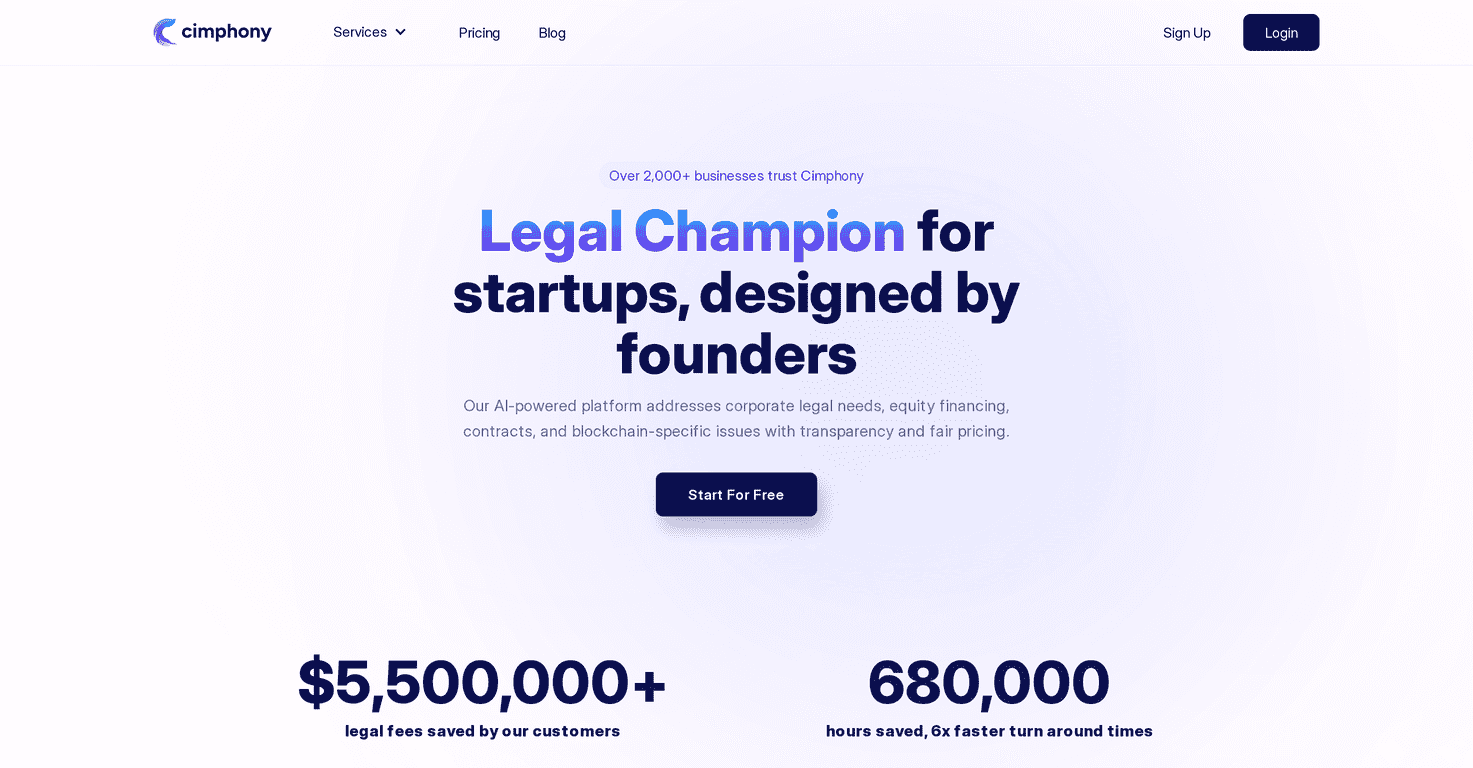
If you’ve ever tried to handle legal stuff as a startup founder, you already know the feeling: one minute you’re building product, and the next you’re staring at a contract template that’s 12 pages long and somehow still missing “the one clause you actually need.” That’s why I was curious about Cimphony.
In my experience, legal workflows usually fall into two buckets: either you pay a traditional law firm by the hour (and it adds up fast), or you cobble together docs and hope nothing breaks later. Cimphony positions itself in the middle—using AI to help with contract management, document creation, and startup-focused legal support—while still aiming to keep things organized and predictable.
So, does it actually make legal tasks less painful? I dug into the features and how the service is presented, and here’s what stood out to me (plus a few places I’d be cautious).
Cimphony Review: Startup Legal Help That Actually Feels Built for Speed
Cimphony is built around the idea that startups need legal support that doesn’t slow everything down. The big promise is that you can manage common legal tasks—like contract management and fundraising-related documents—without spending weeks chasing versions and revisions.
What I like about the way Cimphony is positioned is that it’s not just “here’s a template generator.” It’s framed as a system: you get workflows, document automation, and compliance assistance, which is exactly what founders usually need when legal work starts piling up.
That said, I also pay attention to what these tools can’t do. If you’re dealing with a highly negotiated, high-stakes dispute, you probably still want an experienced human attorney in the loop. AI can help accelerate and organize—but it shouldn’t replace legal judgment where risk is high.
Key Features I’d Actually Use as a Founder
- Legal Project Management for transparency and proactive oversight: I’m a fan of anything that turns “legal work” into visible steps. When you can track what’s happening (and what’s next), you don’t have to keep pinging someone or guessing where a doc is stuck.
- Fast Delivery using AI: The practical win here is turnaround time. If you’ve ever waited days for minor edits, you know how painful that is during fundraising or vendor onboarding.
- Flat-rate pricing: Predictability matters. Hourly billing can be a surprise bill waiting to happen, especially when a contract turns into “just one more round of revisions.”
- Comprehensive services covering general counsel, HR, and more: This is useful because startups don’t just need contracts—they need employment-related documents, policies, and ongoing compliance support as the team grows.
- Regulatory compliance assistance: Compliance is one of those areas where “we’ll deal with it later” becomes expensive later. Having help aligning with applicable rules can reduce that scramble.
- Document automation for quick creation: This is where founders usually feel the biggest difference. If a system can generate first drafts quickly, you can spend time reviewing substance instead of formatting and rebuilding from scratch.
- Customizable templates for agreement preparation: Templates are great—until they aren’t. I like that Cimphony emphasizes customization, because your business model (SaaS vs. marketplace vs. agency) changes what clauses you should care about.
Pros and Cons (The Honest Version)
Pros
- Time savings compared to traditional law firms: In startups, speed isn’t a “nice to have.” It’s often the difference between closing a deal and missing a window.
- More predictable costs thanks to flat-rate pricing: Budget planning becomes way easier when you’re not constantly guessing how many hours a contract will take.
- Startup-friendly breadth: General counsel-style support plus HR and compliance is exactly the mix that grows with you.
- Tech-forward approach: If your team is already comfortable working with tools and automation, Cimphony’s style will feel natural rather than clunky.
Cons
- Complex legal issues may still require a lawyer: If you’re in a negotiation with heavy customization, or you’re dealing with litigation, you’ll want human expertise.
- Some traditional legal professionals may be skeptical: That’s not necessarily a deal-breaker, but it can matter if you’re collaborating with external counsel.
- Privacy and data security are always a concern: Any time you’re using AI tools for documents, you should ask hard questions about data handling, retention, and access controls.
Pricing Plans: Flat-Rate, But Check the Details
Cimphony uses flat-rate pricing models, which is a big reason many startups consider it in the first place. That said, I always recommend verifying what’s included in each plan before you commit—because “flat-rate” can still mean different scopes depending on the service.
For exact pricing information, potential clients are encouraged to check their pricing page directly here.
Wrap up
For startups, Cimphony feels like the kind of legal support that’s designed to keep momentum. If you’re trying to manage contracts, fundraising documents, and compliance without burning your budget on hourly legal time, it’s definitely worth a look.
Just don’t treat it like a “set it and forget it” solution for every edge case. In my view, the best way to use a platform like this is to let it handle the repeatable, document-heavy work—then bring in a human attorney when the situation gets truly complicated.
Promote Cimphony