Table of Contents
Getting your book in front of the right readers can feel like a puzzle—especially when you’re trying to do it without burning months (or money) on guesswork. If you’re wondering what a BookBub Featured Deal is, how the application actually works, and what you need to get approved, I’ll walk you through it like I would for a friend who’s serious about sales.
In my experience, the biggest mistake authors make is treating this like “submit and hope.” It’s more like: prep your book for curators, set your pricing like a strategy, and then show up during the deal with a plan. Do that, and your odds jump.
Key Takeaways
Key Takeaways
- Featured Deals put your discounted or free ebook in BookBub’s curated email newsletters, aimed at readers who already like your genre. The upside is fast visibility; the catch is that it’s competitive.
- The application asks for your book details, pricing, and sales/platform info. I can’t promise acceptance, but in my workflow I treat every submission like it needs to “answer the curator’s questions” in plain language.
- To qualify, your book generally needs to be priced at least 50% off or free for the deal, and it needs strong presentation: cover, blurb, and metadata that match what readers search for.
- BookBub’s selection process looks at quality and relevance (genre fit), plus performance signals like reviews and sales momentum—especially recent activity.
- Pricing matters more than most people think. Many authors start around $0.99–$2.99, but I’ve also seen books perform well at higher promo prices when the genre demand is there and the blurb converts.
- Before applying, I recommend a tight pre-flight checklist: confirm regional availability, verify your deal price is correct on each platform, and make sure your cover + blurb are “click-worthy” for your target genre.
- During the deal, don’t go silent. Reply to readers, share the link early, and monitor results so you can respond quickly (and plan your next release with the data you learn).
- Common rejection reasons I’ve seen (and experienced) usually come down to avoidable issues: incomplete/incorrect pricing, weak cover/metadata, mismatched genre expectations, or missing recent reviews.

What Is a BookBub Featured Deal?
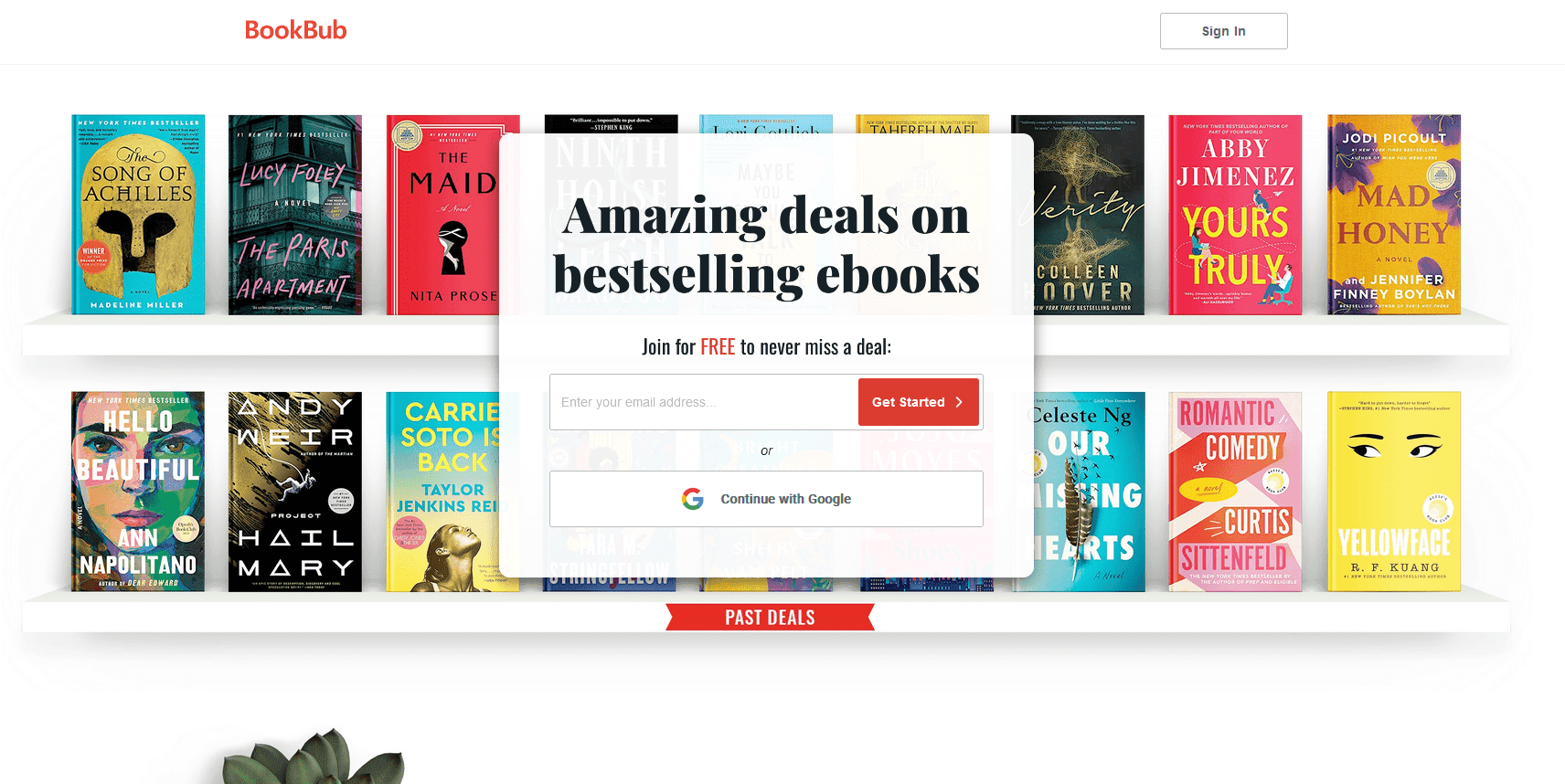
A BookBub Featured Deal is a paid promotion where your ebook gets highlighted in BookBub’s curated email newsletter. The key part is “curated.” They’re trying to match your book with readers who already want that genre—not just blasting links to whoever.
When your deal runs, BookBub typically shows your title to a very large audience (often hundreds of thousands of subscribers, depending on the campaign). That can translate into:
- downloads during the promo window
- momentum after the promo (more visibility can keep working for days/weeks)
- review velocity if readers actually finish and leave feedback
One example that gets mentioned in author communities is Open Evening (debut horror) being featured for four days and hitting 5,000+ downloads. That said, I don’t want to pretend that’s universally replicable. The real takeaway is this: Featured Deals can create a noticeable spike, but your results depend heavily on your genre demand, your cover/blurb conversion, and whether your pricing is competitive for the audience.
If you’re asking “is it worth it?” my honest answer is: it’s worth considering when your book is ready and when you can handle the aftermath (reviews, reader engagement, and follow-up). If your metadata is messy or your cover looks generic, you’re basically paying for traffic you won’t convert.
How to Apply for a BookBub Featured Deal
The application is submitted through BookBub’s website. You’ll be asked to provide details about your book, the discount you want to run, and where your book is available.
Here’s what I pay attention to when I’m filling one out (because this is where most rejections start):
- Genre/category fit: you’re not just picking a genre—you’re signaling to curators where your book belongs.
- Pricing history (and the “best recent price” idea): if your book has been priced inconsistently, your deal discount can look less compelling.
- Sales performance signals: BookBub wants to know if your book is already pulling its weight.
- Regional availability: if the deal is targeted to certain regions, your pricing and access need to match there.
After you submit, your application goes into BookBub’s editorial review. Depending on workload and timing, it can take a few weeks. I usually plan my timeline like this: update everything first, submit only when the listing is “clean,” and don’t schedule major release plans assuming approval.
Also, don’t ignore the competitive nature. I’ve seen authors spend hours polishing their cover and blurb—then lose points because they submitted the wrong price or mismatched platform availability. It happens more than you’d think.
If you’re looking for a more step-by-step workflow for submissions and positioning, you can use this application form guide as a starting point for how to think about readiness before you submit.
And yes—some authors work with professionals who help review the listing and application details. But you can absolutely do this yourself if you treat it like a checklist, not a creative writing assignment.
What Are the Requirements to Qualify?
BookBub’s exact criteria can vary by genre and campaign, but the consistent themes are pretty clear. In practical terms, your book needs to look like a safe bet for readers and a strong fit for BookBub’s newsletter.
Here are the requirements I’d focus on:
- Discount requirement: your deal price generally needs to be at least 50% off or free. BookBub also looks at the “best recent price,” so don’t overthink it—just make your deal pricing the best option you’ve been offering recently.
- Availability on major platforms: your ebook needs to be accessible on the platforms BookBub supports for the deal (commonly Amazon/Apple/Kobo-type storefronts, depending on what you select).
- Clear genre demand: romance, mystery, science fiction, thrillers, horror—these categories tend to have strong reader appetite on BookBub.
- Review and quality signals: you don’t need perfection, but you do need enough positive feedback that readers won’t feel tricked.
- Professional cover + convincing blurb: this is huge. If your cover looks amateur or your blurb doesn’t match the genre, curators notice fast.
- Metadata that’s consistent: title/author name/categories should be accurate, and the listing should be easy to understand.
If you want the full rundown of what BookBub lists as requirements, check the official requirements page. I still recommend you read it twice—because the “small” details (like pricing accuracy and regional availability) are the stuff that quietly kills deals.
How the BookBub Selection Process Works
BookBub’s whole brand is relevance. That means they don’t just pick books because they’re cheap. They pick books because they believe readers will click, download, and stick around.
From what’s shared publicly by BookBub and what authors report after reviewing the process, the editorial team typically weighs things like:
- genre popularity (does your book fit what subscribers want right now?)
- sales momentum (are readers already buying?)
- review count and rating (social proof matters)
- pricing strategy (is the discount meaningful?)
- cover + blurb presentation (does it look like a real, reader-ready product?)
It’s also worth being realistic: BookBub receives a lot of applications. I don’t like repeating a “magic acceptance rate” number unless it’s sourced from BookBub directly, because those numbers can change and they’re hard to verify. What I can say is that the process is selective, and your job is to make your submission easy for them to justify.
Here’s a quick example of what stands out in a good submission: a thriller with recent review activity and a cover that clearly signals the promise (e.g., “fast-paced, high-stakes suspense”) will usually get compared more favorably than a thriller with a vague cover and no recent momentum.
If you want a bigger picture on how to position your book for deal-readiness, this detailed guide can help with thinking through packaging and presentation before you chase promotions.

Pricing Strategies for Your Deal
Let’s talk money. Pricing is one of the fastest ways to improve (or wreck) your Featured Deal results.
Many authors aim for $0.99–$2.99 because it tends to attract higher download volume—especially if your book is new-ish or you’re still building review history. But I don’t treat “lowest price wins” as a rule.
In some cases, pricing at $3.99 or $4.99 can still perform well if:
- your blurb converts strongly
- your cover clearly matches the genre promise
- the book already has enough reviews to reassure new readers
- your audience is price-tolerant (certain subgenres/reader habits are)
So how do you choose? Use your own listing data first. If you’ve run ads, promos, or even just watched how your book behaves at different price points, you can make a better decision than guessing.
For example, instead of “a $0.99 book gets 10x downloads,” try a real comparison in your own dashboard: pick two price points you actually tested (say $0.99 and $2.99), then compare downloads over the same timeframe and adjust for seasonality. That’s the kind of dataset that helps you decide what to do next.
Also, don’t forget regional pricing. What feels like a bargain in the US might not feel like one in other regions due to local pricing habits and currency effects. If you’re targeting multiple regions, make sure your deal price is genuinely competitive there.
Tips to Improve Your Chances of Approval
I’ll be blunt: you don’t get approved just because your book is good. You get approved because it looks like a strong, reader-ready pick for BookBub’s newsletter.
Here’s what I focus on when trying to maximize approval odds:
- Reviews: I aim for at least 10–20 positive reviews when possible. If you’re short, that doesn’t automatically disqualify you—but it makes your job harder.
- Cover: a professional cover isn’t optional. If your cover looks like it could be any book in the category, curators won’t get excited.
- Application accuracy: don’t guess. If the form asks for pricing history or platform availability, double-check it. I’ve seen deals fall apart over “tiny” mismatches.
- Blurb clarity: your blurb should answer the reader’s question fast: what is this book, who is it for, and why should I care?
- Recent momentum: if your book is gaining reviews or sales recently, highlight that in the way your listing shows it.
- Submission timing: if you notice genre trends picking up (for example, similar titles getting traction), it can help. You can’t control trends, but you can avoid submitting when the genre feels flat.
If your book has been featured before, include updated signals (new reviews, improved rating trend, or stronger recent sales). It’s not about “proving you’re worthy.” It’s about showing you’re still worth featuring.
How to Prepare Your Book for the Deal
Before I hit submit, I do a “deal readiness” pass. It takes time, but it’s the difference between a book that converts and a book that just gets clicked and forgotten.
My pre-submission checklist looks like this:
- Update cover and make sure it matches the genre (and doesn’t look like a generic template).
- Verify metadata: title, author name, and categories should be accurate. If your listing has inconsistencies, readers (and curators) notice.
- Confirm regional availability: if you’re targeting the US, UK, etc., check that your book is actually available and priced correctly in those regions.
- Double-check your deal price on every platform you selected. Don’t rely on “it should be set.” Confirm it.
- Formats: if you have additional formats (paperback, audiobook), consider whether they help the overall reader journey. For the deal itself, focus on the ebook format that matches the campaign.
- Author bio + photo: keep it professional and approachable. This is often overlooked, but it supports trust.
- Links and consistency: make sure your store links work and your description doesn’t contradict the listing.
Quick note on reviews: I don’t recommend waiting until the last second to gather reviews. If you can, build review momentum before you apply so your listing looks alive, not stalled.
How to Set Your Discount Price
Discount pricing is where most authors either overcorrect or undercommit.
Most Featured Deals require at least 50% off or free—so plan your strategy around that minimum. If your usual price is $4.99, a common discount setup is $2.49 or $0.99. But you shouldn’t pick randomly. Ask: what do I want this deal to do?
- If your goal is maximum downloads: lean toward lower promo pricing (often $0.99).
- If your goal is balancing downloads and margin: consider $1.99–$2.99 or even $3.99 if your conversion is strong.
- If your goal is long-term review growth: free can work well, but only if your book is positioned to convert downloads into readers who finish and leave feedback.
Competitor benchmarking helps. If similar books in your subgenre are consistently discounted to $0.99 during promotions, that’s a clue. But if your book has stronger reviews or a clearer hook, you may be able to hold a slightly higher promo price without losing too much conversion.
Also, keep regional differences in mind. A “good” discount in one region can be too high or too low elsewhere, so check your expected price points for the regions you plan to target.
If you want more help thinking through positioning and writing elements that support conversion, you can also use resources like how to write a foreword as part of your overall packaging strategy.
Steps to Maximize the Deal’s Results
Getting approved is only step one. The deal itself is where you turn visibility into readers—and hopefully into reviews and sales after the promo ends.
Here’s what I recommend doing once your Featured Deal goes live:
- Start promoting before launch: share the deal link a few days early on your newsletter, social media, and website. Don’t wait until the day of.
- Tell people exactly what they’ll get: a quick post that repeats the genre promise and the main hook tends to work better than a generic “my book is on sale!” message.
- Engage during the promo: if readers comment or message you, reply. It’s small, but it signals you’re active.
- Monitor performance daily: look at downloads and review activity. If you see a slow start, you can adjust your messaging (not the deal price—just your outreach).
- After the promo, follow up: thank readers, ask for honest reviews, and point them toward your next book or bonus content.
- Use the momentum: if the deal creates new readers, don’t waste it. Plan your next release with the data you just gathered.
Some authors also run ads (Facebook, Amazon) to keep traffic flowing after the deal ends. In my view, that’s most effective when you already know your conversion rate and you’re not just throwing money at a book that hasn’t been optimized.
Common Mistakes to Avoid with BookBub Deals
Let’s save you from the stuff that can quietly sabotage your chances.
- Submitting an undercooked application: missing details, unclear genre fit, or incorrect pricing history can get you rejected.
- Wrong deal price (or inconsistent pricing across platforms): this is one of the most common avoidable problems.
- Weak cover or mismatched cover-to-genre: if your cover doesn’t match the promise of your blurb, readers won’t convert.
- Sloppy metadata: inconsistent author name, confusing categories, or vague titles can hurt discoverability.
- Ignoring reviews: waiting until the deal ends to think about review growth usually means you miss the window when momentum is highest.
- Over-promising: don’t write a blurb pitch that doesn’t deliver. It backfires through lower reader satisfaction.
- Launching too many promos at once: if you can’t manage the reader influx, you’ll lose the chance to convert downloads into long-term fans.
- Skipping post-promo follow-up: the deal doesn’t end when the newsletter stops. Your engagement afterwards is what helps turn downloads into lasting readers.
FAQs
A BookBub Featured Deal is a paid promotional opportunity where your ebook is highlighted to a large, targeted audience—usually at a discounted price—to boost visibility and sales through BookBub’s main email list.
You apply through the BookBub website by submitting your book details, meeting their requirements, and paying the applicable fee. You fill out the application form, then wait for editorial review.
In general, you need to meet quality standards, have enough positive social proof, and set an attractive discount price. Eligibility can vary based on genre and whatever criteria BookBub is emphasizing at the time.
If you want fast visibility and you’re ready to convert new readers into reviews and future sales, a Featured Deal can be effective. Just make sure your cover and blurb are strong and your book is priced competitively for the deal.