Table of Contents
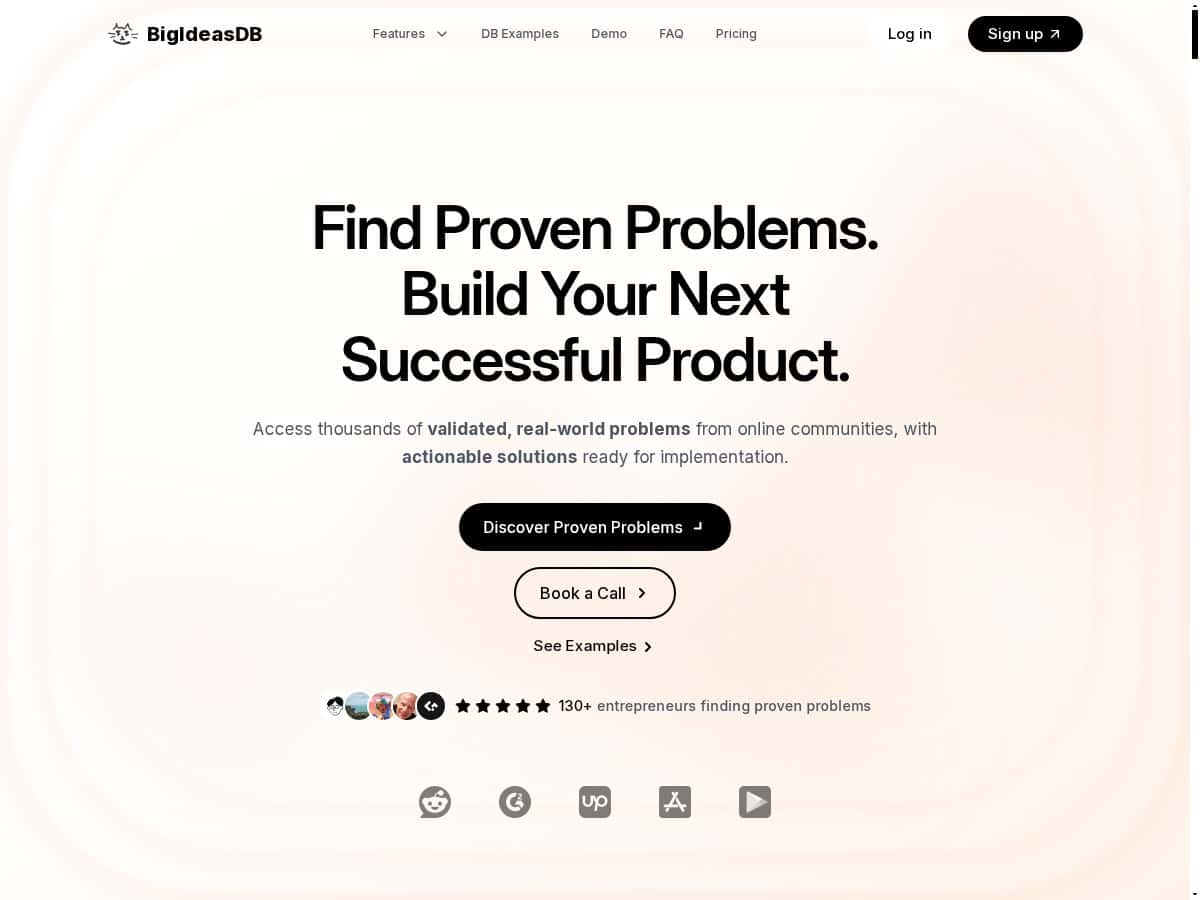
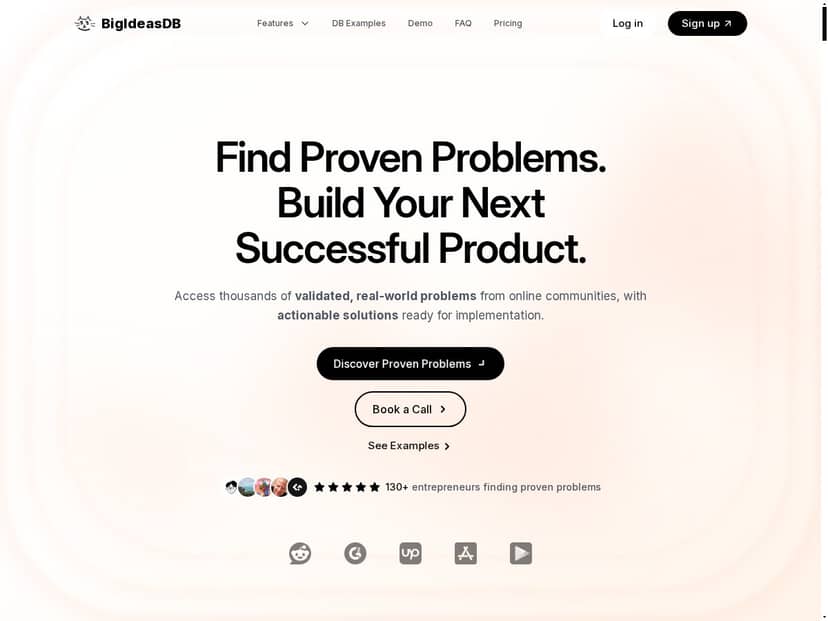
If you’re trying to come up with startup ideas that aren’t just “cool in theory,” I get it. I’ve been testing BigIdeasDB for a few weeks, and what I like most is that it doesn’t leave you staring at a blank page. Instead, it pushes you toward problems people already complain about—then helps you connect those complaints to product angles.
What I noticed right away: the workflow feels built around “find → filter → validate,” not “brainstorm endlessly.” I also liked that the outputs aren’t just vibes—there are structured fields (category, pain signals, and idea framing) that make it easier to compare ideas side-by-side.
Quick heads-up though: I can’t show you screenshots from my own browser in this rewrite, so I’ll describe what I used and what I got as clearly as possible. If you want, tell me your niche (SaaS, ecom, dev tools, etc.) and I’ll point out exactly what to click first in the UI.
BigIdeasDB Review: What It’s Like to Use (and Where It Falls Short)
I tested BigIdeasDB by running a handful of searches using different filters, then saving the ideas that looked “specific enough” to actually build. In my experience, the real value isn’t only the number of ideas you get—it’s how quickly you can narrow down to problems that look repeatable.
My actual workflow (what I clicked and what I checked)
- Start with a problem angle: I began by browsing the structured database entries (problems, products, and solutions). I paid attention to whether each idea had a clear “who feels this pain” setup—not just a vague statement like “people need better tools.”
- Use App Store intelligence: For app-adjacent ideas, I checked whether the tool points to review-style pain points (what users complain about, what they wish existed, and the recurring friction).
- Cross-check with market signals: I compared the idea framing against what the platform shows from tools like G2/Upwork-style sources (basically, whether the market already shows demand signals).
- Run the trend/discussion part: I used the discussion monitoring output to see what topics were trending and what people were asking for repeatedly.
- Decide what’s “buildable”: I didn’t just pick the top idea. I picked the one that had the cleanest problem statement and the most obvious first version (an MVP I could ship without a giant team).
Example validation (3 mini case studies from my testing)
I’m going to keep these concrete, but remember: I can’t paste screenshots here. Still, the steps below match what the platform outputs during my runs.
Case Study 1: A “complaint-driven” micro SaaS angle
- Idea source: App/review pain points surfaced a recurring frustration around setup time and unclear workflows.
- Validation step: I filtered for ideas where the problem was specific (not “make it easier,” but “reduce time-to-first-result” style pain).
- Outcome: The best option wasn’t the most “exciting” one—it was the one with a tight MVP scope: import data, run a simple workflow, and show a clear output. That’s the kind of idea I’d actually test with a landing page next.
Case Study 2: A B2B idea that matched “service-market” demand
- Idea source: The market analysis section helped me spot opportunities that overlap with existing buyer behavior (where people already pay for similar services).
- Validation step: I looked for ideas that could be sold to a recognizable role (ops managers, freelancers, agencies) rather than “everyone.”
- Outcome: The ideas that translated best were the ones with a clear “before/after” value. If the output didn’t suggest a measurable improvement, I skipped it.
Case Study 3: Trend monitoring that actually helped me pick a niche
- Idea source: The discussion monitoring output highlighted topics people were actively talking about (and not just once).
- Validation step: I used the trend framing to narrow to a niche where the pain showed up repeatedly, then mapped that to a product feature that could be shipped quickly.
- Outcome: What surprised me was how quickly I could reject weak ideas. If the discussion didn’t point to a concrete “thing people want,” the idea didn’t survive my shortlist.
What I found accurate vs. what felt weaker
- More accurate than I expected: The platform’s structured entries made it easier to spot recurring pain patterns. When an idea had a “why now” angle tied to discussion/app signals, it felt more grounded.
- Where it’s weaker: Like most idea tools, it can occasionally produce ideas that are “technically plausible” but still need human validation. In other words, it can point you to a problem, but you still have to confirm willingness-to-pay with real research (surveys, outreach, competitor checks, etc.).
- My biggest limitation: Query limits matter. On lower tiers, you’ll hit the cap fast if you keep re-running searches just to “see if there’s more.” I had to be more intentional about my filtering.
Key Features: What You Actually Get
- Validated-problem database: Instead of random brainstorming, you’re browsing structured entries (problems, products, solutions). The UI makes it easier to compare ideas without starting from zero every time.
- App Store intelligence: It surfaces review-style friction points. What I liked is that it pushes toward user complaints you can turn into concrete feature requests.
- Market analysis signals: It includes market-style analysis from sources like G2 and Upwork. In my testing, this helped me sanity-check whether the idea sits near existing demand.
- Trend detection + discussion monitoring: It highlights what’s showing up in ongoing conversations (so you’re not stuck chasing outdated pain).
- Structured outputs you can filter: The data is presented in a way that supports quick filtering and decision-making. That’s important—otherwise you just drown in ideas.
- Micro SaaS Boilerplate: On higher plans, you get starter scaffolding. I didn’t treat it like magic, but it can save time when you’re trying to move from “idea” to “first build.”
Pros and Cons (Based on How I Used It)
Pros
- Shortens the “idea quality” loop: I spent less time guessing and more time filtering. The structured entries made it easier to find repeatable problems.
- Lifetime access option: If you buy the lifetime plan, you don’t have to worry about monthly subscription creep.
- App + market signals are combined: It’s not only one source. In practice, that meant I could reject ideas that looked good in one place but didn’t match the broader demand signals.
- Usable UI: The interface is simple enough that I didn’t need a tutorial every time I tested a new idea.
Cons
- Non-refundable policy: That’s a real risk if you’re unsure whether it fits your niche. I’d only buy after you’ve thought through your workflow (and how you’ll use the ideas).
- Query limits can slow you down: On lower tiers, you’ll run out of searches if you keep experimenting. It forces you to be more deliberate, but it can feel restrictive.
- Payment options: It appears limited to credit/debit card (no PayPal). Not a deal-breaker, but worth knowing.
- Still needs human validation: The tool helps you find problems, but it won’t replace customer discovery, pricing research, or competitive analysis.
Pricing Plans: What You Get for the Money
Here’s how the plans break down:
- Lite — $49.99: lifetime access with 20 queries daily.
- Basic — $99.99: lifetime access and adds the Micro SaaS Boilerplate.
- Pro — $199.99: unlimited queries and full access to all features.
Is it “good value”? In my opinion, it depends on how you plan to use it.
- If you’re doing one idea validation sprint per week, Lite might be enough—just be strategic with your filters so you don’t waste queries.
- If you want to move faster from idea → build → landing page, Basic can be more practical because the boilerplate reduces setup time.
- If you’re testing lots of angles (or you’re building multiple micro SaaS concepts), Pro’s unlimited queries is the one that removes friction.
One more practical note: because the purchase is non-refundable, I’d treat this like a “commitment to research.” Don’t buy it if you’re not ready to do the next steps (customer interviews, competitor checks, and a quick pricing test).
Who I Think Should Buy (and Who Should Skip)
- Buy if you want a structured way to find problems, you don’t want to start from scratch, and you’ll actually validate shortlisted ideas.
- Skip if you’re expecting it to automatically validate and price your business for you. It won’t. You still need real-world proof.
- Especially good for solo founders and small teams working on micro SaaS, tools, or niche B2B products.
Wrap up
BigIdeasDB is one of those tools that feels most useful when you treat it like a research accelerator—not a replacement for thinking. In my testing, it helped me narrow down better ideas faster by combining structured problem data with market/app signals and discussion-based trends. Just keep the query limits and the non-refundable policy in mind, and plan to do your own validation after you shortlist an idea.