Table of Contents
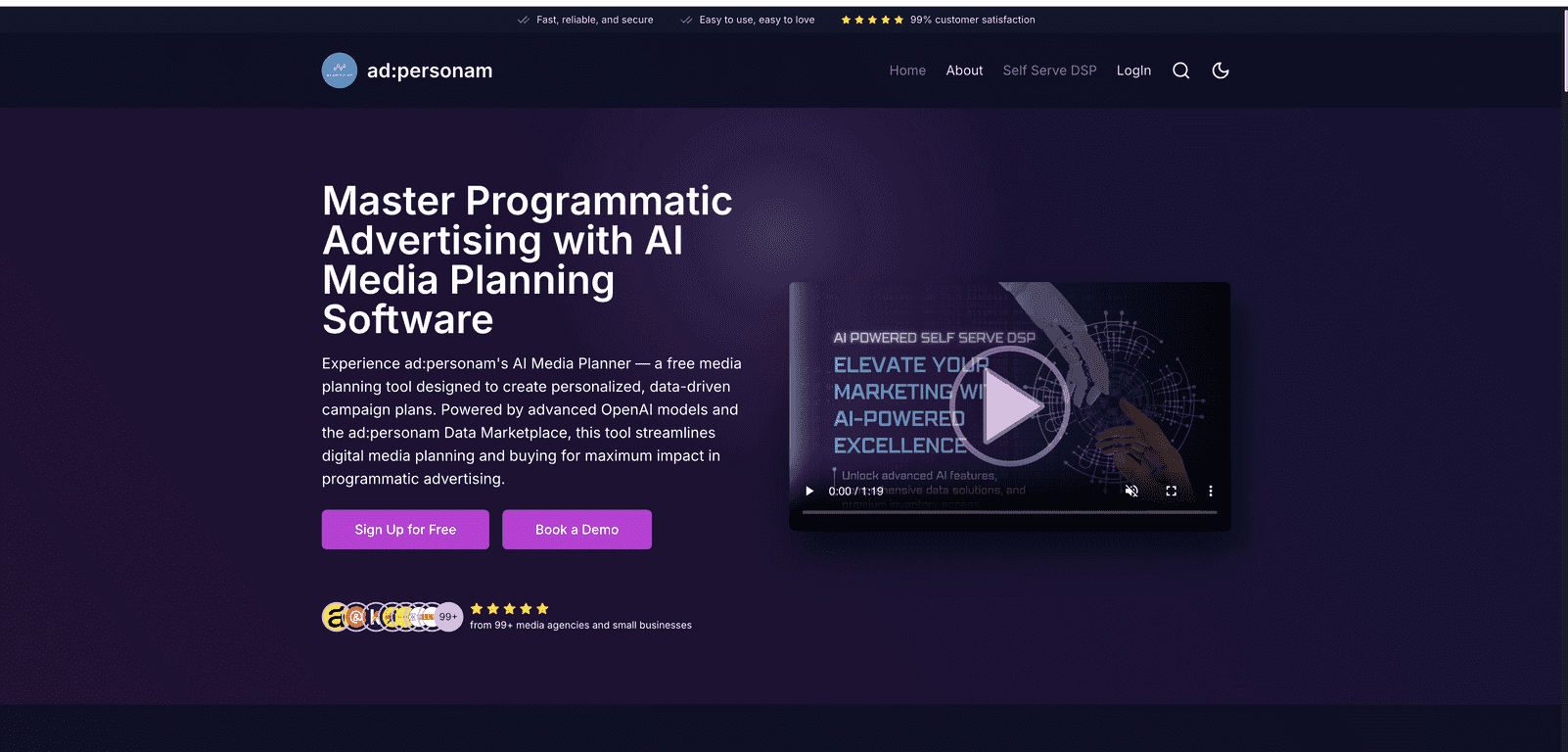
I’ve spent enough time in programmatic to know the “media planning” part can get messy fast—spreadsheets, screenshots, and a bunch of back-and-forth with platforms that don’t always agree with each other. That’s why I was curious about ad:personam and its AI Media Planner. The promise is simple: help you build and manage omnichannel campaigns without making you feel like you need a full-time analyst on staff.
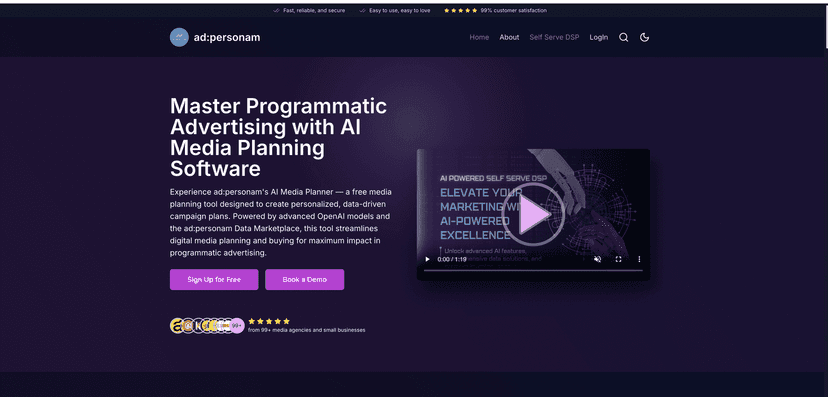
In my testing, the biggest thing I noticed wasn’t some magical “set it and forget it” button. It was how quickly I could move from a basic goal to a plan that actually looks like a real campaign—formats, targeting, and reporting all tied together. If you’re trying to run display, video, and mobile without losing track of the details, that’s where ad:personam starts to feel useful.
AI Media Planner Review
When it comes to programmatic advertising, a good media planning tool matters because it sets the “rules of the road” for everything that follows. ad:personam focuses on that planning layer, and in my experience that’s the part most teams rush. You’ll see it right away in how the platform supports omnichannel campaign planning—so you’re not stuck building separate plans for display, video, and mobile like it’s three different projects.
Here’s what I liked most during setup: you start with your goals, and the workflow pushes you toward a coherent strategy. It’s not just “pick audiences and run.” It’s more like, “define what you want, then map it to channels and formats.” For example, if your goal is awareness, your plan will naturally look different than if you’re optimizing for conversions. That alignment is a big deal when you’re trying to explain strategy to stakeholders who don’t want to hear “it depends” for 20 minutes.
Another thing I paid attention to was the AI-driven insights. I don’t expect AI to magically know your business better than you do. But I do like when a tool surfaces patterns I might miss—like which audience segments are worth expanding, or where targeting might be too narrow to scale. The insights felt most helpful when I was making adjustments mid-campaign rather than trying to perfect everything upfront.
Real-time reporting is also a practical feature. I don’t want to wait days to understand what’s working. When I checked performance, I could see enough to decide whether to tweak targeting, shift budgets, or revisit creative distribution across formats. Is it as deep as a dedicated analytics suite? No. But for a planner and execution companion, it did the job.
Key Features I actually cared about
If you’re evaluating ad:personam, these are the capabilities that stood out to me as more than buzzwords.
- Omnichannel campaign planning across formats like CTV, video, and mobile—so your strategy stays consistent.
- Goal alignment so your plan reflects business objectives instead of generic targeting.
- Data-driven optimization with insights tied to a data marketplace concept (the tool uses this to support decision-making).
- AI-driven insights that help you interpret audience behavior and not just watch numbers change.
- User-friendly interface that doesn’t feel like you need a manual to get started.
- Real-time reporting for ongoing adjustments and better targeting decisions.
- Customizable targeting options so you can still apply your own judgment.
Pros and Cons (the honest version)
Let’s be real—every tool has trade-offs. Here’s what I’d tell a friend after using ad:personam for a bit.
Pros
- Free to use, which is huge if you’re testing the waters or building a plan before committing budget.
- No minimum ad spend, so small teams aren’t forced into an expensive “try it” phase.
- Access to a wide ad network, which helps when you want visibility across channels instead of being limited to one inventory source.
- Responsive customer support, and I appreciated that when I had questions about how to structure campaigns.
- Efficient programmatic workflow compared to piecing together planning and reporting in separate tools.
Cons
- Self-serve can feel complicated at first. The interface is friendly, but there’s still a learning curve—especially if you’re new to programmatic.
- Advanced features may be limited for complex strategies. If you’re running highly specialized setups with lots of custom rules, you might hit boundaries faster than you’d like.
Key Features
- Omnichannel Campaigns for various advertising formats
- Alignment of strategies with specific business goals
- Data-Driven Optimization with insights from the Data Marketplace
- AI-Driven Insights for better audience understanding
- User-Friendly Interface for easy management
- Real-Time Reporting for tracking performance
- Customizable Targeting Options
- Affordable Pricing Plans
Pros and Cons
Pros
- Free to Use with no cost
- No Minimum Ad Spend requirement
- Access to a wide ad network for visibility
- Responsive Customer Support for assistance
- Efficient programmatic advertising management
Cons
- Learning curve for self-service features
- Limited advanced features for complex campaigns
Pricing Plans
From what I could verify, ad:personam is free to access as a media planner. They also promote additional services like a Self-Serve DSP, described as affordable and flexible—but the exact pricing details aren’t spelled out clearly in the information I reviewed. If you’re budget-conscious, that’s still a win, because you can start building plans without paying upfront.
Quick tip before you commit
If you’re going to test it, I’d start with one channel you understand well (like mobile or video), define a clear goal (awareness vs conversions), and then use the real-time reporting to decide what you’d change. Don’t try to perfect everything in day one—programmatic needs iteration.
Wrap up
Wrap up
For me, ad:personam feels like a solid option when you want AI-assisted media planning without the usual “we need a bigger team” overhead. It’s especially appealing if you’re juggling multiple formats and want a planner that keeps the strategy coherent across channels. Just keep expectations realistic: it’s not going to replace expert judgment, and if you’re running highly complex campaigns, you may find some advanced features are limited.
Promote AI Media Planner