Table of Contents
Struggling with math can be frustrating, whether you’re a student or a parent. Finding the right help can make all the difference. AI Math GPT promises to make learning math easier and more enjoyable. In this AI Math GPT review, we’ll explore how this AI-powered tutor can support students of various levels with real-time assistance and effective problem-solving.

AI Math GPT Review
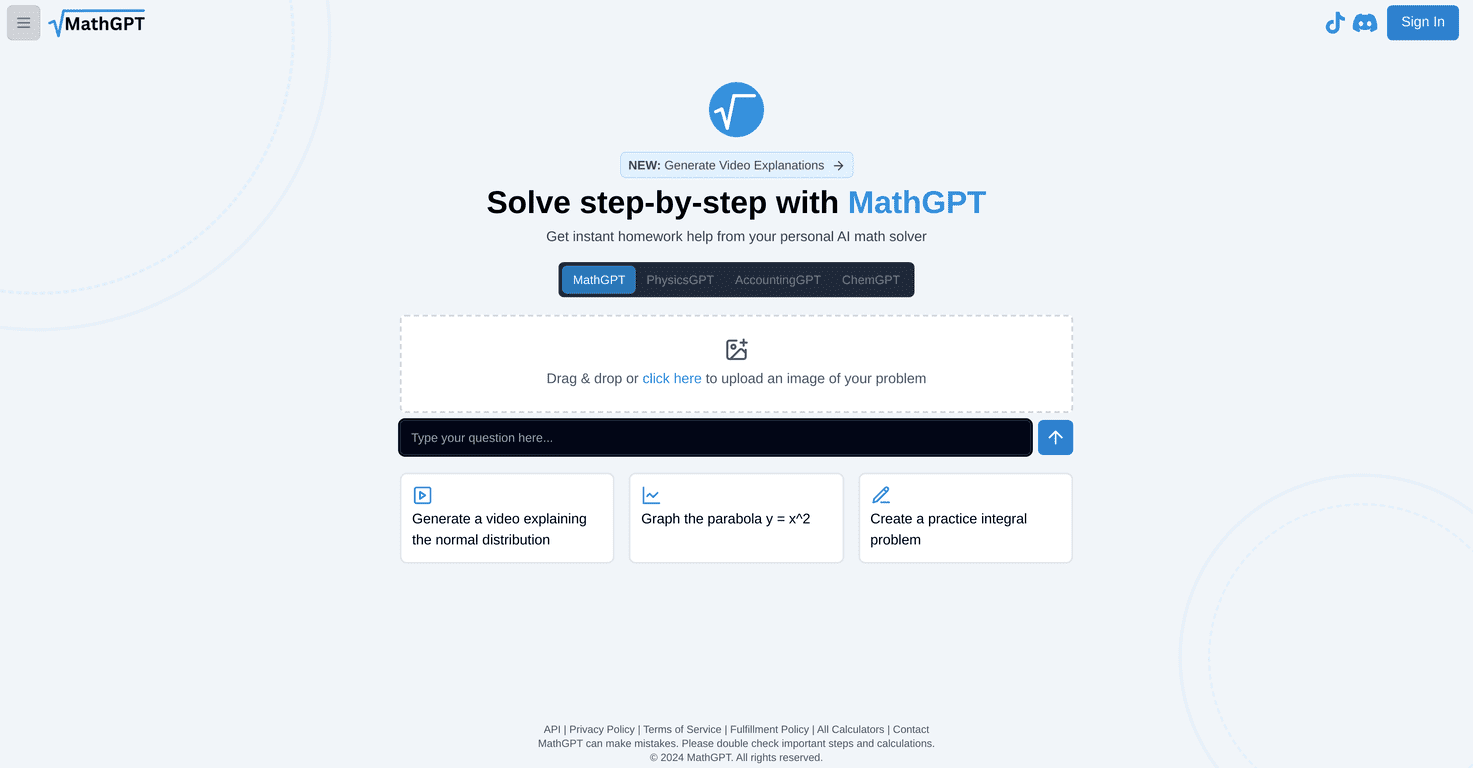
AI Math GPT is an innovative math tutor utilizing advanced AI technology, such as Llama3 and OpenAI o1. It aims to provide personalized learning experiences, breaking down complex math problems into step-by-step explanations that anyone can understand. Whether you need homework help at midnight or just a nudge in the right direction, AI Math GPT is designed to be accessible 24/7.
The user-friendly interface makes it easy to input math problems and receive instant feedback, which is perfect for students who prefer immediate responses to their queries. Furthermore, its multi-language support ensures that more learners can benefit from its services, regardless of their language background. Many users appreciate the interaction and real-time feedback, making math learning feel more engaging and less stressful.
Key Features
- 24/7 Availability for constant support
- AI-Powered Problem Solving for enhanced learning
- Step-by-Step Explanations for all types of problems
- Multi-Language Support for diverse learners
- User-Friendly Interface for easy navigation
- Personalized Learning Paths to cater to individual needs
- Interactive Problem Solving for real-time feedback
Pros and Cons
Pros
- Improves understanding and confidence in math
- Reduces homework-related stress for students and parents
- Offers personalized learning experiences
- Includes a free-tier plan to try out features
- Enhances problem-solving skills through efficient reasoning
Cons
- Limited free experiences with the Llama3 model
- May not cover every advanced math topic comprehensively
- Subscription fees might be a barrier for some users
Pricing Plans
AI Math GPT provides several pricing options to suit users’ needs: A Free Forever Plan allows 30 experiences with basic features. The Starter Plan at $15.99 per month offers 800 credits and enhanced support. The Advanced Plan at $22.99 monthly increases the credits to 1200 and introduces better reasoning capabilities. Lastly, the Professional Plan at $49.99 per month delivers 3000 credits and top-tier assistance, all from either Llama or OpenAI models.
Wrap up
In conclusion, AI Math GPT is a dynamic tool that empowers students to tackle their math challenges with confidence. Its advanced features, supportive environment, and flexible pricing plans make it an excellent choice for those seeking personalized math help. Whether you’re just starting out or need advanced assistance, AI Math GPT is here to make your math journey smoother and more enjoyable.
Promote AI Math GPT