Table of Contents
Let’s be honest—product sourcing can get messy fast. One minute you’re comparing prices, the next you’re bouncing between vendor sites, trying to figure out which listing is actually in stock. That’s exactly why I was interested in Accio. It positions itself as an AI-powered sourcing agent, and after spending some time testing how it finds and compares products, I can see why people use tools like this—when it works, it saves real time.
Accio Review: Does It Actually Make Sourcing Easier?
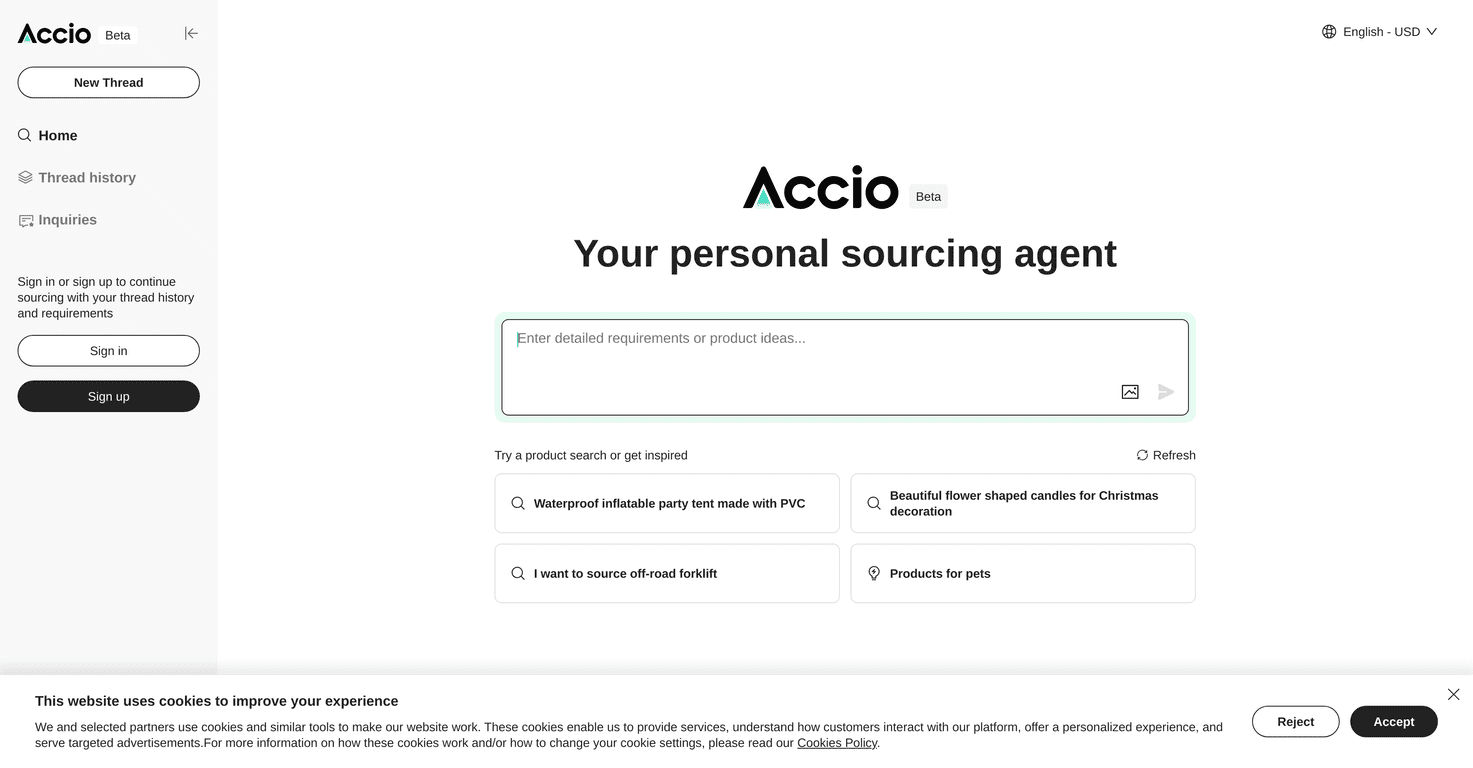
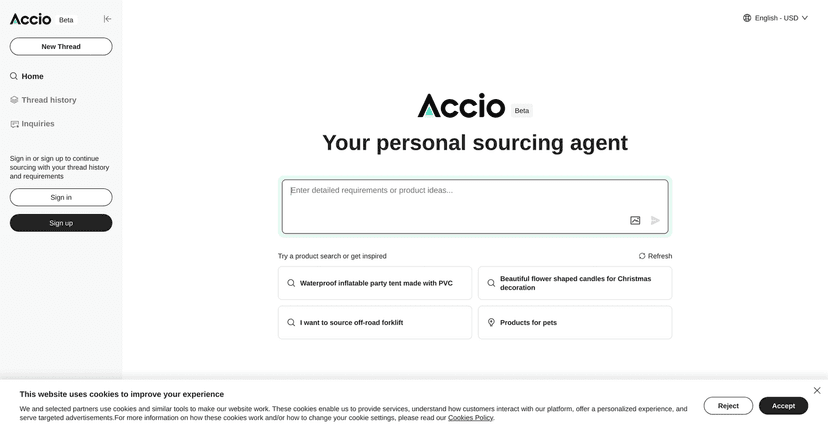
Accio is built to help you find products faster and compare options without spending hours manually searching. The first thing I noticed is that the interface feels pretty straightforward. You’re not forced into a complicated workflow—at least not at the start. If you’ve ever tried to source an item and ended up with 15 tabs open, you’ll appreciate anything that reduces that chaos.
On the search side, Accio focuses on helping you locate specific products quickly. In practice, that means you can move from “what I want” to “here are options” without having to dig through the usual vendor rabbit holes. And because it integrates with multiple platforms, it’s not limited to a single marketplace. That matters when you’re trying to source from more than one place—especially if one supplier is out of stock or doesn’t ship to your region.
Now, the part that really stands out: cost and vendor comparison. Instead of treating each result like a separate scavenger hunt, Accio helps you compare price and vendor details side by side. I like this because it cuts down the back-and-forth. You can look at availability, compare costs, and make a decision based on what you actually care about (price, supply, and relevance), not just whatever shows up first in a search engine.
That said, I wouldn’t call it magic. If your product is super niche, or if vendors don’t have updated inventory feeds, the results can be less reliable than you’d hope. Still, for everyday sourcing—especially when you need speed—Accio feels like a solid assistant.
Key Features I’d Pay Attention To
- AI-powered product sourcing — helps you get to relevant product matches faster than traditional searching.
- User-friendly interface — less friction when you’re just trying to find options quickly.
- Enhanced search functionalities — improves how quickly you can narrow down to specific items.
- Integration with various platforms — expands where results come from, which helps when one vendor can’t cover your needs.
- Cost and vendor comparison — lets you compare options without jumping between sites constantly.
Pros and Cons (The Stuff You’ll Actually Notice)
Pros
- It saves time — instead of manually comparing listings, you can scan options and shortlist faster.
- Less manual searching — fewer vendor pages to open, refresh, and cross-check.
- Better relevance — the AI approach generally helps surface items that match what you’re looking for, not just random close matches.
- Useful for cost management — comparisons make it easier to spot the better deal across vendors.
Cons
- You may need a learning curve — not because it’s “hard,” but because you’ll want to learn how to phrase what you need to get the best matches.
- Availability can limit results — if certain items aren’t actively available across connected platforms, you’ll feel that gap immediately.
- AI can be wrong sometimes — if the underlying data isn’t updated regularly, you might see mismatches (like pricing or availability) that you’ll still need to verify on the vendor side.
Pricing Plans: What I Found
At the moment, Accio doesn’t show clear pricing details in the information I reviewed. That’s not unusual for tools that may offer different plans depending on usage, team size, or sourcing volume. My recommendation: check the official Accio site directly or contact their sales team so you can get pricing that matches how you’ll actually use it.
If you’re budgeting, ask about things like expected monthly usage, any limits on comparisons, and whether you get access to all integrations by default. Those details can make a “cheap” plan not so cheap after you hit restrictions.
Wrap up
Overall, I think Accio is a promising tool for anyone who sources products regularly and wants to cut down on the time spent searching and comparing. The cost/vendor comparison is the feature that feels most practical, and the interface doesn’t get in your way. Just keep your expectations grounded: you’ll still want to verify key details on the vendor side, especially for availability and pricing.
If you want a faster path from “I need this product” to “here are the best options,” Accio is worth a look.